How Much Does Animation Cost Per Minute in 2026? Real Prices by Production Tier

Co-founder of Yum Yum Videos | Explainer Video & Video Marketing Expert
Quick Answer: How Much Does 1 Minute of Animation Cost in 2026?
For professionally produced business videos, animation cost per minute typically ranges from $5,000 to $20,000+. The final animation price depends on the production team, visual style, complexity, and level of customization.
To estimate the current market, we contacted 125 video production companies and animation studios in July 2026. We received 61 usable quotes for a custom animated explainer lasting 60 seconds, with a median quote of $9,680. We compared those results with our experience producing more than 1,000 custom videos.
The following animation prices show what businesses can realistically expect at each production level:
- $0 to $1,000: Template based or AI generated videos. Fast and affordable, but usually limited in customization, originality, and overall production quality.
- $1,000 to $5,000: Freelancers. This tier can work well for simple, clearly defined projects, but clients generally face a higher risk of inconsistent quality, communication delays, or missed deadlines, especially when one person is responsible for the entire production process.
- $5,000 to $8,000: Small and midsize studios offering custom animation. They usually provide good production quality and a more organized process, with a team that can handle feedback, keep the project moving, and deliver the video on time.
- $8,000 to $25,000: Established professional studios. At this level, clients usually get a highly polished, fully custom video, backed by an experienced team and a well organized production process. There is more support at every stage, clearer communication, and greater confidence that the project will stay on track and be delivered as agreed.
- $25,000+: Broadcast level productions. These projects go beyond a typical corporate video and may involve months of work, larger teams, advanced 3D, or frame by frame animation.
How We Estimated These Animation Costs
To make sure these ranges reflected the current market rather than just our own pricing, we contacted 125 video production companies and animation studios. Each company received the same brief and visual references for a fully custom animated explainer lasting 60 seconds.
We received 76 responses, including 61 usable quotes ranging from $2,800 to $27,000. The median quote was $9,680, and the median estimated production time was seven weeks.
We then compared those findings with our experience producing more than 1,000 custom videos and working with hundreds of animation professionals.
Because the brief focused on an animated explainer, the results are most representative of custom business animation. They do not necessarily reflect pricing for feature films, game animation, VFX, or premium broadcast CGI.
For a separate breakdown focused specifically on explainer projects, see our guide to explainer video cost.
The research was conducted, and the pricing was last reviewed, in July 2026.
Prefer a Video Explanation?
If you prefer to watch rather than read, this short video from Yum Yum Videos explains the main factors that affect animation pricing:
Real Example: What a $15,000 Per Minute Animation Looks Like
.
This project cost approximately $15,000 per finished minute. Branch used the video to explain its platform to potential clients and investors during a period of rapid growth.
Around that time, the company raised a $300 million Series F round and reached a $4 billion valuation. You can read the full Branch case study here.
At that stage, Branch needed to explain a complex platform to clients and investors with different priorities. The video served a specific purpose: helping those audiences understand the platform.
Animation Cost by Production Tier
There is no single standard price for animation. Quotes vary because freelancers, small studios, and larger production companies offer different services, team structures, and levels of customization.
The price ranges below show what each type of provider typically includes and the kinds of projects they are best equipped to handle.
How Much Does Animation Cost?
Templates and Videos Created with AI
$0 to $1,000 per minute
This video illustrates a similar level of visual complexity. Their actual production budgets have not been verified.
Templates and AI video tools offer a fast and inexpensive way to create simple content without a lengthy production process.
This usually means:
- Limited visual variety: The final video may resemble content created by other users of the same platform.
- Limited customization: The script and visual ideas need to fit the options available within the tool.
- Little creative guidance: Decisions about the message, structure, and visual direction usually remain with the client.
When This Option Works Best
These tools can work well for internal presentations, product updates, early visual drafts, and content that needs to be produced quickly.
They are less suitable when a project requires original artwork, a carefully developed script, several rounds of feedback, or a visual style created specifically for the brand. Complex products and messages intended for clients or investors may also require support with script development, visual direction, and project management.
Freelancers
$1,000 to $5,000 per minute
This video illustrates a similar level of visual complexity. Their actual production budgets have not been verified.
This category includes independent animators who handle several parts of the production themselves.
Freelancers can be a good option when:
- The project is simple and clearly defined.
- The script and visual direction have already been decided.
- Someone on the client’s team is available to organize feedback and keep the work moving.
The quality of the final video depends heavily on the freelancer’s experience. When one person handles the script, design, animation, communication, and revisions, there is a greater risk of inconsistent quality or delays. Larger productions can also become difficult for one person to coordinate.
Small and Midsize Animation Studios
$5,000 to $8,000 per minute
This video illustrates a similar level of visual complexity. Their actual production budgets have not been verified.
Studios in this range usually offer a more organized production process than a freelancer, with several people sharing the work.
This usually includes:
- Custom illustration and animation
- A defined schedule and revision process
- A team that can manage feedback and keep the project moving
These studios can be a good option for product videos, marketing explainers, and other projects with a clear scope. They may be less suitable when the work requires extensive research, several internal stakeholders, a complex script, or ongoing guidance at every stage.
Established Professional Animation Studios
$8,000 to $25,000 per minute
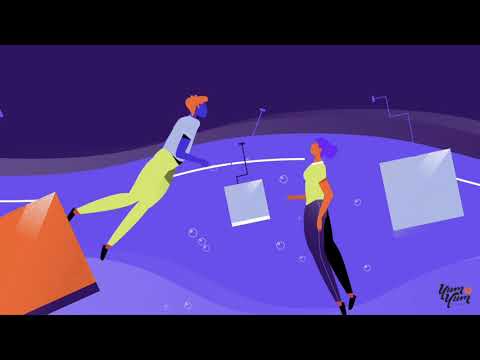
We produced a 90 second animated video for Chargebee for $22,500, equivalent to $15,000 per finished minute. The project included a custom script, visual development, animation, and professional sound design.
Studios in this price range usually assign different specialists to each part of the production. A producer coordinates the project, while writers, designers, animators, and sound professionals each manage a different stage of production.
Companies often choose this type of studio when:
- The product or service is difficult to explain.
- The project requires original artwork rather than templates.
- Several people need to review and approve the video.
- The video will be used by sales, marketing, or investor relations teams.
- The company needs a clear schedule and support throughout the production.
At this level, the animation cost per minute depends on the length of the video, visual complexity, number of scenes, amount of original artwork, revision process, and production timeline.
Yum Yum Videos is an animated explainer video company with a complete production team. Most of our custom projects cost between $8,000 and $15,000 per finished minute and follow a structured process from script development through final delivery.
Broadcast Production Studios
$25,000 to $150,000 or more per minute
This video illustrates a similar level of visual complexity. Their actual production budgets have not been verified.
Projects in this range usually involve larger production teams, longer schedules, and more specialized work. They may include advanced 3D, animation created frame by frame, complex visual effects, detailed art direction, or technical requirements for television and major advertising campaigns.
This type of production is generally used for commercials, entertainment projects, major product launches, and campaigns where the visual execution is central to the idea.
Prices vary according to the animation style, number of scenes, team size, timeline, technical requirements, and amount of original artwork involved.

Is an Animated Video a Good Investment for a Business?
Our client data gives us a strong indication. The eight startups we worked with that later became unicorns or went public commissioned an average of four videos each. Across our full client base, the average is only 1.2 videos per company.
These companies did not rely on a single explainer. During important stages of their growth, they used several videos to explain different products, parts of the business, and value propositions to investors, clients, partners, and internal teams.
A few examples:
- Accelerant: We produced nine videos explaining different parts of its insurtech model before the company completed a $724 million IPO and reached a $6.4 billion valuation.
- Chargebee: We created three videos covering its subscription billing platform and related products before the company reached unicorn status and was later valued at $3.5 billion.
- Loadsmart: We produced five videos for different areas of its logistics platform before the company reached a $1.3 billion valuation.
Only 23% of our clients commissioned more than one video, but the startups in this group averaged four. That is more than three times the overall client average.
This does not prove that the videos caused their growth. It does show that companies preparing for fundraising and rapid expansion often have more than one message to communicate. Instead of trying to explain the entire business in a single video, these startups created separate assets for different products, audiences, and business goals.
Animation Cost by Style in 2026
Animation style affects the final price, but it is only one part of the quote. The ranges below apply to professionally produced business videos and show what companies can generally expect to pay for each style.
The final animation cost per minute also depends on the amount of custom artwork, number of scenes, production team, revisions, timeline, and technical requirements.
2D Animation for Business Videos
Typical professional range: $5,000 to $25,000 per minute
2D animation is widely used for explainer videos, product demos, advertising, and brand stories because it can represent people, products, interfaces, and abstract ideas within the same visual style.
The 2D animation cost per minute varies considerably. A relatively simple project may use fewer scenes, limited character movement, and a compact visual style. More expensive productions usually require original characters and environments, detailed storyboards, a larger number of scenes, and more time for animation and revisions.
For business videos, 2D animation is a flexible option because the visual approach can be adapted to different budgets, brands, and communication needs. The final price depends less on the fact that the video is 2D and more on how much original design and production work the project requires.
Motion Graphics Animation
Typical professional range: $7,000 to $18,000 per minute
Tentacle, an explainer video produced by Yum Yum Videos.
Motion graphics use typography, shapes, icons, charts, and animated interfaces to explain information visually. This style is common in SaaS, finance, technology, and corporate videos, especially when the message involves data, processes, or software.
The motion graphics animation cost depends on the amount of original design and the complexity of the movement. A simple project may use basic shapes, text, and transitions. More detailed productions often require custom graphics, animated data, interface sequences, and careful timing so viewers can follow the information without feeling overwhelmed.
Although motion graphics can look simpler than character animation, they may require just as much planning, design, and animation work.
Whiteboard Animation
Typical professional range: $6,000 to $12,000 per minute
Spigit, a whiteboard video produced by Yum Yum Videos.
Whiteboard animation is sometimes considered a lower cost option because many tools use templates and predesigned artwork. A professionally produced whiteboard video still requires script development, storyboarding, custom illustrations, animation, voiceover, sound design, and revisions.
The whiteboard animation cost depends on the number of scenes, the amount of original artwork, the complexity of the transitions, and the length of the production process.
Whiteboard videos often cost slightly less than other custom 2D styles because the artwork and movement are usually simpler. However, the script and visual sequence still need to be carefully planned so each new image supports what the viewer is hearing.
3D Animation
Typical professional range: $15,000 to $40,000 or more per minute
Sintavia, a 3D explainer video produced by Yum Yum Videos.
3D animation usually costs more than other animation styles because each object must be modeled, textured, lit, animated, and rendered. Detailed environments, realistic materials, simulations, and complex camera movements can add considerably more production time.
The 3D animation cost per minute is generally higher, but the style can be worth the investment when a company needs to show a product from every angle, reveal internal components, or explain a physical process that would be difficult to film.
3D animation is commonly used for product visualization, commercials, manufacturing, healthcare, engineering, and other technical industries where showing depth, scale, or realistic movement helps viewers understand the subject.
How Animation Style Affects Price
Animation style affects the final price, but it does not determine it on its own. Two videos created in the same style can have very different costs depending on the number of scenes, amount of original artwork, character movement, revisions, timeline, and team involved.
For that reason, different animation styles sometimes fall within similar price ranges. The best choice is the style that fits both the message and the available budget.
Animation Cost FAQ
How much does animation cost per minute in 2026?
Professional animation for business videos typically costs between $5,000 and $20,000 or more per finished minute. The final price depends on the animation style, number of scenes, amount of custom artwork, production team, timeline, and services included.
In our 2026 market research, the median quote for a custom animated explainer lasting 60 seconds was $9,680.
How much does 2D animation cost per minute?
The 2D animation cost per minute generally ranges from $5,000 to $25,000 for professional business videos.
Projects at the lower end of that range usually have fewer scenes, simpler character movement, and less original artwork. More expensive productions may include custom characters and environments, detailed storyboards, complex animation, professional sound, and additional revision stages.
Can I get a professional animated video for under $5,000?
Yes, although the scope will usually be more limited. Projects under $5,000 are often produced by freelancers or small teams and may use simpler artwork, fewer scenes, or a shorter production process.
Before accepting a quote, check whether it includes scriptwriting, storyboard, custom design, animation, voiceover, sound design, project management, and revisions. Two quotes with similar prices may include very different services.
Why does professional animation cost so much?
A professional animated video usually involves several stages and specialists. The process may include research, scriptwriting, storyboarding, art direction, illustration, animation, voiceover, sound design, project management, and revisions.
You can see how these stages fit together in our guide to the animation production process.
The price reflects the amount of work involved, the experience of the team, and the time required to complete each stage.
How long does it take to produce one minute of animation?
One minute of professional animation commonly takes six to nine weeks to produce. In our 2026 market study, the median estimated production time was seven weeks.
The final timeline depends on the visual style, complexity, number of scenes, feedback process, and services included. Projects with several reviewers or a large amount of original artwork may take longer.
Is animation worth the investment for a business?
It can be, particularly when a company needs to explain something that is difficult to show with live action or communicate through text alone.
Animation can be useful for product launches, sales presentations, investor communications, employee training, and technical explanations. Its value depends on the quality of the message, how the video is distributed, and whether it solves a specific communication need.
A larger budget does not guarantee a better business result, so the project should be evaluated according to what the video needs to accomplish and how it will be used.
How to Choose the Right Animation Partner
Price is important, but two animation quotes can include very different services. Before choosing a provider, check whether the proposal covers scriptwriting, storyboarding, custom illustration, animation, voiceover, sound design, project management, revisions, and final versions.
A freelancer or smaller studio may be a good fit for a simple project with a clearly defined scope. A larger production team makes more sense when the video requires original artwork, several reviewers, a complex script, or close support throughout the process.
The right choice is the provider that can produce the video you need within your budget, timeline, and quality expectations.
At Yum Yum Videos, most custom animation projects cost between $8,000 and $15,000 per finished minute. You can explore our animation portfolio and case studies to see what that level of production looks like in practice.

Victor Blasco
Co-founder of Yum Yum Videos | Explainer Video & Video Marketing Expert
Victor Blasco has over 25 years of experience in animation and film production. For the past 14+ years, he has worked with companies to create explainer and marketing videos that simplify complex ideas and drive business results.
His work has supported global brands like Amazon and McKesson, as well as startups that raised over $2B and reached unicorn or IPO stages.
Victor shares insights based on real client work. His contributions have been published on platforms like Social Media Examiner, and he has been featured or quoted in outlets such as Forbes.