30 Best Commercial Ads of All Time (2026)

Co-founder of Yum Yum Videos | Explainer Video & Video Marketing Expert
Most commercials are forgotten pretty quickly. The good ones leave something behind: a line people repeat, a character they recognize, a song, a visual joke, or a product moment that sticks.
That is the standard for this list. These 30 commercial ads cover very different decades, budgets, and production styles, from a 15-second holiday spot to a five-minute animated film. Some became famous because of their reach or business results. Others still deserve attention because the creative idea works years later.
For this 2026 update, I kept the classics that made the original list worth reading and replaced three entries with newer commercial ads from 2024 and 2025.
After more than 14 years producing marketing videos at Yum Yum Videos, I have seen expensive productions fall flat while simpler ideas sometimes communicate the message more effectively. For this list, I looked at how quickly the idea becomes clear, how closely it connects to the brand or product, how well the execution has aged, and any public campaign results I could verify.
The list includes animated commercials, live-action spots, mixed-media work, 3D, comedy, and a few ads that are simply strange. The examples span several production styles because the best approach changes with the idea, audience, and product.
If you want to compare adjacent formats, our promotional video examples cover a broader mix of marketing videos, while our product ads guide focuses specifically on product-led advertising.
- Best Animated Commercial Ads
- 1. Chipotle: Back to the Start
- 2. Red Bull Barber Shop
- 3. Toys R Us: Christmas
- 4. Cadbury Aliens
- 5. Dumb Ways to Die
- 6. You’re Just a Sip Away
- Live-Action: Best Commercials
- 7. Dove Real Beauty Sketches
- 8. Google Home Alone
- 9. Google Pixel: Javier in Frame
- 10. The Force
- 11. Red Lamp
- Live-Action Commercials with Animation
- 12. They Do Exist!
- 13. Hare Jordan
- 14. Instacart: We’re Here
- 3D Commercial Ads
- 15. Happiness Factory
- 16. Rock, Paper, Scissors
- 17. The Last Game
- Funniest Commercial Ads
- 18. Evil Is Back for Good
- 19. You’re Not Yourself When You’re Hungry
- 20. Whassup
- 21. Alexa Loses Her Voice
- 22. Love Freebies? Get Them Legally
- 23. Dollar Shave Club: Our Blades Are F***ing Great
- 24. German Coastguard
- Popular Ads That Got Weird
- 25. Girls Don’t Poop
- 26. Treadmill
- 27. CeraVe: Michael CeraVe
- 28. Puppy Monkey Baby
- 29. Unskippable Elevator
- 30. This Is a Special Time
- What the Best Commercial Ads Have in Common
- What Makes a Good 30-Second Commercial?
- Practical Ideas for Your Own Commercial
- Frequently Asked Questions About Commercial Advertisements
- A Better Way to Judge a Commercial
Best Animated Commercial Ads
Animation gives advertisers room to build a world that would be difficult, expensive, or impossible to film. The strongest animated commercials still keep the idea easy to follow.
1. Chipotle: Back to the Start
This stop-motion commercial follows a farmer who turns his small family farm into an industrial operation and eventually decides to return to a more sustainable way of working.
The story carries Chipotle’s values without turning into a list of claims. The handmade look, the characters, and Willie Nelson’s version of The Scientist all support the same idea.
The campaign also reached a large audience. The One Club reports that Chipotle launched the film on YouTube, showed it on 10,000 cinema screens, and later aired it during the Grammy Awards. The campaign generated more than 300 million media impressions, 5.9 million YouTube views, and 45 million Twitter impressions.
2. Red Bull Barber Shop
Red Bull’s animated commercials are recognizable almost immediately. The loose line drawings, characters, pacing, and humor have become part of the brand itself.
“Barber Shop” is a good example of why that consistency matters. The ad does not need elaborate visuals to feel distinctive. A simple illustration style and a familiar sense of humor are enough to tell viewers whose commercial they are watching.
Red Bull has repeated this visual language across campaigns for years, so the style itself now helps identify the brand before the logo appears.
3. Toys R Us: Christmas
This Christmas commercial first aired in 1989 and was later remastered for its 25th anniversary in the UK.
The reason it still works is not complicated. The song does most of the heavy lifting. It is easy to remember, easy to associate with the brand, and tied directly to the excitement of Christmas.
Some commercial videos depend on a large visual idea. This one shows how much a memorable piece of music can do.
4. Cadbury Aliens
Cadbury’s “Aliens” takes a strange premise and keeps the product at the center of it. The chocolate is so enjoyable that even aliens start dancing.
According to Unruly, the ad generated 852,895 social shares and ranked as the ninth most-shared ad worldwide in 2016.
The weirdness gets attention, but the joke still comes back to the chocolate. That connection is what stops the commercial from becoming a random sketch with a logo at the end.
5. Dumb Ways to Die
.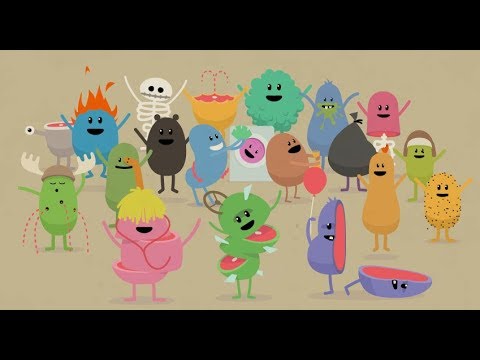
“Dumb Ways to Die” is one of the clearest examples of an advertising video becoming bigger than the media campaign that launched it.
The One Club reports that the video generated nearly 50 million views and more than 3 million social shares, becoming the most-shared public service announcement at the time.
The behavioral data is even more interesting. 39% of the target audience said the campaign would make them behave more safely around trains, while Metro reported a 20% reduction in accidents and deaths during the three months after launch. The video cannot be treated as the sole cause of that change, but the combination of reach, recall, and reported behavior gives the campaign unusual depth.
6. You’re Just a Sip Away
This 2017 commercial is only 30 seconds long, and it does not waste any of them.
The animation moves through a summer setting built around iced coffee, while music and sound effects carry the mood. There is no need for a voiceover because the product, weather, movement, and sound are already doing the communication.
It is a useful example for anyone searching for the best 30-second commercials: one clear feeling can be enough when every element points in the same direction.
If animation is the main focus of your research, our animated ads and cartoon commercials guide has more examples.
Live-Action: Best Commercials
Live action works especially well when the person, performance, or situation is the idea. The five examples below use nostalgia, emotion, accessibility, humor, and character in very different ways.
7. Dove Real Beauty Sketches
Dove’s “Real Beauty Sketches” became one of the brand’s most widely seen advertising videos, with more than 50 million views in its first 12 days and nearly 180 million views overall.
The setup is simple. Women describe themselves to a forensic artist, and strangers describe the same women. The difference between the portraits makes the point without requiring a conventional product demonstration.
The self-perception gap is clear before the brand becomes the focus, which lets the emotional idea carry the first part of the commercial. Dove’s official campaign page provides more background on the project.
8. Google Home Alone
Google brought Macaulay Culkin back as Kevin McCallister and recreated scenes from Home Alone, this time with Google Assistant solving many of the problems he faced in the film.
The nostalgia has a job to do. Each recreated scene gives the product a natural use case instead of pausing the story for a feature list.
The commercial attracted nearly 7 million views in its first 24 hours and later reached 70.7 million views, becoming the most-viewed holiday ad of 2018, according to Marketing Dive.
9. Google Pixel: Javier in Frame
“Javier in Frame” was released for the 2024 Super Bowl and follows a blind man using Guided Frame, an accessibility feature on the Google Pixel camera.
The commercial explains the feature through the moments it helps Javier capture. Viewers see relationships, everyday experiences, and the arrival of a new family member while understanding what the technology does.
That makes the product demonstration part of the story instead of a break from it. Google has more detail on the feature and the campaign in its official post.
10. The Force
Volkswagen’s “The Force” follows a child dressed as Darth Vader who keeps trying, unsuccessfully, to use the Force around the house. The payoff comes when the Passat starts remotely and the child believes he finally did it.
The commercial was released online before the Super Bowl and became the most-viewed video ad worldwide in 2011, with more than 50 million views.
The business results were also substantial. A WARC and IPA case study reports that Volkswagen sold 20,902 Passats, 116% more than the previous year, and estimated $213 million in incremental revenue.
The product appears at exactly the right moment. The joke would not work without the car.
11. Red Lamp
.
IKEA’s original “Red Lamp” commercial aired in 2002. The ad makes viewers feel sorry for an abandoned lamp sitting outside in the rain, only to have a man appear and point out that the lamp has no feelings.
Sixteen years later, IKEA returned to the idea and gave the lamp a different ending.
The original won the Film Grand Prix at Cannes Lions in 2003. The sequel is almost as interesting as the award because it shows how long the original idea stayed alive.
Live-Action Commercials with Animation
Mixing filmed footage with animation can solve practical production problems or create a visual joke that neither approach could deliver as easily on its own.
12. They Do Exist!
The M&M’s Christmas commercial is only 15 seconds long. Red and Yellow meet Santa, both sides discover that the other really exists, and everyone is shocked.
That is the entire idea.
The short runtime is part of why the commercial is so useful to study. It introduces recognizable characters, establishes the situation, lands the joke, and keeps the brand present without adding unnecessary explanation.
It has also returned around the holidays for decades, which gives the spot a kind of longevity very few advertising videos achieve.
13. Hare Jordan
.
“Hare Jordan” paired Michael Jordan with Bugs Bunny before Space Jam existed.
At the time, the combination gave adults a major sports star and younger viewers a familiar cartoon character. The live-action and animation are not there simply to show off technique. The collision between those two worlds is the concept.
Jordan and Bugs later appeared together again, and the partnership became a starting point for Space Jam.
That is an unusually long afterlife for a commercial idea.
14. Instacart: We’re Here
Instacart’s first Super Bowl commercial brings together advertising characters including the Energizer Bunny, Kool-Aid Man, Pillsbury Doughboy, and Old Spice Guy.
The nostalgia is fun, but the idea also explains Instacart in one move: products from many familiar brands can arrive together in a single order.
The One Club case study reports that orders rose 14% year over year, website visits increased 20% on game day, and new-user traffic jumped 72% after the commercial aired. Organic views performed 573% above benchmark.
3D Commercial Ads
3D commercials usually demand more production time and budget than simpler formats, so the visual idea needs to justify the extra work. These three do.
15. Happiness Factory
Coca-Cola’s “Happiness Factory” imagines the entire world hidden inside a vending machine.
The 3D animation gives the commercial a scale and sense of discovery that would be difficult to create any other way. Every strange machine and character exists to turn the simple act of buying a Coke into a miniature adventure.
Coca-Cola described “Happiness Factory” as its highest-rated global commercial at the time. The spot aired in more than 100 countries, won major advertising awards, and received an Emmy nomination.
16. Rock, Paper, Scissors
Android turns rock, paper, and scissors into characters who are supposed to be natural rivals but end up helping one another.
The story carries the brand message “Be together. Not the same” without showing a phone or walking through Android features.
AdNews reported that the commercial surpassed 7 million views within a few months of its Oscars debut.
It is a brand ad in the purest sense: the product stays mostly offscreen, while the idea gives the audience a reason to remember what the company stands for.
17. The Last Game
Nike’s “The Last Game” looks and behaves more like an animated short film than a standard commercial. It runs for about five minutes, includes famous footballers, and builds a complete story around the danger of playing it safe.
The film belonged to Nike’s broader Risk Everything campaign, which generated more than 400 million video views and 23 million engagements. Wieden+Kennedy’s campaign case study also reports $2.3 billion in revenue, a 21% year-over-year increase, while “The Last Game” became Facebook’s most-shared video at the time.
Those figures apply to the wider campaign, so they should not be attributed to this film alone. They still give useful context for the scale of the work.
Funniest Commercial Ads
Humor is difficult to separate from timing. The funniest commercials below work because the joke and the brand idea arrive together.
18. Evil Is Back for Good
This commercial brings back a familiar movie villain to promote a line of electric cars and the company’s environmental message.
The character gives the ad a reason to be funny while the story keeps returning to the cars. The humor is not an extra layer placed on top of a product pitch. It is the device used to deliver it.
That distinction matters. Funny commercial ads are easier to remember when the audience also remembers what was being sold.
19. You’re Not Yourself When You’re Hungry
Mr. Bean appears as a kung fu fighter who suddenly seems incapable of keeping up with everyone around him. After eating a Snickers, he becomes himself again.
The performance is funny on its own, but the structure is what made the larger “You’re Not You When You’re Hungry” platform so reusable. Different characters and situations could change while the core idea stayed intact.
According to Campaign, the broader campaign helped increase global Snickers sales by 15.9% in its first full year and added $376 million in sales between 2010 and 2012. Those results belong to the campaign, not this individual Mr. Bean execution.
20. Whassup
.
A group of friends watch a game, drink beer, and yell “Whassup?” at one another.
There is very little plot, which is part of the point. The line is easy to imitate, and the commercial turns repetition into participation. People could quote it without needing to explain where it came from.
That is why the spot moved so quickly into pop culture. The phrase itself became a piece of distribution.
21. Alexa Loses Her Voice
This is still one of my favorite commercials on the list.
Alexa loses her voice and is replaced by Gordon Ramsay, Cardi B, Rebel Wilson, and Anthony Hopkins. Each replacement is entertaining for a different reason, and every failure makes the same point: the normal Alexa voice is the one people actually want.
The commercial became the most-viewed YouTube ad of 2018, reaching 50.1 million views. The broader campaign generated 1.5 billion media impressions, and Amazon Echo sales during Super Bowl weekend were 300% higher than the previous year’s Super Bowl weekend.
Those figures describe the broader campaign and sales period, not the commercial acting in isolation.
Those metrics belong to the broader campaign, but they show the scale of the response.
22. Love Freebies? Get Them Legally
Harvey Nichols used real security footage of shoplifters and added cartoon heads to conceal their identities while promoting its rewards app.
The production idea is clever because the limitations become part of the look. Existing footage replaces a conventional shoot, and simple animation turns the people in the clips into characters.
Campaign described the work as having a minimal budget. Harvey Nichols did not disclose the exact production cost or ROI, but downloads of the Harvey Nichols Rewards app exceeded the campaign target by 50% within six months.
The video was one part of a broader campaign that also used print, social media, and in-store activity.
23. Dollar Shave Club: Our Blades Are F*ing Great
Few startup commercials are as useful to study as Dollar Shave Club’s launch video.
The production is intentionally simple. Founder Michael Dubin walks through a warehouse, talks directly to camera, makes jokes, explains the offer, and gives the brand a voice people can recognize immediately.
Inc. reported that the video was filmed in a single day for $4,500 and generated 12,000 orders within its first 48 hours.
Dividing the $4,500 production cost by 12,000 initial orders gives roughly $0.38 per order. That figure is not the same as customer acquisition cost or campaign ROI. Dollar Shave Club never disclosed the full marketing picture.
24. German Coastguard
The German Coastguard commercial builds everything around one language mistake.
A young coastguard worker hears “We are sinking” over the radio and replies, “What are you thinking about?”
The punchline is short, easy to understand, and directly tied to the language-learning service being advertised. Remove the product and the joke stops making sense.
That is exactly the relationship a comedy ad needs.
Popular Ads That Got Weird
Some popular commercials become memorable because they make the audience slightly uncomfortable. That can work, provided the strangeness still has a reason to exist.
25. Girls Don’t Poop
Poo-Pourri had an awkward product to explain and chose to make that awkwardness the whole creative territory.
The elegant spokesperson, formal delivery, and bathroom subject matter create a contrast that makes the commercial difficult to ignore.
Forbes reported that the video cost $25,000 to produce, with another $650,000 spent promoting it on YouTube and Facebook. It reached 10 million views in two weeks and helped generate $4 million in back orders in less than a week.
For a product many brands would struggle to discuss at all, embracing the uncomfortable subject became the advantage.
26. Treadmill
Skittles gives us a character sweating Skittles while another person collects and eats them.
There is no elegant explanation for that sentence, which is probably why the ad belongs in this section.
The commercial uses the kind of absurdity Skittles had already made part of its brand voice. It catches attention because the image is difficult to predict and even harder to forget.
Whether a viewer likes the joke is almost secondary. The important point is that the weirdness still feels like Skittles.
27. CeraVe: Michael CeraVe
CeraVe built an entire campaign around a ridiculous question: what if Michael Cera had invented CeraVe?
The joke was allowed to grow across the campaign before the Super Bowl commercial paid it off. At the end, the real product message remains intact: CeraVe is developed with dermatologists, not Michael Cera.
The One Club reports that the broader campaign generated around 30 billion earned impressions, increased sales by 25%, and drove a 1,350% increase in searches related to who created CeraVe.
Those are campaign results rather than results from the commercial alone.
28. Puppy Monkey Baby
The first time I saw “Puppy Monkey Baby,” I was not sure whether I liked it. I was very sure I remembered it.
Mountain Dew combined three unrelated things into one uncomfortable character and turned the creature into the center of its Super Bowl commercial.
The reaction produced substantial online activity. The Drum reported 24.9 million online views, more than 340,000 social interactions, and around 283.8 million social impressions.
This is a useful reminder that “memorable” and “universally loved” are not the same thing.
29. Unskippable Elevator
GEICO starts with an insight most advertisers would rather avoid: people want to skip ads.
Instead of fighting that behavior, the commercial delivers the message immediately, freezes the actors, and lets the awkward scene continue while the viewer waits for the skip button.
D&AD reports that the broader Unskippable campaign generated more than 10 million views in its first month.
The idea works because it was designed around the media format itself. The limitation becomes the joke.
30. This Is a Special Time
This final commercial is difficult to describe without making it sound worse than it is.
An ice cream creature sits in front of the camera and eats its own head with a spoon.
That is essentially the ad.
I included it because it shows the far end of the spectrum. Some commercial ads use beauty, nostalgia, or emotion. This one uses discomfort. The image is so strange that forgetting it becomes difficult, although that kind of attention is obviously a much riskier strategy for a brand.
What the Best Commercial Ads Have in Common
After 30 examples, the patterns are more useful than another list of adjectives.
“The Force” centers on one child believing he has supernatural powers. Dollar Shave Club centers on one voice and one offer. Poo-Pourri leans into the awkwardness of the product. GEICO builds around the skip button. Each commercial gives one idea enough room to carry the spot.
They also give the brand a real role in the idea. The product does not need to appear constantly, but the story should lose something if you remove it. That is true of the Passat in “The Force,” Snickers in the Mr. Bean spot, Google Assistant in “Home Alone,” and CeraVe in the Michael Cera campaign.
Finally, the execution fits the concept. A 15-second M&M’s joke needs speed. “The Last Game” needs several minutes. “Dumb Ways to Die” needs repetition and music. A commercial becomes easier to judge once you stop asking whether it looks expensive and start asking whether the production choice serves the idea.
What Makes a Good 30-Second Commercial?
Searches for the best 30-second ads and best 30-second commercials often lead to lists like this one, but short runtime alone does not make a spot effective.
Thirty seconds usually gives you enough time for one central idea, one product role, and one memorable turn. Trying to explain every feature usually creates a crowded ad.
“You’re Just a Sip Away” works in 30 seconds because it focuses on one feeling. The M&M’s Christmas spot goes even shorter at 15 seconds and still establishes the characters, situation, joke, and brand.
For short commercial videos, the first question should be simple: what is the one thing the viewer needs to remember when the ad ends?
Practical Ideas for Your Own Commercial
The examples above suggest a few approaches worth testing. They are useful as starting points, not rules.
- Build around one recognizable problem. Google Assistant turns familiar Home Alone problems into product demonstrations. HP and other strong commercials do the same with everyday frustrations.
- Give the brand a repeatable character or visual language. Red Bull’s illustration style, the M&M’s characters, and long-running brand mascots make recognition easier across campaigns.
- Use a visual metaphor when the product is difficult to explain. Animation and mixed media can make an abstract feature or benefit visible without a long explanation.
- Use humor only when it supports the message. Snickers, GEICO, and Dollar Shave Club all make the joke part of the product argument.
- Treat the format as part of the creative brief. A six-second pre-roll, a 30-second TV commercial, and a five-minute branded film should not use the same structure.
At Yum Yum Videos, we have spent more than 14 years producing custom marketing and commercial videos for companies including Amazon, Walmart, Red Bull, and McKesson. Our case studies show how we approach different communication problems and production styles.
For commercial work, the useful production question is the same one raised by the examples in this article: what should the audience remember, and what is the simplest creative idea that can make that happen?
Frequently Asked Questions About Commercial Advertisements
What is considered a commercial ad?
A commercial ad is a promotional video or film created to influence how an audience thinks about a product, service, company, event, or cause. Commercial videos can run on television, streaming platforms, YouTube, social media, websites, or paid advertising placements.
What is the difference between a commercial ad and an advertising video?
In everyday marketing use, the terms overlap heavily. “Commercial” often suggests a produced advertising spot associated with television or larger campaigns, while “advertising video” can describe a wider range of paid digital video formats. The production goal matters more than the label.
What was the best Super Bowl commercial?
There is no objective winner across every year. On this list, Volkswagen’s “The Force,” produced by Deutsch Inc. in 2011, is one of the strongest examples because the creative idea, product role, reach, and reported business results all reinforce one another.
How much does it cost to make a commercial ad?
Production cost varies with style, length, talent, locations, crew, animation complexity, and post-production.
A fully customized animated commercial typically costs around $10,000 to $20,000 based on the pricing used in the current article. Live-action projects with celebrity talent, multiple locations, or large sets can cost much more. Media placement is generally a separate expense.
For a broader breakdown, see our guide to how much a 30-second commercial costs.
What is the most famous commercial of all time?
Apple’s “1984” is one of the most famous commercials in advertising history. It debuted during Super Bowl XVIII in 1984 to introduce the Macintosh and remains a common reference point in discussions of high-profile advertising.
Calling any single ad “the most famous” is subjective, so it is more accurate to treat “1984” as one of the strongest candidates.
What is an example of a commercial advertisement?
Volkswagen’s “The Force” is a clear example. It promotes the Passat through a short story built around a child dressed as Darth Vader. The car is essential to the payoff, so the entertainment and product message work together.
What is the oldest television commercial?
The oldest generally recognized television commercial was a 10-second Bulova Watches spot aired in the United States on July 1, 1941, before a baseball game. Guinness World Records recognizes it as the first TV advertisement.
A Better Way to Judge a Commercial
The 30 ads above do not share one style, budget, length, or tone. What they share is a reason for every major creative choice.
When you watch a commercial for inspiration, look past the polish. Ask what the ad makes you remember, when the brand enters the idea, and whether the same concept would still work if the production were less expensive.
That is usually more useful than trying to copy the surface of a famous campaign.

Victor Blasco
Co-founder of Yum Yum Videos | Explainer Video & Video Marketing Expert
Victor Blasco has over 25 years of experience in animation and film production. For the past 14+ years, he has worked with companies to create explainer and marketing videos that simplify complex ideas and drive business results.
His work has supported global brands like Amazon and McKesson, as well as startups that raised over $2B and reached unicorn or IPO stages.
Victor shares insights based on real client work. His contributions have been published on platforms like Social Media Examiner, and he has been featured or quoted in outlets such as Forbes.