Video Marketing Statistics: 2026 Data + 32 Historical Benchmarks

Co-founder of Yum Yum Videos | Explainer Video & Video Marketing Expert

Video marketing in 2026 is less about whether companies should use video and more about where, how often, and for what purpose they should produce it. Video now moves between websites, LinkedIn feeds, YouTube, sales conversations, onboarding flows, support libraries, and screens ranging from phones to televisions.
The numbers reflect that shift. Wistia analyzed more than 13 million videos for its latest State of Video report, while YouTube says Shorts alone now averages 200 billion daily views. At the same time, B2B teams are publishing video more frequently and using AI for parts of the production workflow.
At Yum Yum Videos, an animated explainer video company, we have produced more than 1,000 videos since 2012. I find industry statistics most useful when they help answer a practical question: where should this video live, how should it be produced, and which metric will tell us whether it worked?
For the planning side, see our video marketing strategy guide. For format and platform changes, see our latest video marketing trends.
Table of Contents
Video Marketing Statistics for 2026 at a Glance
| 2026 statistic | What it tells us |
|---|---|
| 76% of companies produce at least one video per month | Video production has become a recurring activity for most marketing teams. |
| 8 in 10 B2B teams use LinkedIn as their primary video channel | B2B video distribution is increasingly tied to social and professional feeds. |
| More than one third of teams use AI in their video workflow | AI is already part of research, scripting, editing, captions, and other production tasks. |
| YouTube Shorts averages 200 billion daily views | Short form video has reached enormous global scale. |
| YouTube has led U.S. streaming watch time for nearly three years | Online video now competes for attention across phones, computers, and television screens. |
5 Video Marketing Statistics That Matter in 2026
1. 76% of Companies Produce at Least One Video a Month
Wistia’s 2026 State of Video report surveyed more than 900 professionals and analyzed over 13 million videos representing 79 million hours of viewing. It found that 76% of companies produce at least one video every month.
The interesting part is the frequency. Video is no longer something every company saves for a major brand campaign. A marketing team may produce a product demo this month, several LinkedIn clips next month, then a webinar, customer story, onboarding module, or sales video after that.
For teams planning a video budget, that changes the conversation. It can make more sense to think about a video system or library than to evaluate every new piece as an isolated project.
Source: Wistia 2026 State of Video
2. 8 in 10 B2B Teams Use LinkedIn as Their Primary Place to Share Video
One of the more useful B2B video marketing statistics in Wistia’s latest report is the role of LinkedIn. Eight in ten teams surveyed said LinkedIn is their primary place to share B2B video.
That affects production before the video is finished. A piece created only for a website may need a different opening, crop, runtime, or caption treatment when it appears inside a feed where the viewer did not arrive specifically to watch it.
This is especially relevant for customer clips, product announcements, short expert videos, event excerpts, and sections taken from longer explainers. One core piece can often support several smaller assets if those versions are planned early.
Source: Wistia 2026 State of Video
3. More Than One Third of Teams Already Use AI in Video Workflows
Wistia found that more than one third of teams already use AI somewhere in their video workflow, with preproduction among the most common areas.
That tracks with where AI is genuinely useful today. Research, transcript cleanup, captioning, rough script exploration, translation, localization, and early editing tasks can all become faster.
The harder part still happens around the decisions. Who is this for? What does the viewer need to understand? Which product detail deserves time in the script? What can be removed? AI can help with the workload, but those choices determine whether the finished video has a clear reason to exist.
Source: Wistia 2026 State of Video
4. YouTube Shorts Averages 200 Billion Daily Views
YouTube says Shorts now averages 200 billion daily views. At that scale, short form video is much more than a promotional side format.
For marketers, the number is useful because short video can perform a different job from the main asset. A 20 second clip may introduce a product problem, pull one moment from a customer interview, or attract someone to a longer tutorial. It does not have to carry the entire message.
The mistake would be turning 200 billion views into a rule that every business video should become a Short. A complex software platform, training module, testimonial, and social clip all ask for different amounts of attention.
Source: YouTube 2026 CEO letter
5. YouTube Has Led U.S. Streaming Watch Time for Nearly Three Years
YouTube also reports that it has ranked first in U.S. streaming watch time for nearly three years, citing Nielsen.
This is an interesting counterweight to the growth of Shorts. People are watching enormous volumes of very short video, while YouTube is also competing for longer viewing sessions on television screens.
That makes universal advice about video length much less useful. A person scrolling through LinkedIn behaves differently from someone searching YouTube for a tutorial or watching a long interview on a television. Runtime should follow the viewing situation and the amount of information the video has to carry.
Source: YouTube 2026 CEO letter
What These Video Marketing Statistics Mean for Strategy
The current numbers point toward a video landscape with more production, more formats, and more places to publish. That can easily create pressure to make more content without being especially clear about what each piece is supposed to accomplish.
I would start with the job of the video. A homepage explainer may need to improve understanding and move visitors toward a demo. A social clip may only need to earn enough attention for someone to visit the site. A tutorial can be successful if it helps customers complete a task without opening a support ticket.
Once that job is defined, the platform statistics become much easier to use. LinkedIn’s importance may affect distribution. Shorts may influence how you repurpose the main video. AI may change parts of the workflow. None of those decisions replace the need to know what you want the viewer to do next.
How to Use Video Marketing Analytics With Industry Benchmarks
Industry numbers are useful for context. Your own video marketing analytics tell you what to change.
| Video goal | Metrics worth watching |
|---|---|
| Awareness | Qualified reach, watch time, branded search, site visits |
| Engagement | Retention, completion, clicks, page behavior |
| Lead generation | Forms, demos, trials, qualified pipeline |
| Sales support | Opportunity movement, close rate, sales cycle length |
| Customer education | Activation, adoption, support tickets, completion |
A broad benchmark can tell you that video is common in B2B marketing. It cannot tell you whether your product demo is helping sales close deals. For that, you need to connect the video to the behavior that matters inside your own funnel.
If you want to take that further, our guide to video marketing ROI looks at attribution, production cost, and return in more detail.
What Changed? A Look Back at Older Video Marketing Statistics
Video marketing statistics age quickly because the platforms, devices, formats, and viewing habits behind them keep changing. Some numbers that were quoted constantly a few years ago now describe a very different internet.
That makes them interesting for another reason. Looking back shows which changes lasted, which assumptions disappeared, and which old benchmarks I would be very careful about using in a 2026 strategy.
Video Went From an Emerging Format to an Everyday Habit
Earlier versions of this article included some numbers that now feel like artifacts from the period when online video was still proving itself. One widely repeated comparison claimed that one minute of video was worth 1.8 million words. Another benchmark said more than 45% of internet users watched at least one online video per month, with average exposure of 32.2 videos per month and 100 million daily viewers.
Other statistics put daily YouTube viewing at 14 minutes and 6 seconds, monthly exposure to online video advertising at 16 minutes and 49 seconds, and even forecast a future in which 1 million videos would be watched every second.
The specific numbers have aged, but the direction was right. Video moved from something marketers were trying to prove people would watch into an everyday form of internet consumption. YouTube Shorts alone now reports 200 billion daily views, which gives some perspective on how dramatically the scale changed.
Historical sources included Siteefy and Neal Schaffer.
Old Conversion Statistics Were Much More Absolute
Some of the most shared historical video statistics were about conversion. Earlier versions of this page cited figures saying 90% of online shoppers found product videos helpful for purchase decisions, 84% had been convinced to buy after watching a brand video, and 64% were more likely to purchase after watching product video.
The claims became even more specific in certain channels. Older benchmarks reported 403% more inquiries for real estate listings with video, 88% more time on websites with video, an explainer video increasing website conversion by as much as 144%, and a 51% increase in subscriber to lead conversion when video appeared in email.
I would not use any of those percentages as a forecast for a campaign today. They came from different industries, audiences, pages, formats, and measurement methods. What they do show is how early marketers began testing video throughout the funnel. In 2026, the cleaner approach is to measure the conversion point attached to your specific video and compare it with your own baseline.
Historical sources included Small Business Trends, HubSpot, Siteefy, Smart Insights, and Classy.

B2B Video Used to Be Closely Tied to the Desktop
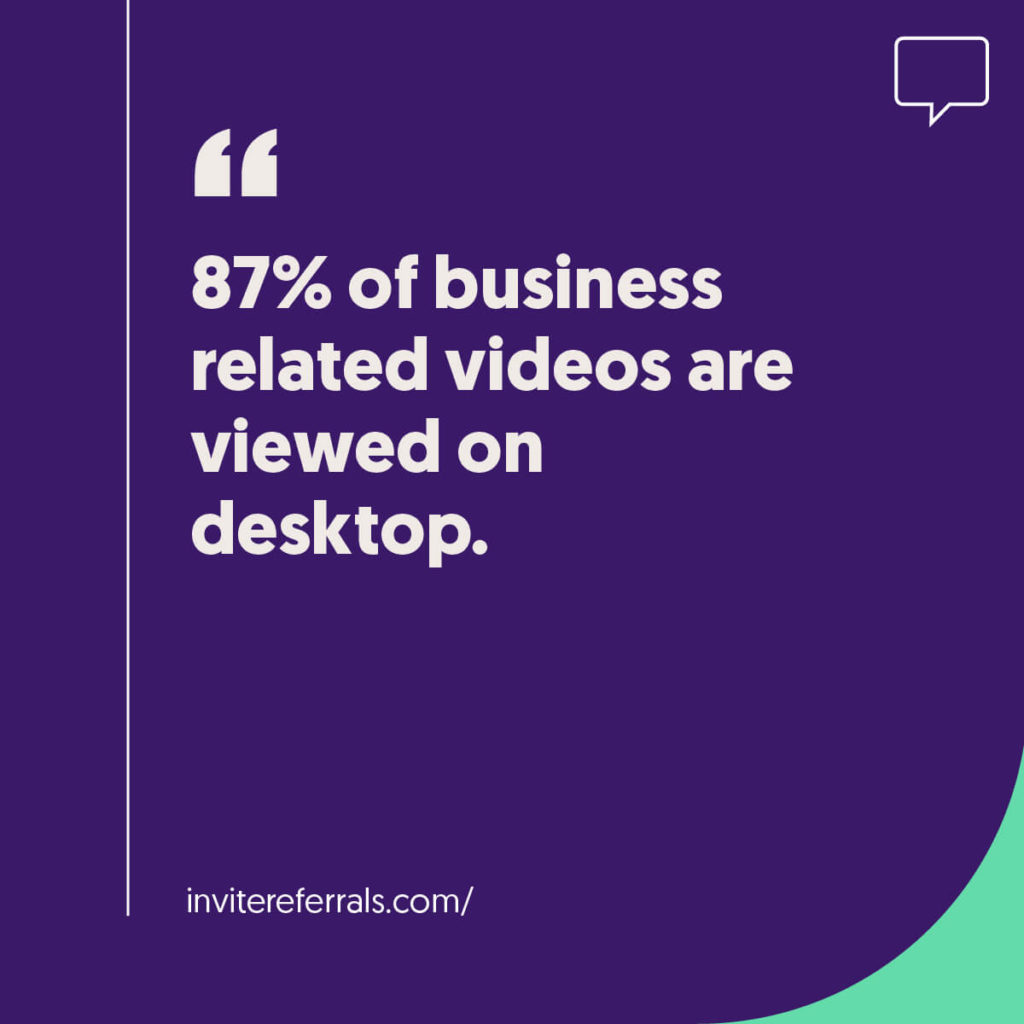
Older B2B benchmarks said 75% of executives watched work related video at least once a week and 59% preferred video when the same information was available as text. One particularly revealing statistic put 87% of business related video viewing on desktop.
Another benchmark said 50% of manufacturers were improving their YouTube presence to build their brands and communicate directly with customers.
The desktop figure is the one that stands out today. Wistia’s 2026 research says 8 in 10 teams now use LinkedIn as their primary B2B video channel, while video itself moves between websites, social feeds, sales tools, YouTube, email, and other environments. B2B viewers have not disappeared from desktop, but planning around one device or destination no longer describes the way business video is distributed.
The historical executive preference data was previously linked to Small Business Trends, while the desktop benchmark was cited through InviteReferrals.
Email and Video Produced Some Huge Historical Benchmarks
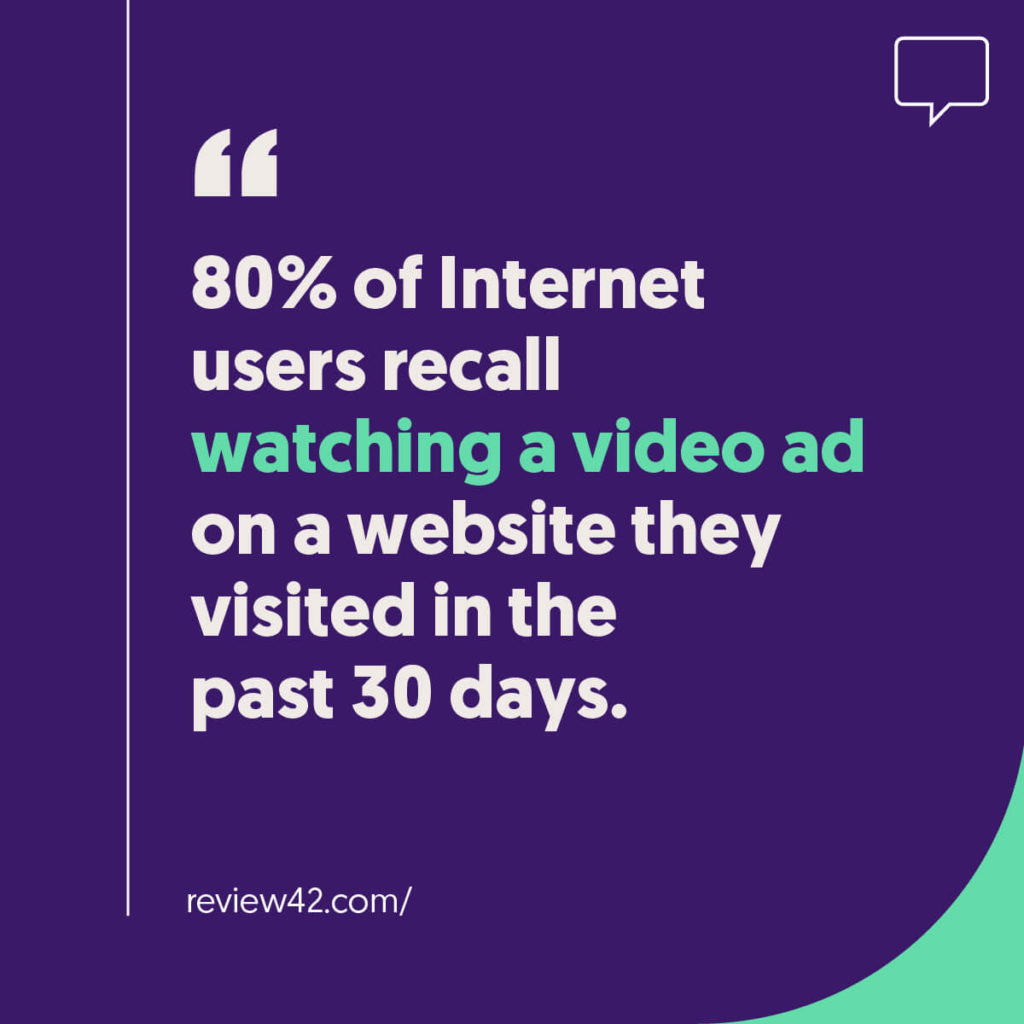
Earlier research cited by this page said 80% of internet users recalled a video ad they had seen during the previous 30 days and that 46% of those viewers took some action afterward.
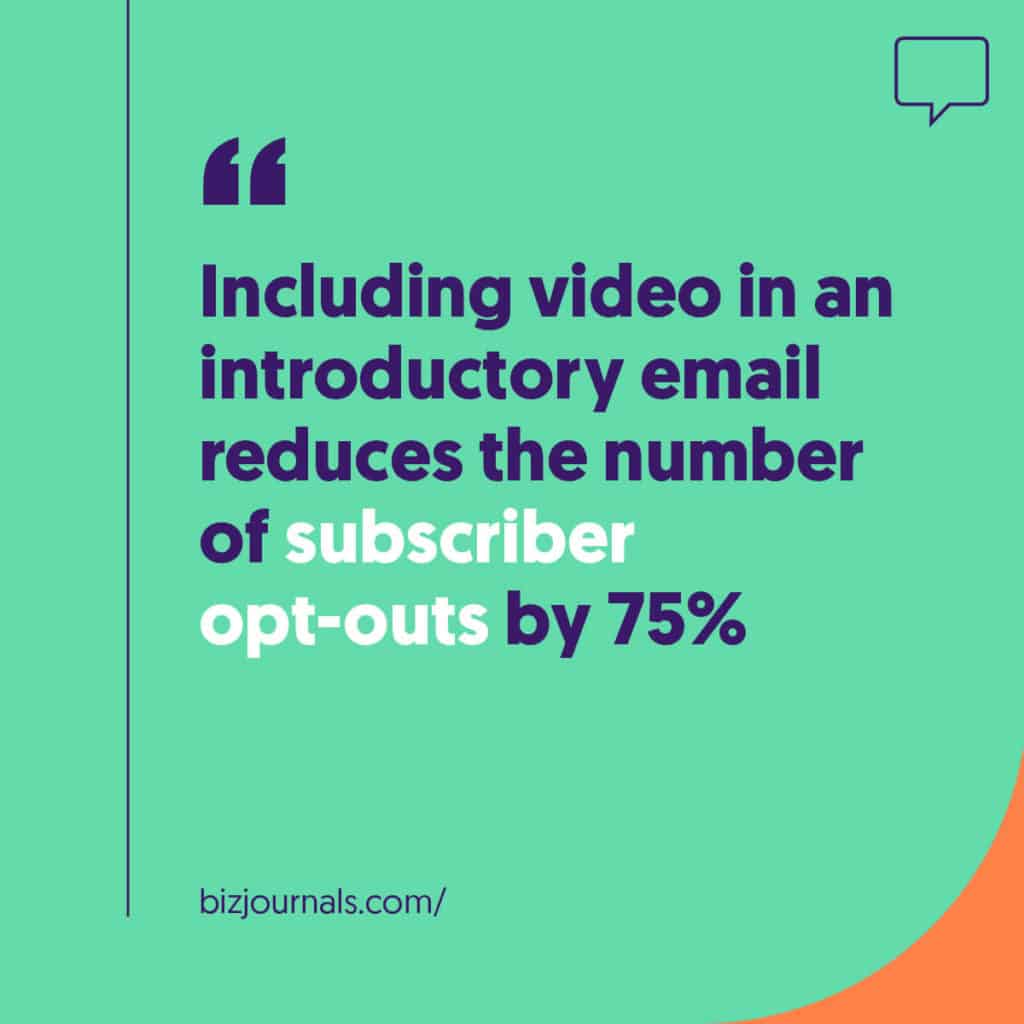
Email produced even more dramatic numbers. One benchmark claimed that video in an introductory email improved click through rate by 300%, while another said it reduced opt outs by 75%. A separate source cited elsewhere in the article put the email click through increase between 200% and 300%.
Email clients, autoplay behavior, inbox design, tracking, and the way marketers use video links have all changed since these figures circulated. I would test video with your own audience rather than assume one of those percentages will transfer to a current campaign.
Historical sources included Review42, Campaign Monitor, and Business Journals.
Shorter Video Was Once Treated Almost Like a Rule
Several older benchmarks pushed marketers strongly toward shorter runtimes. One put the critical opening window at just 2.7 seconds. Another said 20% of viewers left within 10 seconds, 33% by 30 seconds, 45% by one minute, and almost 60% by two minutes.
Other studies reported that 69% of people preferred short video for learning about a product or service and that 15 second videos were more likely to be shared than 30 or 60 second versions.
Attention at the beginning still matters, but runtime is much harder to reduce to a single rule in 2026. YouTube Shorts produces extraordinary volume while YouTube also leads U.S. streaming watch time. A 15 second social clip and a six minute product tutorial can both make sense. The better question is whether the video earns the amount of time it asks from the viewer.
Historical sources included Influencer Marketing Hub, The Tilt, Blogging Wizard, and Siteefy.
Mobile Video Changed How We Produce for the Screen
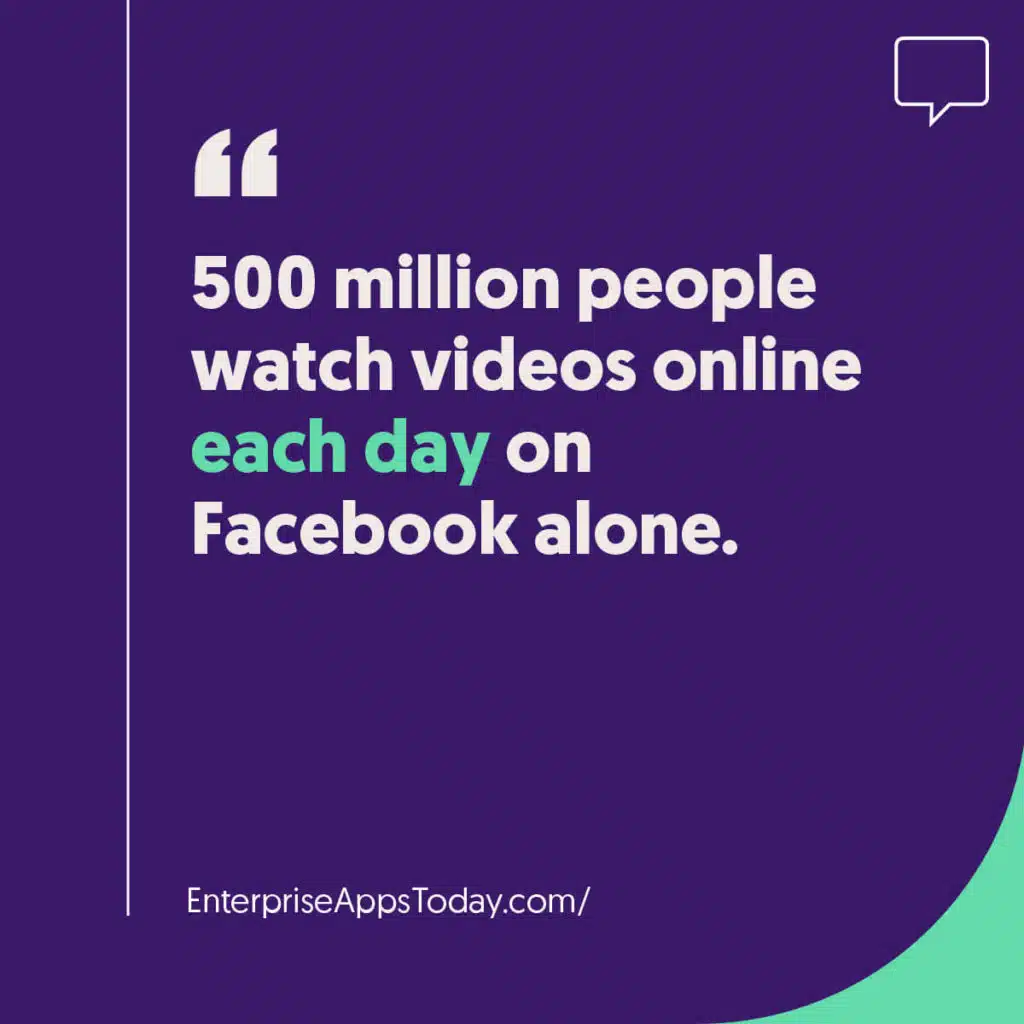
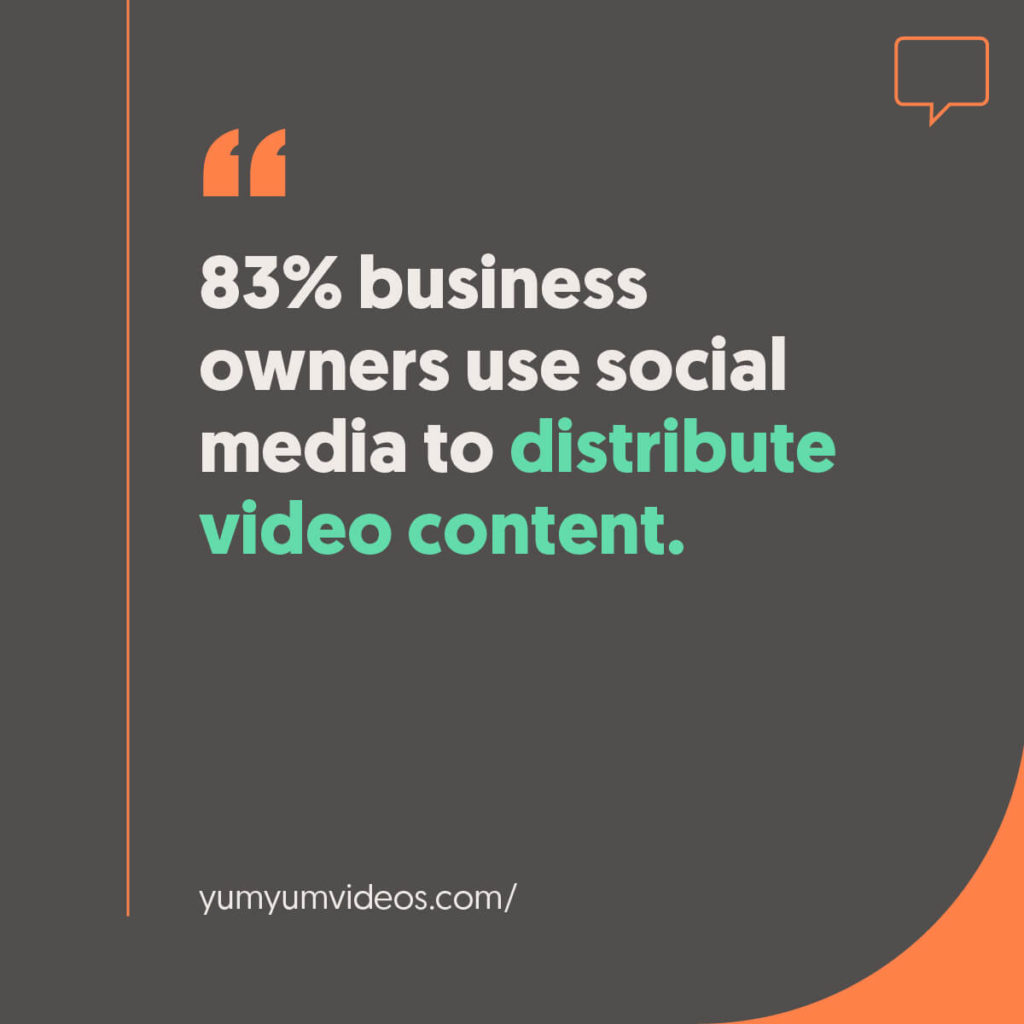
The old social and mobile numbers capture a period when marketers were figuring out what happened once video left the desktop player. Earlier versions of this article cited 500 million daily Facebook video viewers, 83% of business owners using social media to distribute video, and Facebook posts with video generating 59% more engagement.
Device statistics were just as specific. One benchmark put more than 75% of video playback on mobile devices. Another comparison said desktop viewers stayed for two minutes or less, while iPhone viewers averaged 2.4 minutes, Android viewers 3 minutes, and iPad viewers 5 minutes.
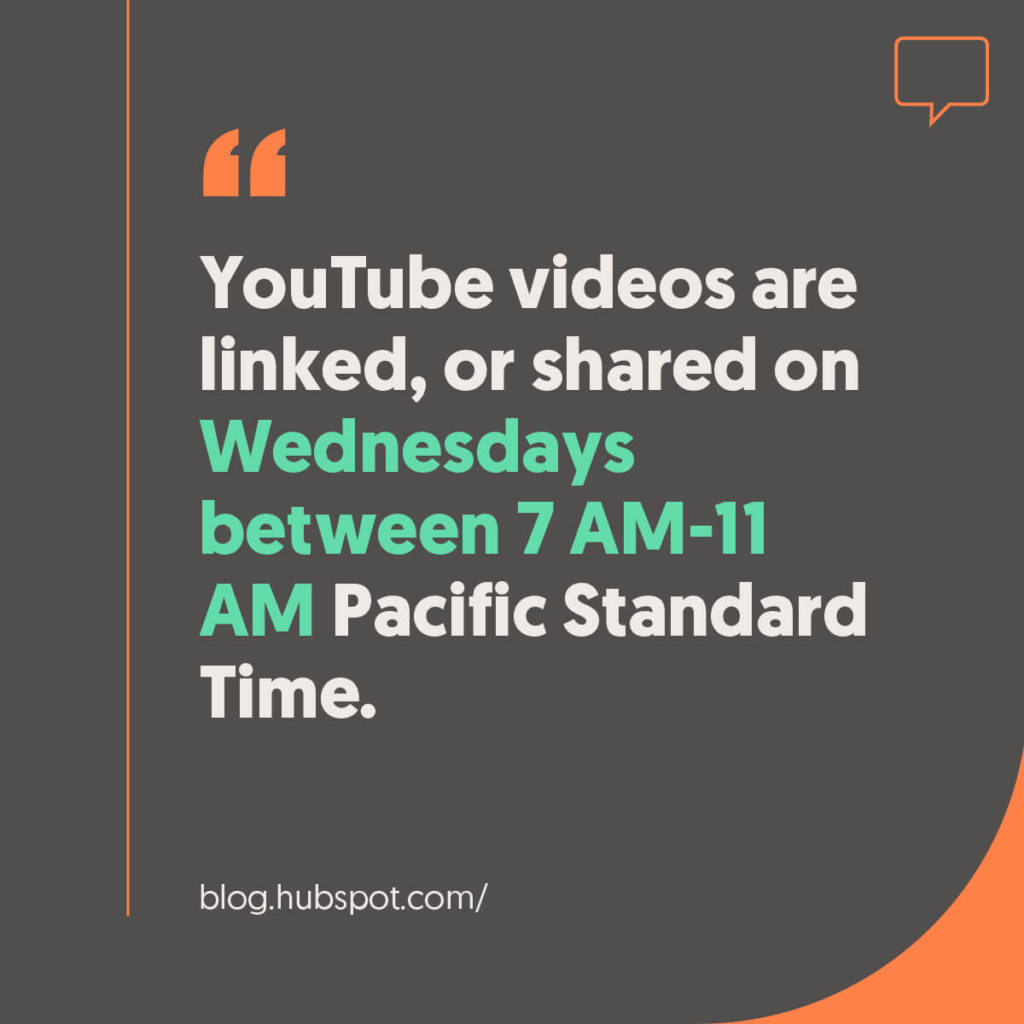
Vertical viewing also became a major topic. An older statistic claimed mobile users watched up to 90% of vertical video ads compared with 14% of horizontal ads. Another said 92% of mobile users watched video without sound and half relied on captions. Marketers were even given highly specific publishing advice, including an old benchmark that identified Wednesday between 7 and 11 AM Pacific Time as a strong sharing window.
I would not build a 2026 strategy around any of those exact percentages or publishing times. The lasting change is more practical: video now has to survive different screens and viewing situations. Captions, readable text, vertical versions, horizontal masters, social cutdowns, and mobile playback are normal production considerations rather than special adaptations.
Historical sources included Enterprise Apps Today, Rocks Digital, TechJury, InviteReferrals, OptinMonster, and HubSpot.
For an older platform specific benchmark, you can also see our Instagram statistics. For training specific data, see our eLearning video statistics.
So, How Effective Is Video Marketing?
There is no single percentage that can answer that for every company. A product demo, social ad, training module, testimonial, and homepage explainer have different jobs, so they should not all be judged against the same metric.
A product video might be tied to demo requests, trials, or product page conversion. A tutorial can be measured through activation, completion, or fewer support requests. A campaign video may need qualified reach, traffic, leads, or revenue.
The industry statistics in this article help describe the environment around your video. The decision about whether your own video worked should come from the metric attached to the reason you produced it.
Video Marketing Statistics FAQ
What are the most useful video marketing statistics in 2026?
Production frequency, channel use, viewing scale, AI adoption, and platform behavior are useful when they come from recent datasets. The current Wistia and YouTube figures in this article are useful for understanding how companies are producing and distributing video in 2026.
What are B2B video marketing statistics useful for?
B2B video marketing statistics can help with distribution and format decisions. For example, LinkedIn’s prominence in Wistia’s 2026 research is useful when planning where B2B clips will be published. Your CRM, pipeline, and sales data should still determine whether those videos are reaching the right buyers.
What are social media video statistics useful for?
Social media video statistics can show how platforms, formats, and viewing habits are changing. For an actual campaign, combine those benchmarks with your own retention, clicks, qualified traffic, conversion, and audience data.
Can I still use old video marketing statistics?
Yes, as long as the date and context are clear. Historical statistics can show how viewing behavior or marketing practices changed, but an old conversion percentage should not be presented as a current forecast. That is why the older benchmarks above are discussed separately from the 2026 data.
How should I use video marketing statistics in a strategy?
Use industry data to understand the larger market, then use your own analytics to make decisions. If retention drops early, look at the opening. If viewers watch but do not convert, examine the offer or next step. If a tutorial gets strong completion but support volume stays the same, check whether it is solving the right customer problem.
Statistics are most useful when they help you ask a better question about the video you are already making.

Victor Blasco
Co-founder of Yum Yum Videos | Explainer Video & Video Marketing Expert
Victor Blasco has over 25 years of experience in animation and film production. For the past 14+ years, he has worked with companies to create explainer and marketing videos that simplify complex ideas and drive business results.
His work has supported global brands like Amazon and McKesson, as well as startups that raised over $2B and reached unicorn or IPO stages.
Victor shares insights based on real client work. His contributions have been published on platforms like Social Media Examiner, and he has been featured or quoted in outlets such as Forbes.