Don’t Use A Whiteboard Animation Video! (Until You Read This)

Victor Blasco

by Victor Blasco

Co-founder of Yum Yum Videos | Explainer Video & Video Marketing Expert


Don’t Use A Whiteboard Animation Video! (Until You Read This)


So, you are thinking about creating a whiteboard animation video for your business, but you are not entirely sure if it’s the right style for your brand.

Well, you’ve come to the right place.

In this guide, we are going to pull back the curtain and show you exactly when you shouldn’t use this style, and when you absolutely should. Plus, we’ll dive into real business case studies, video examples, pricing, and more.

Look, at our explainer video company, Yum Yum Videos, we have produced hundreds of whiteboard videos over the years. We’ve tracked their success metrics across dozens of industries, we know what drives conversions, and honestly, we also know exactly where most video agencies drop the ball with this specific style.

Before we jump into the dos and don’ts, here is a quick video we put together showcasing some of our favorite examples. If you find it helpful, don’t forget to hit that Like button!

Before we look at the pros and cons, let’s quickly define what we are actually talking about.


What Is a Whiteboard Animation Video and What Makes It Different?

A whiteboard animation video is a style of video production—mainly used for whiteboard explainer videos—where a drawing hand physically illustrates black marker designs on a white background while a voiceover narrates the story. It simulates a live classroom setting, making complex topics incredibly easy to understand.


Key Characteristics of a Professional Whiteboard Video

Depending on whether you hire a premium whiteboard animation company or just use cheap online templates, the quality will change drastically. In my experience, professional whiteboard animation videos must have these specific characteristics to actually be effective:

  • A white canvas, black marker, and minimal color: If you flood the screen with a massive color palette, you are making a different style of video. We keep it stark and basic so nothing distracts the viewer from the core message. Color should only be used as a deliberate accent—like highlighting your logo or a specific call to action.
  • Real-time synchronization: The story must be drawn dynamically as the narrator tells it. This is crucial to keep the viewer’s brain hooked and sync’d with the audio.
  • The drawing hand: It’s a simple detail, but it’s the hallmark of the style. It gives the video a human, organic touch.
  • Fewer camera cuts: Cheap templates tend to cut from one static image to another. High-quality videos rely on continuous visual flow (like a single-take camera shot) where one drawing connects seamlessly into the next. That’s where the real engagement lives.

How Long Should a Whiteboard Animation Video Be?

One of the best things about this style is its flexibility. Normally, in the explainer video world, we tell clients to keep things under 90 seconds. But whiteboard videos are an exception to the rule.

Because the human brain is hardwired to anticipate what the drawing hand will do next, this style holds attention for much longer. A whiteboard explainer video can easily run for 2 to 3 minutes without boring the audience.

Furthermore, if you are creating internal training videos, educational content, or mini-documentaries for complex industries, a whiteboard animation can comfortably run for 5 to 12 minutes while maintaining excellent engagement rates.


The Main Benefits of Whiteboard Animation

Before we look at the bad fit scenarios, let’s quickly recap why this style is so powerful when used correctly:

  • It’s an educational powerhouse: It literally feels like a masterclass. It strips away the noise and forces the viewer to focus on the core message.
  • Unmatched information retention: Because it uses both visual and auditory channels simultaneously in a clean layout, people actually remember what they watched days later.
  • Higher conversion rates: Simplicity builds trust. When people finally understand how your complex software or medical device works, they buy. (Our case study with MedVector is a prime example of this).
  • The perfect match for complex niches: It is hands-down the best style for Healthcare, SaaS, and Tech companies.


How Much Does a Whiteboard Animation Video Cost?

Since we promised to talk about pricing, let’s get right to it. The cost of a whiteboard animation video depends heavily on whether you choose a template-based route or a custom production.

If you use DIY software, you might spend a few hundred dollars, but the result will look generic and lack the strategic flow needed for high conversions. For a fully customized, professional whiteboard video produced by a specialized agency, you can expect to invest anywhere from $3,000 to $10,000+ per minute.

Why the big range? It comes down to factors like the quality of the script, custom character design, professional voiceover talent, and fluid animation techniques. If you want a detailed breakdown of what drives these prices, check out our comprehensive guide on explainer video cost.


When You Should NOT Use a Whiteboard Animation Video

Now, let’s be 100% honest. Despite all the benefits I just mentioned, this style is not a silver bullet. If it were, every single video on the internet would look like this.

There are very specific scenarios where choosing this path will actually hurt your marketing efforts. Here is when you should run away from whiteboard animation videos:


1. For Ultra-Short or Overly Simple Messages

If your product is dead-simple and your video is going to be under 60 seconds, do not use a whiteboard.

As I mentioned before, a whiteboard format primes the audience’s brain for a “class.” They sit down expecting to learn something complex that will be explained simply. If they realize your message is just a basic, 30-second sales pitch, it feels disappointing and loses its magic.


2. When You Need an Eye-Catching “WOW” Factor

Think of it this way: a whiteboard video is a university lecture; a motion graphics video is a rock concert. Both have different goals.

If your primary objective is to make a splash on social media, grab immediate attention with vibrant colors, and make people say “WOW, look at those graphics!”, this is the wrong style. Whiteboard is designed to be subtle and educational, not visually explosive.


3. For Abstract, Non-Educational Sales Pitches

If you need to explain a complex economic concept, whiteboards are gold. But if you are trying to sell a high-ticket financial course based on lifestyle, emotion, and abstract branding, you need to go another route.

When you want to showcase sleek, modern sophistication rather than step-by-step teaching, Motion Graphics is a much better alternative.


4. For Heavy Character and Scene-Driven Stories

If your script involves a character walking through a neighborhood, interacting with their family, entering a building, and driving a car, don’t force it into a whiteboard canvas. It ends up looking clunky and awkward.

That is a job for traditional Character Animation. Forcing a whiteboard video to feature complex, highly detailed backgrounds defeats the whole purpose of the style’s signature simplicity. (Take a look at the character-driven video we created for ICBA to see what I mean by scene-heavy animation).


5. For Strictly Solemn or Tragic Topics

By nature, hand-drawn animations carry a casual, slightly playful tone. Even when we handle heavy B2B or medical workflows—like our work for MedVector, where we turned a clinical process into a friendly, empathetic board game layout—there is a touch of lightheartedness to it.

If your video is addressing a deeply sad topic, a tragic event, or a strict legal warning, the hand-drawn “cartoon” vibe can easily come across as tone-deaf or insensitive.


When You SHOULD Use a Whiteboard Animation Video

Now that we’ve eliminated the wrong paths, let’s talk about where whiteboard animation absolutely dominates. If your marketing goals align with any of the following scenarios, this style will yield some of the highest ROI you can get from video marketing.


1. When Deep Education Matters More Than the “WOW” Factor

Sometimes, your biggest hurdle isn’t getting people to click on your video—it’s getting them to actually understand what you do once they are there. This is incredibly common in complex fields like healthcare, deep tech, and software.

By choosing this style, you willingly sacrifice flashy, distracting colors in exchange for crystal-clear comprehension. We’ve built hundreds of whiteboard videos for corporate giants like McKesson and Isito specifically for this reason: when the audience leaves the video truly understanding a complex medical or technical workflow, conversions skyrocket.


2. For Long-Form Content or Extensive Explanations

If you tried to make a traditional, hyper-stylized animated video that lasted 3 or 4 minutes, it would cost a fortune and likely exhaust the viewer’s eyes. Whiteboard is the exception.

Because the drawing process is inherently developmental, it keeps the viewer’s brain in a constant state of anticipation. If you have a detailed pitch, a complex product onboarding workflow, or an in-depth tutorial, whiteboard animation videos can easily sustain high engagement for 3, 5, or even 10 minutes without dropping the ball. This same principle applies to doodle videos, which share a similar hand-drawn appeal.


3. When You Want to Inject Humor and Surprise

The physical presence of the drawing hand introduces a brilliant storytelling mechanic: comedic timing.

Because the illustrator can reveal a drawing line by line, you can create visual punchlines and sudden twists that keep the audience smiling. It makes even the most rigid corporate topics feel deeply human, empathetic, and approachable.


Case Study: How Spigit Proved the Power of Whiteboard

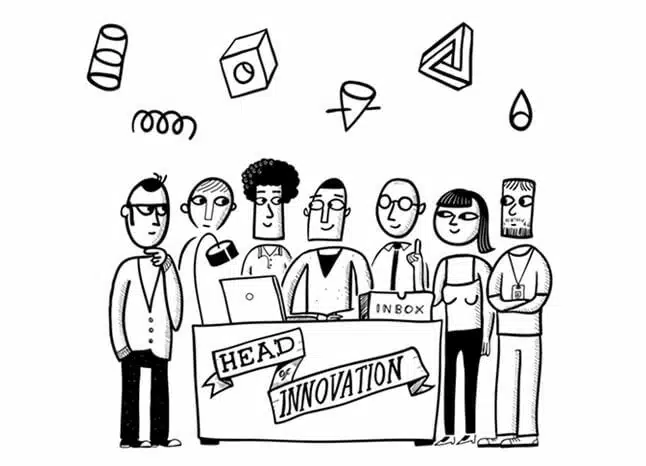
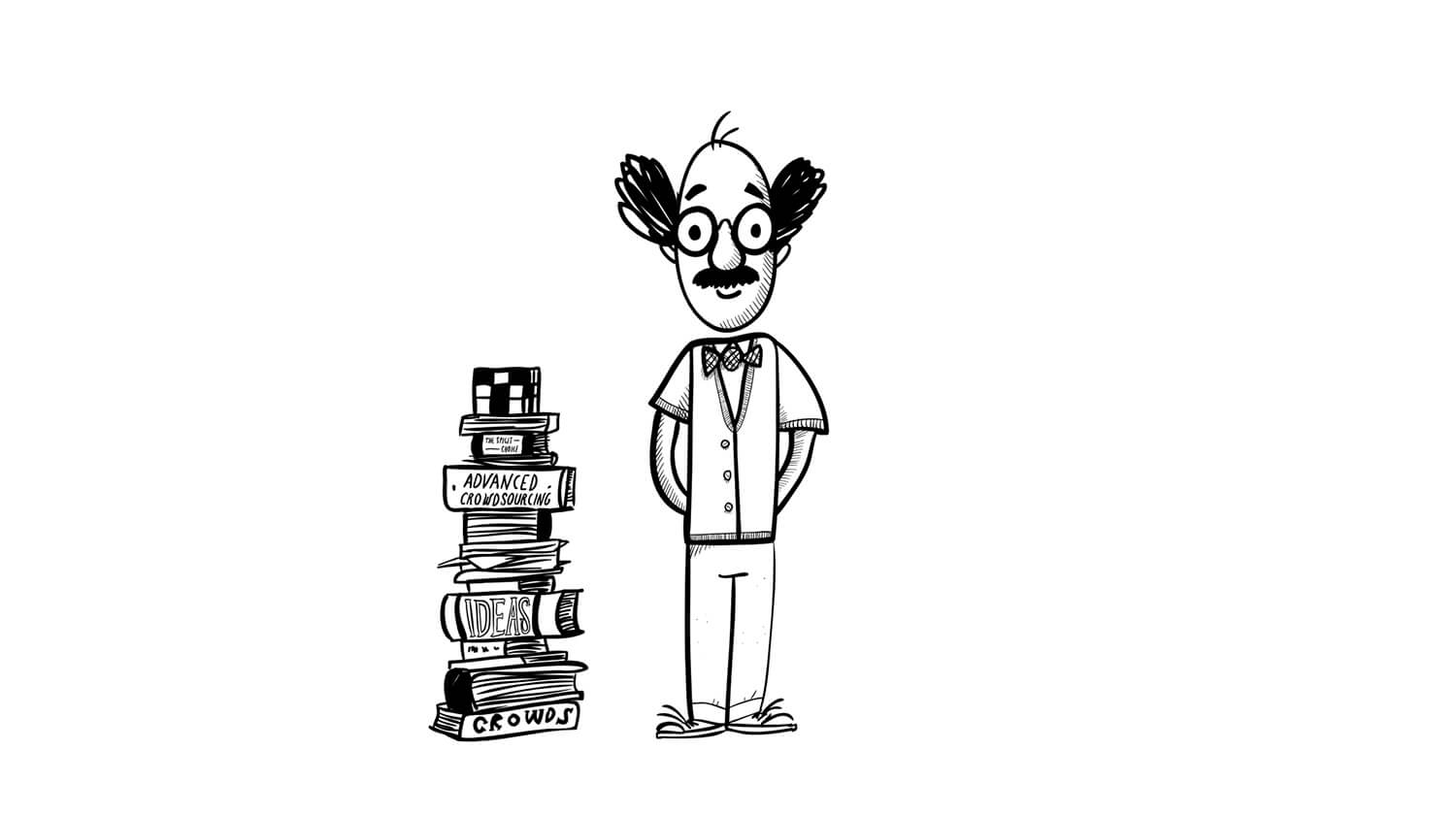
To show you I’m not just talking about theory, let’s look at a real-world example. When the team at Spigit—a massive crowdsourcing and innovation management platform—came to us, they had a brilliant but highly abstract concept to explain.

They didn’t need flashy graphics; they needed their enterprise audience to understand the mechanics of collective intelligence.

We designed a custom whiteboard video that leaned heavily into clean, clever metaphors, using the drawing hand to build an entire ecosystem of ideas right in front of the viewer’s eyes.

The result? The video didn’t just explain the platform—it became a core asset in their sales funnel, proving that when you align a complex B2B message with the raw educational power of a whiteboard, you don’t need colors to close a deal.


The Bottom Line: Is it Right for You?

To wrap things up, let’s look at a quick cheat sheet to help you make your final decision:

  • Choose a Whiteboard Video if: Your topic is complex, your video needs to be longer than 90 seconds, you belong to the SaaS, Tech, or Healthcare sectors, and your primary goal is to educate your audience so they can make an informed buying decision.
  • Avoid a Whiteboard Video if: You need to make a massive, colorful splash on social media, your message takes less than 45 seconds to explain, or your story relies heavily on detailed character drama and moving backgrounds.


At the end of the day, picking the right style is about matching your video with your customer’s mindset. If you want to see how we handle different styles across the board, feel free to explore our tailored whiteboard animation style page to see what a fully customized, premium production looks like.

Hopefully, this guide saves you from making a costly mistake and points your video strategy in the exact direction it needs to go!


Victor Blasco

Victor Blasco

Co-founder of Yum Yum Videos | Explainer Video & Video Marketing Expert

Victor Blasco has over 25 years of experience in animation and film production. For the past 14+ years, he has worked with companies to create explainer and marketing videos that simplify complex ideas and drive business results.

His work has supported global brands like Amazon and McKesson, as well as startups that raised over $2B and reached unicorn or IPO stages.

Victor shares insights based on real client work. His contributions have been published on platforms like Social Media Examiner, and he has been featured or quoted in outlets such as Forbes.


Keep up with the latest in
video marketing

Sign up for our newsletter, biweekly
digest from our video experts.


close