What Is 2.5D Animation? Meaning, Style & Examples

Co-founder of Yum Yum Videos | Explainer Video & Video Marketing Expert

2.5D animation sits in a useful middle ground. It uses 2D artwork, but layers, perspective, shadows, and camera movement give the scene a sense of depth that flat animation does not have.
That makes it a good fit when you want more dimensionality than traditional 2D but do not need the full modeling and rendering of 3D. You will see it in explainer videos, product videos, interfaces, maps, buildings, data visualizations, and plenty of game and film work.
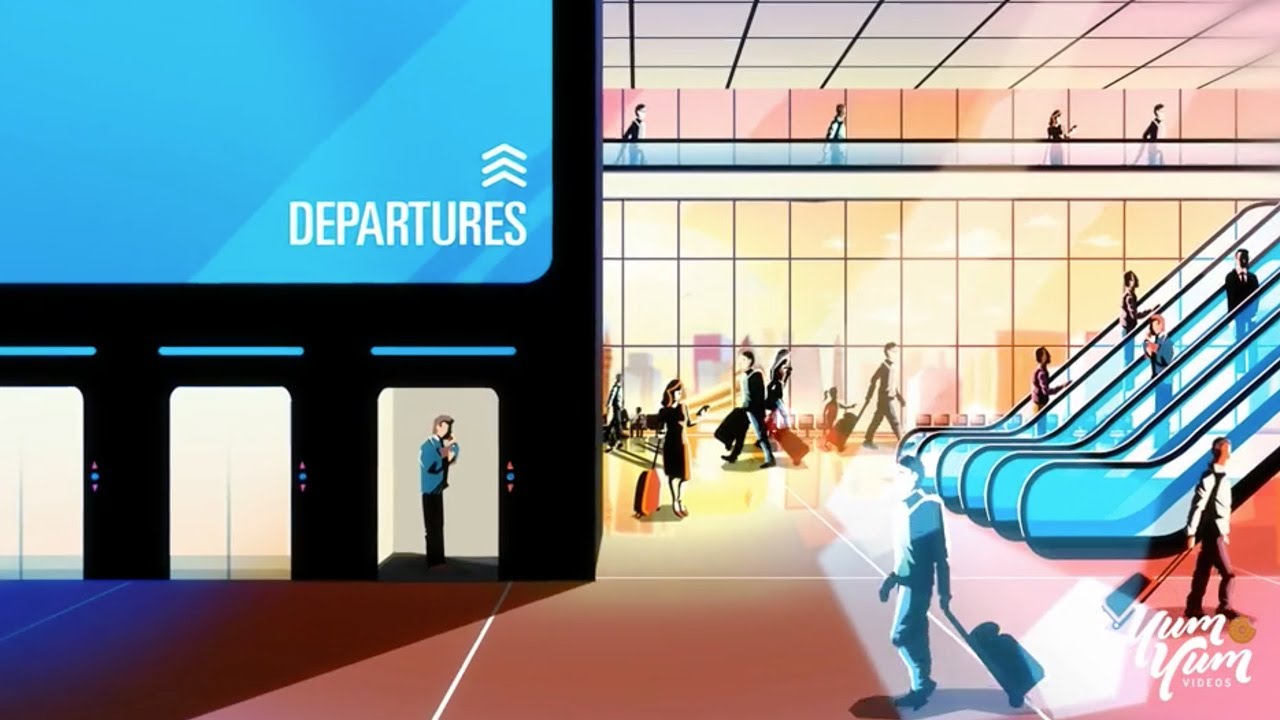
Here is an example of 2.5D animation we created at Yum Yum Videos:
.
What Is 2.5D Animation?
2.5D means two and a half dimensional. The artwork itself remains 2D, while depth comes from how those flat elements are arranged and animated.
A simple way to picture it is to imagine several illustrated layers placed at different distances from a camera. As the camera moves, the foreground and background shift at different speeds. Add perspective, scale, shadows, and angled planes, and the scene starts to feel dimensional even though the artwork is still flat.
This is why 2.5D works especially well for things like interfaces, products, buildings, maps, and geometric systems. The extra depth can help organize information or direct attention without turning the project into a fully 3D production.
2D vs. 2.5D vs. 3D Animation
The clearest difference is how much freedom the artwork has in space.
- 2D animation: Characters, objects, and backgrounds are designed on a flat plane. It is a strong choice for character driven stories and graphic explanations.
- 2.5D animation: Flat artwork is arranged across layers and animated with perspective, camera movement, scale, and shading to create depth.
- 3D animation: Objects are fully modeled in three dimensions, so they can rotate freely and be viewed from virtually any angle.
If you want to see how these styles look in motion, this short video compares several animation styles side by side:
.
When Does 2.5D Animation Make Sense?
1. When You Need to Show Spatial Relationships
Networks, interfaces, buildings, machines, and products can be easier to understand when the viewer can see how different parts relate across depth. The scene can stay illustrated while the camera moves between layers and reveals how the pieces connect.
2. When One Object Needs More Emphasis
Sometimes most of a video can remain flat while one product, device, or graphic gets extra depth. That contrast naturally pulls attention to the object without changing the visual language of the entire piece.
3. When the Design Uses Geometry or Interfaces
Boxes, dashboards, screens, data layers, and maps tend to work well in 2.5D because their shapes already lend themselves to perspective. You can rotate or stack illustrated planes, move through them, and still keep a clean graphic style.
4. When Full 3D Would Be More Than the Project Needs
3D animation adds modeling, rigging, lighting, rendering, and other production steps. If the message only needs depth, parallax, angled planes, and camera movement, 2.5D can be a lighter production choice. We cover the broader cost differences in our guide to animation cost.
10 Best 2.5D Animation Examples
The examples below use the same basic technique in very different ways. Some rely on layered environments, others on geometric shapes, interfaces, or just one important object that needs extra depth.
1. WSP: A 2.5D Animation by Yum Yum Videos
. We created this piece for WSP, and it is one of the clearest examples on the list of 2.5D being used for a practical reason. The buildings and streets are flat illustrations, but the camera moves through them as if they occupied a real space. That extra depth helps organize a technical story without turning the whole project into 3D.

2. ChartLamo: 2.5D Animated Video
.
In this medical piece, the 2.5D treatment is mostly about emphasis. Objects gain depth when they matter, so the eye knows where to look. The geometric style also fits the clean, technical subject.
3. Cognize: 2.5 Dimension Video
.
Cognize uses color and perspective more aggressively. The bright pink palette already has a strong identity, while layered illustrations and camera movement give the AI themed visuals more spatial depth.
4. StockCharts: A 2.5D Animation by Yum Yum Videos
.
We created this motion graphics video for StockCharts without characters. Cubes, cylinders, charts, and other geometric elements move through the frame at different depths, while the underlying artwork remains 2D. It is a good example of how 2.5D can make financial information feel more spatial without making the design visually heavy.
5. Stocks in Value by Yum Yum Videos
.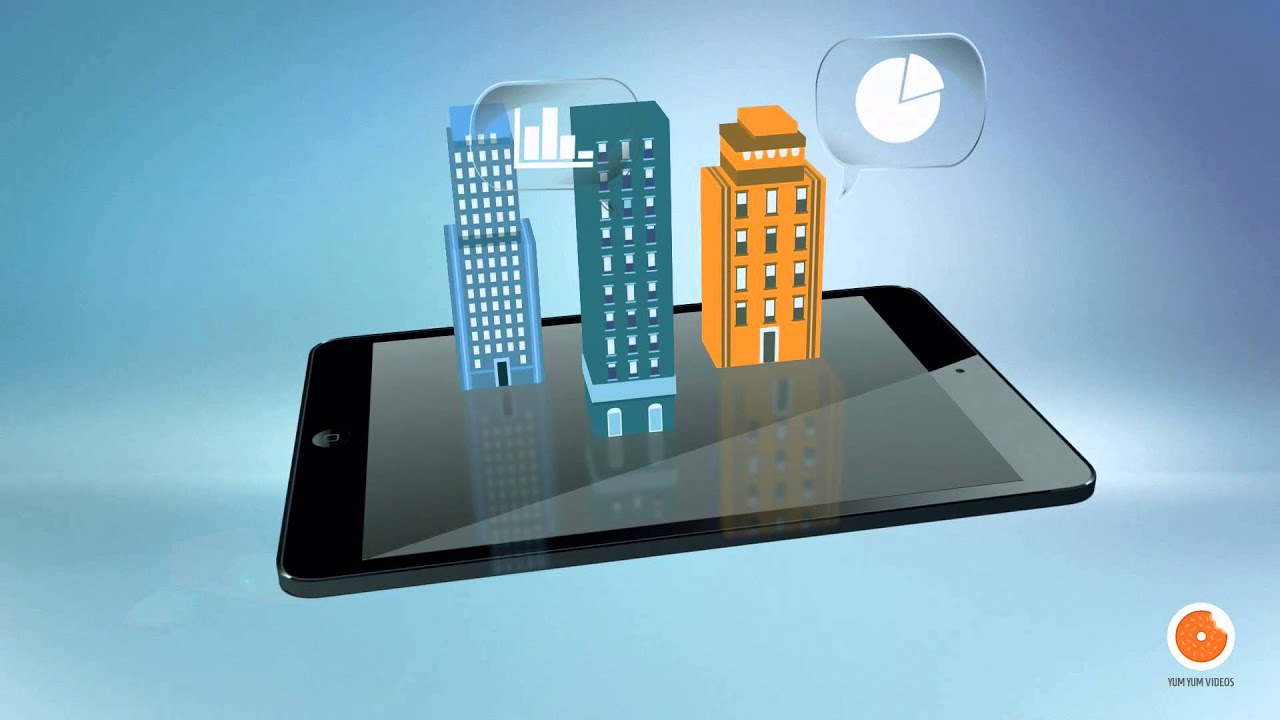
Here, a specialist speaks directly to camera while illustrated panels and objects appear around him. Those elements behave like a dimensional interface, giving the explanation more structure without competing with the presenter.
6. Adzerk: Yum Yum Videos
.
Most of this video stays in flat 2D. The 2.5D treatment appears selectively on computers, phones, tables, and other objects when they become relevant. I like this example because it shows that the style does not need to take over the entire piece to be useful.
7. Accedian Assurance: 2.5D Explainer Video
.
Accedian uses geometric forms instead of human characters to represent network infrastructure. Changes in angle, scale, and position give abstract technology a more tangible presence and make the relationships between elements easier to follow.
8. TripleBlind Two Minute Overview: 2.5D Video
.
TripleBlind has to explain a technical privacy platform in a short amount of time. The 2.5D treatment helps separate data, systems, and other abstract concepts into layers, giving the viewer a clearer sense of how the platform works.
9. Atlassian Platform Overview: 2.5D Animation
.
Atlassian uses 2.5D selectively. Certain shapes and objects gain depth at specific moments while the rest of the design stays consistent. The effect is subtle, but it helps underline ideas introduced by the voiceover without changing the style of the whole video.
10. What Is Oracle Customer Success Services?: 2.5D Video
.
Oracle takes an even more restrained approach. The most dimensional object is a box representing its cloud solution. Giving that one element extra depth turns an abstract service into something the viewer can recognize and track through the explanation.
Need a 2.5D Animation Video? How We Can Help
We produce custom 2.5D videos from script and visual development through animation and final delivery.
If you already know you want 2.5D, we can build the project around that style. If you are still choosing between 2D, 2.5D, and 3D, we can help you decide how much depth the idea actually needs before production starts.
For project inquiries, contact Yum Yum Videos.
.
2.5D Between Flat 2D and Full 3D
2.5D is a strong option when depth helps explain something: how parts connect, how an interface is structured, how a product sits in space, or where the viewer should look next.
If the same idea reads clearly on a flat plane, traditional 2D may be the simpler choice. If the project needs full rotation, realistic volume, or complete freedom of movement, 3D is usually the better fit.


Victor Blasco
Co-founder of Yum Yum Videos | Explainer Video & Video Marketing Expert
Victor Blasco has over 25 years of experience in animation and film production. For the past 14+ years, he has worked with companies to create explainer and marketing videos that simplify complex ideas and drive business results.
His work has supported global brands like Amazon and McKesson, as well as startups that raised over $2B and reached unicorn or IPO stages.
Victor shares insights based on real client work. His contributions have been published on platforms like Social Media Examiner, and he has been featured or quoted in outlets such as Forbes.