14 Best Animation Apps to Make Animated Videos (Free & Paid)

Co-founder of Yum Yum Videos | Explainer Video & Video Marketing Expert

Pencil2D and FlipaClip focus on drawn animation, Blender and Maya cover full 3D production, while Visme and Vyond are built around business content. The right animation app depends heavily on what you are actually trying to make.
At Yum Yum Videos, we’ve been working in animation since 2012 and have produced more than 1,000 videos, from 2D character animation and motion graphics to whiteboard, mixed media, and 3D. We also spend time testing new animation tools and workflows as they become available.
Each review includes platforms, pricing, and the type of user the software suits. The notes below focus on the part I would want to know before choosing one tool over another.
The Best Animation Apps to Start Creating Today
1. Pencil2D for 2D Video Creation
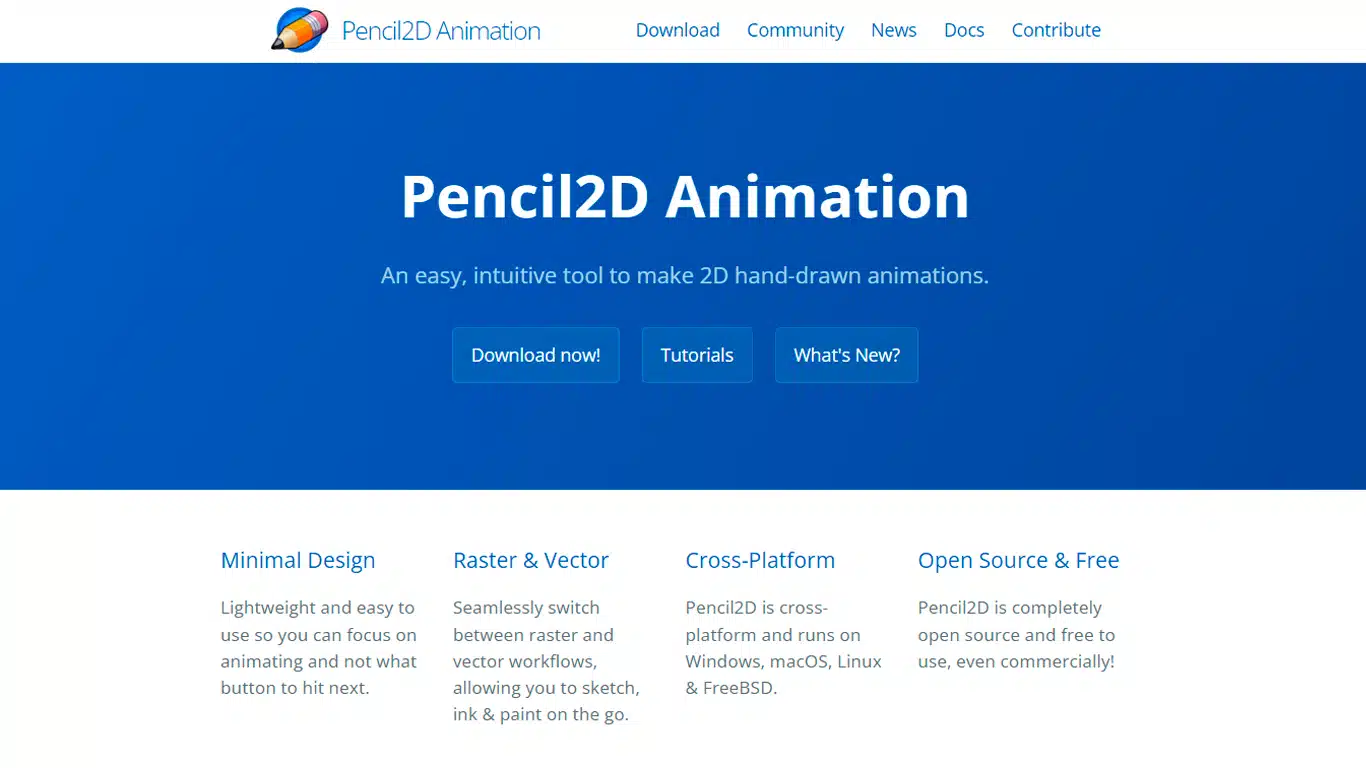
Pencil2D is a free, open source 2D animation app built around traditional frame by frame drawing.
Pencil2D’s interface is pretty straightforward. The timeline and drawing tools work directly with individual frames, and you can switch between raster and vector workflows while sketching and painting.
That narrow focus is useful when you’re learning timing, spacing, and basic drawing animation. Larger projects eventually run into its limited text, shape, and production controls.
Platforms: Windows, macOS, Linux, and FreeBSD.
Pricing: Pencil2D is free and open source.
Best for: Beginners who want to learn 2D frame by frame animation with free software.
Our tak: Pencil2D is easy to understand because there is very little between you and the drawing. That simplicity is useful when you are learning timing and spacing. Once a project needs typography, reusable assets, or more production control, you will probably move on to another program.
2. Visme for Business Animation
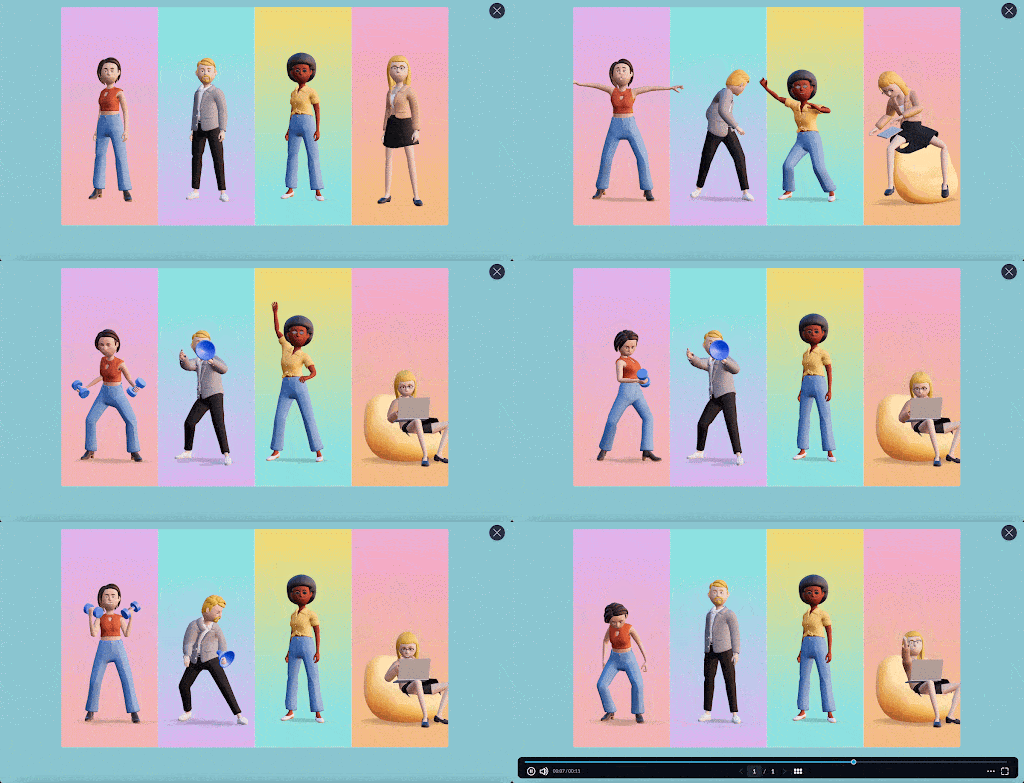
Visme is a cloud based design platform for animated graphics, presentations, ads, videos, and other business content.
It includes more than 20 animated templates plus tools for moving text, images, videos, and slides. The asset library also includes illustrations, animated characters, stock photos, and stock footage.
Its timeline manages object order, transitions, and audio synchronization. You can also use drag and drop controls, fades, zooms, a 3D character creator, and AI features. GIF and MP4 exports are available.
Platforms Android, iPhone and iPad, Mac, and Windows.
Pricing The free plan includes basic animation features. Advanced features are available through Visme’s Starter and Pro plans.
Best for Marketing teams and business professionals creating animated presentations and branded content.
Our take Visme puts templates and business design first, which works well for presentations, charts, social assets, and branded content that needs to move quickly. A marketing team can make polished pieces without learning a traditional animation pipeline, and that is where I think the platform earns its place on this list.
3. Linearity Move for Motion Graphics
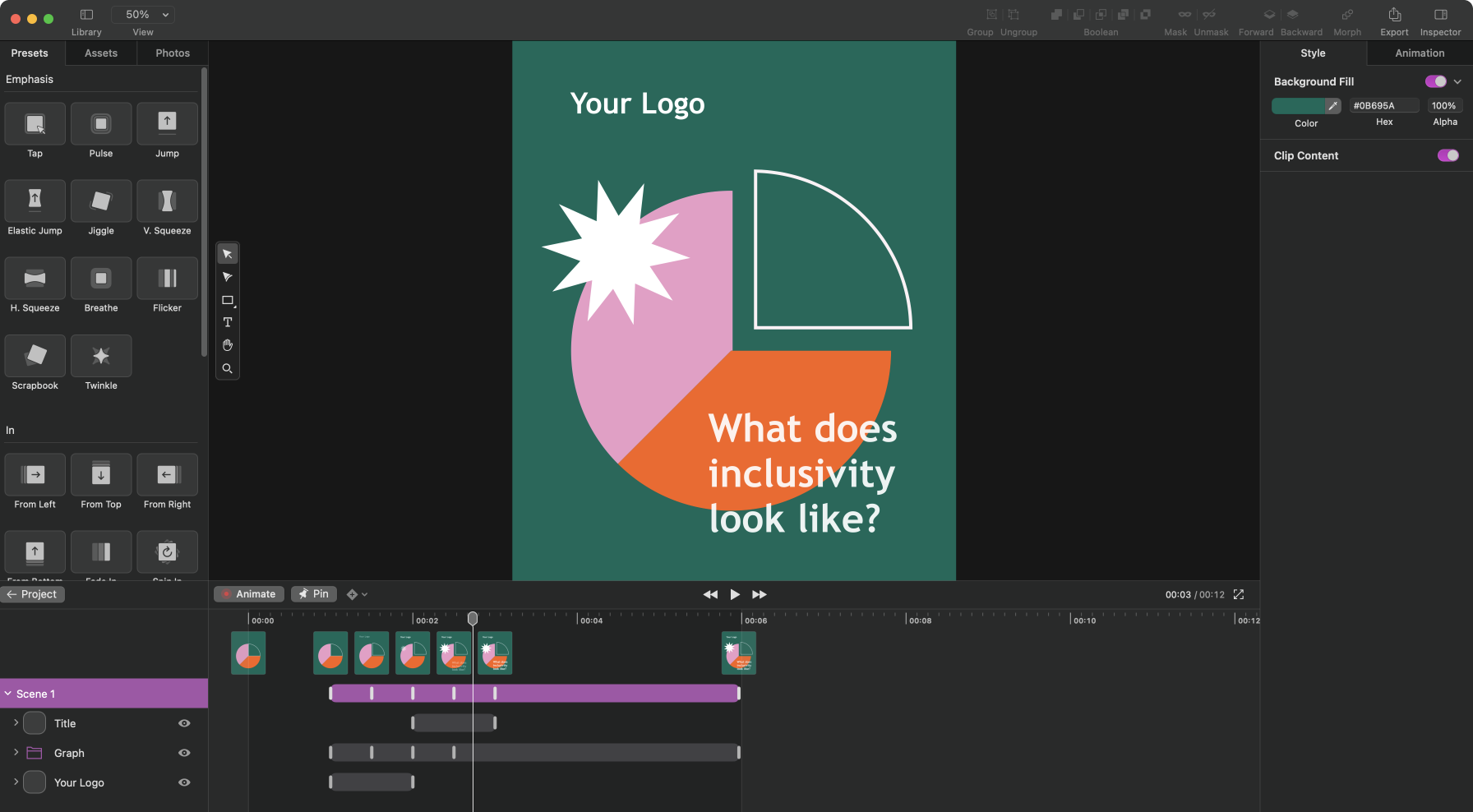
Linearity Move is a motion graphics animation app for Mac and iPad.
You can bring in an existing design or create one from scratch, then add movement with automatic keyframes, presets, and shape morphing. The program also imports vector and video files.
Designers who already understand vector artwork should recognize the canvas based workflow quickly. The timeline keeps keyframes and timing in view, and the export menu supports GIF, MP4, and MOV. Linearity accounts also sync projects across devices.
Platforms: macOS, iPadOS, and iOS.
Pricing: Free plan available. Pro is available as a paid plan.
Best for: Designers turning static vector artwork into motion graphics.
Our take: Move works especially well when the artwork already exists as vectors. You can bring in a finished design and start animating it without rebuilding the whole piece somewhere else. For heavier compositing, effects, or a long sequence, I would move to a full desktop package.
4. FlipaClip for Mobile Frame by Frame Animation
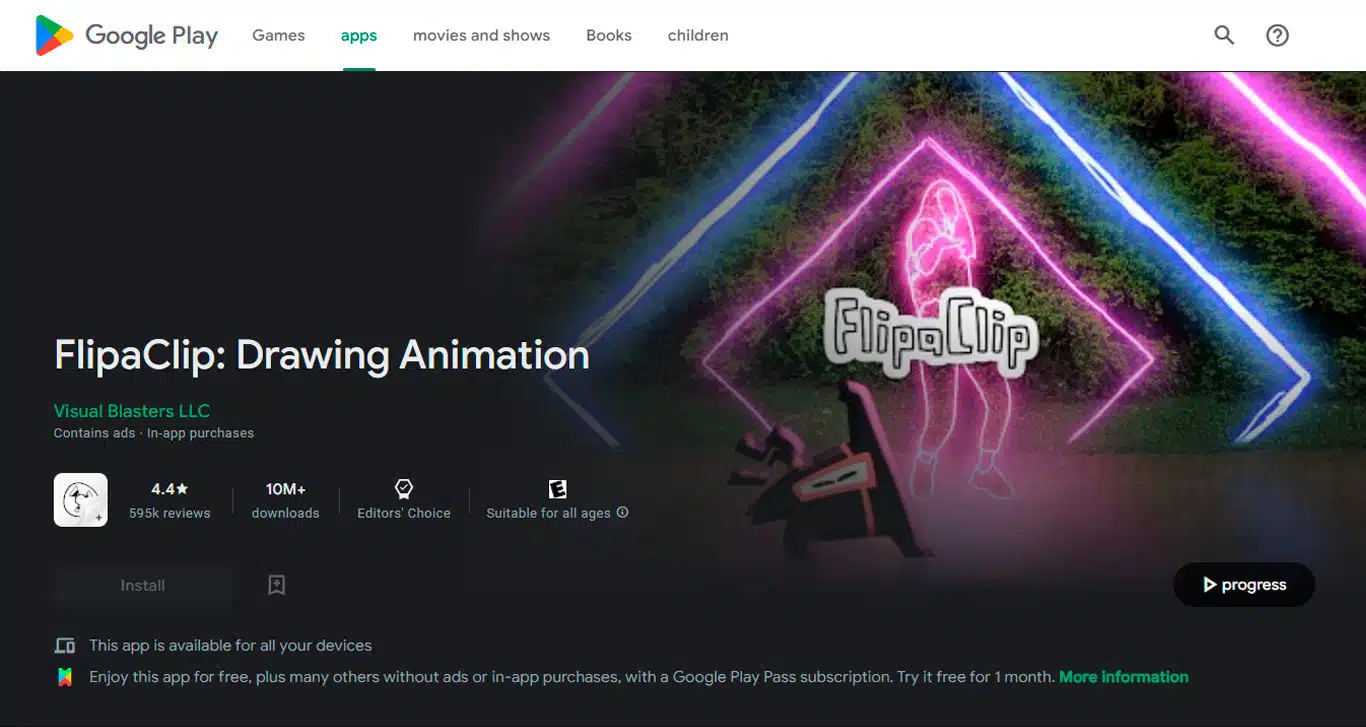
FlipaClip is a mobile frame by frame animation app for phones and tablets.
The app gives you drawing tools, layers, and audio. It can also show faint versions of the drawings immediately before and after the current frame, which makes changes in movement and spacing easier to judge as you draw.
Platforms: Android and iOS.
Pricing: Free. FlipaClip Plus adds premium features through a paid subscription.
Best for: Students, beginners, and digital artists practicing traditional 2D animation on a phone or tablet.
Our take: FlipaClip gets you drawing quickly. Add a few frames, play them back, adjust the movement, and you start learning timing almost immediately. It is a good fit for practice and short pieces. Larger projects are easier to organize on desktop software with stronger asset and timeline controls.
5. Toon Boom Harmony for Studio 2D Production
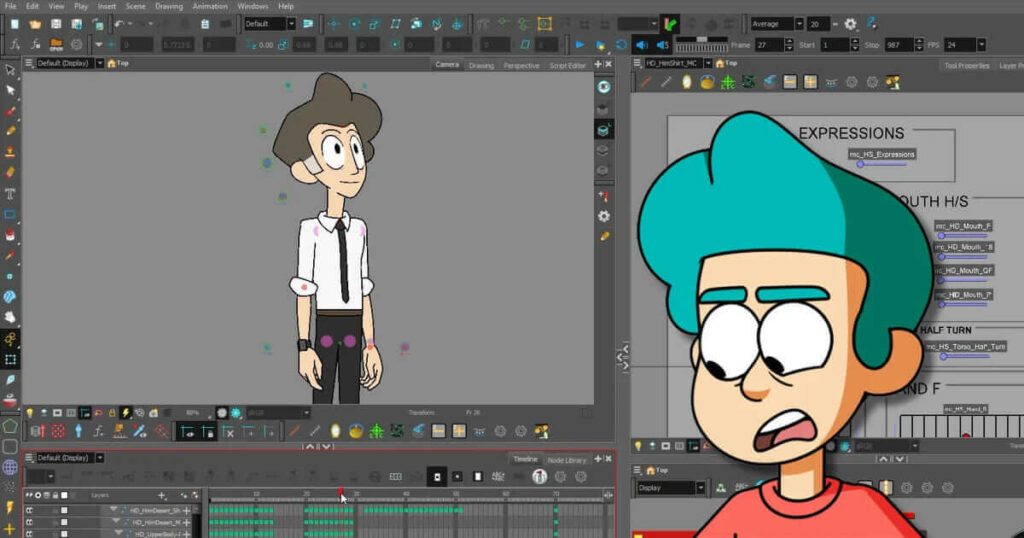
Toon Boom Harmony is 2D animation software for production work.
The toolset includes frame by frame drawing, character rigs, compositing, effects, and other controls used in episodic and studio animation. Production teams can keep drawing, rigging, and scene work inside the same environment.
Harmony also appears in established studio pipelines, which makes it relevant for animators planning to work professionally in 2D.
The interface takes time to learn. Experienced users get detailed control over rigs, drawings, scenes, and effects. New animators face many more options than they would in an entry level program.
Platforms: Windows, macOS, and Linux.
Pricing: Essentials costs US$30 per month, Advanced US$77 per month, and Premium US$139 per month. Annual plans are also available.
Best for: Animators who need 2D software for studio level production.
Our take: Harmony becomes easier to justify once you are managing recurring characters, detailed rigs, or a larger production pipeline. Those controls are excessive for an occasional short animation, but they become useful very quickly when a team is producing the same characters and assets across many scenes.
6. Jitter for UI and Text Motion

Jitter is a browser based motion graphics animation app for UI elements, text, and short graphic sequences.
The layout will feel familiar to people coming from Figma or similar design software. It uses layers, alignment controls, and keyframes, and you can import existing Figma work or begin with a preset.
Typical uses include microinteractions, interface transitions, animated typography, and short motion pieces. Export options include GIF, MP4, and Lottie.
Platforms: Web, through a browser on Mac, Windows, and Linux.
Pricing: Free plan available. Paid plans add higher quality exports and additional features.
Best for: UI and UX designers and social media teams creating interface and text animation.
Our take: Jitter saves setup time when the design already exists in Figma. A UI designer can bring in an existing screen and start animating it without rebuilding every element. That workflow fits short interface sequences very well. Longer pieces with heavier effects will outgrow Jitter’s narrower toolset.
7. Stop Motion Studio for Physical Animation
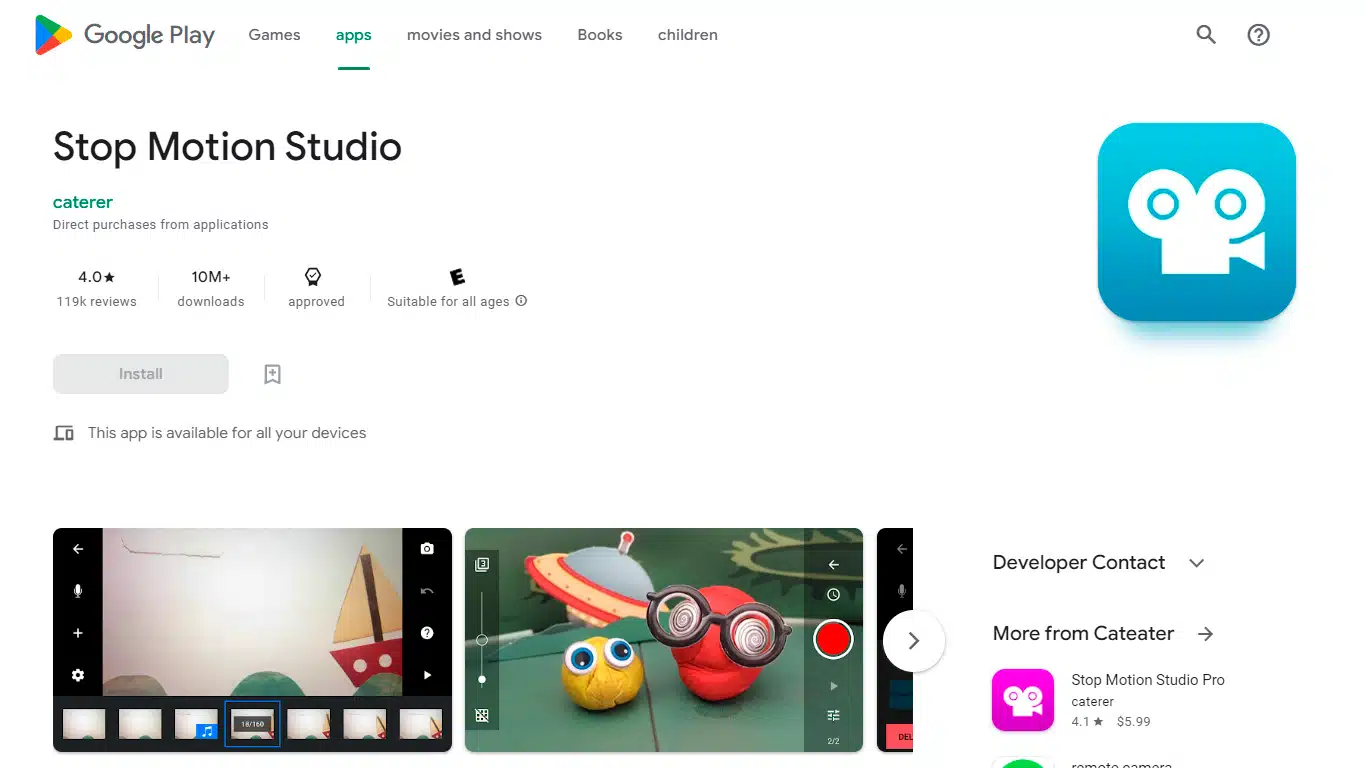
Stop Motion Studio is an animation app made specifically for stop motion.
The overlay mode places the previous frame over the current camera view, giving you a reference while you reposition objects. Interval capture can take frames automatically, and the app also includes editing tools, filters, and audio support.
Creators use it for product shots, classroom exercises, clay animation, toy animation, and other projects built around physical objects.
Platforms: Windows, macOS, Android, and iOS.
Pricing: Free version available on mobile. The Pro version is a one time purchase, with pricing varying by platform.
Best for: Beginners and animators who want a dedicated tool for frame by frame stop motion.
Our take: The focused feature set is the reason Stop Motion Studio works. The overlay gives you a reference for each movement, while interval capture handles repeated frame capture. For a small stop motion project, those two features solve a surprising amount of the practical setup.
8. Blender
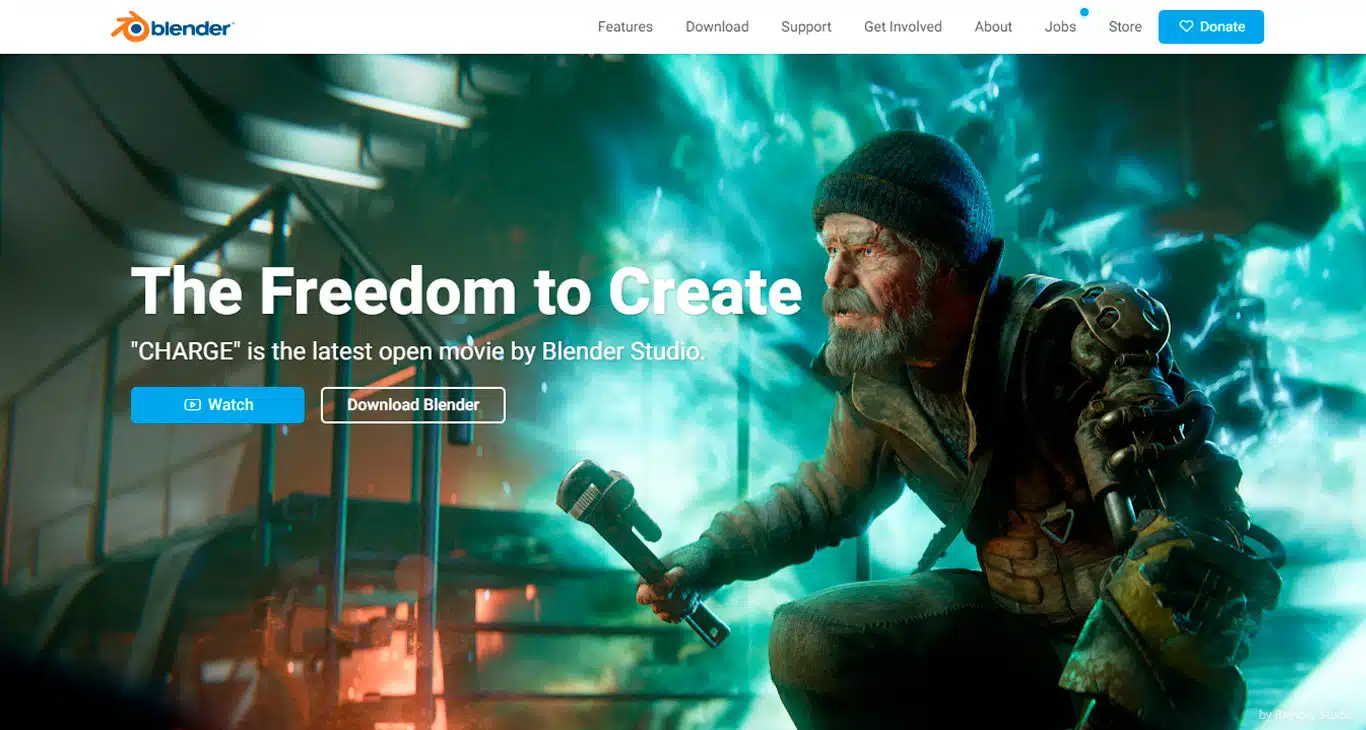
Blender is a free, open source 3D animation app that combines modeling, rigging, simulation, rendering, compositing, motion tracking, and video editing in one program.
A project can move from an initial 3D model through rigging, animation, lighting, rendering, and compositing without leaving Blender.
Grease Pencil adds drawing and 2D animation inside the 3D environment, which allows artists to combine both techniques in the same project.
Learning Blender takes time because the interface and the 3D pipeline contain a lot of tools and concepts. Its large user community helps, with extensive tutorials and documentation available online.
Platforms: Windows, macOS, and Linux.
Pricing: Free and open source, including for commercial use.
Best for: Anyone who wants to learn or work with 3D animation without paying for software.
Our take: Blender offers an unusual amount of production capability at no software cost. Modeling, rigging, animation, rendering, and compositing all happen in one place. The real investment is time, but there is plenty of room to grow once you learn the workflow.
9. Autodesk Maya for Film and Games
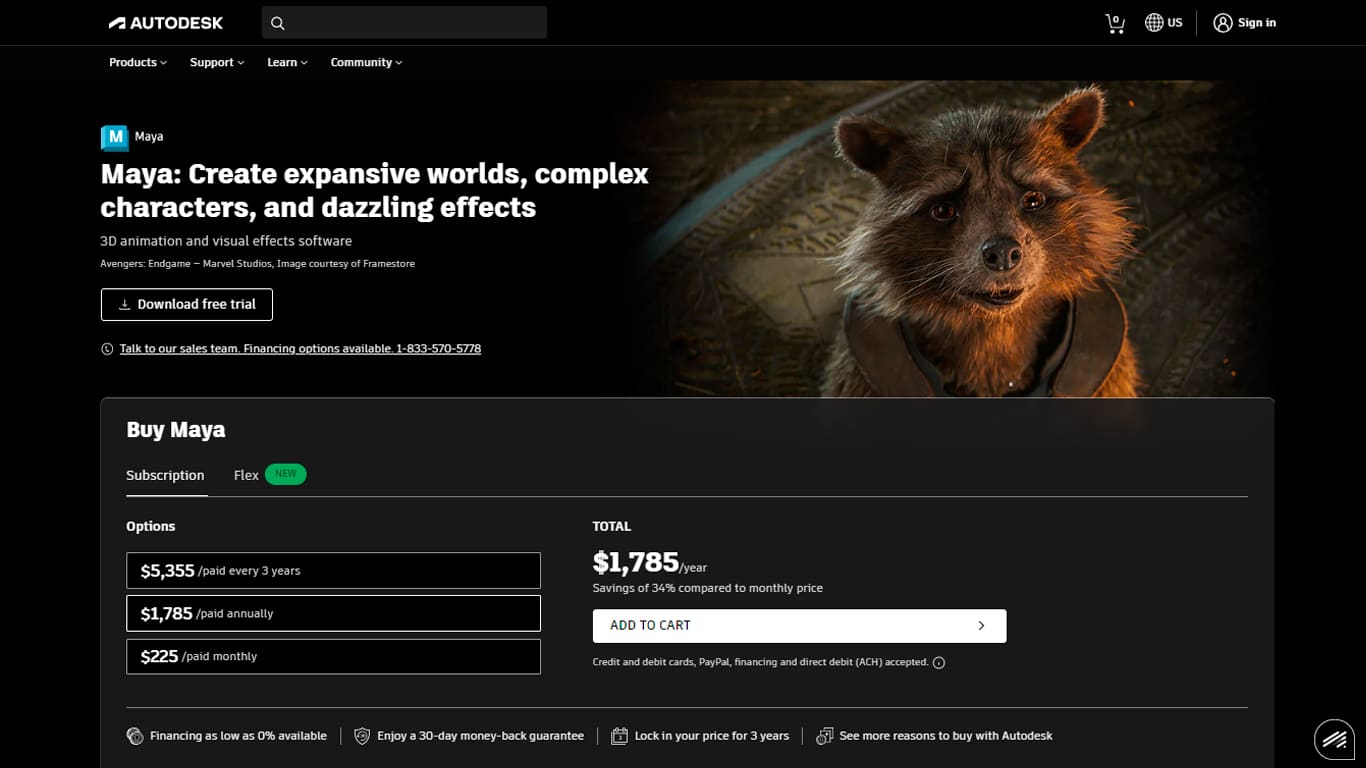
Autodesk Maya is 3D animation software used for character work, modeling, visual effects, simulations, rendering, and motion graphics.
Its toolset includes modeling, rigging, character animation, effects simulation, and rendering. Artists can move through much of a professional 3D pipeline inside the same application.
Film, television, and game teams also use Maya in larger production environments, which is one reason it remains relevant for artists planning a studio career.
Beginners need time to learn both the interface and the logic of a full 3D pipeline. Someone preparing for studio work has a stronger reason to make that investment.
Platforms: Windows, macOS, and Linux.
Pricing: 30 day free trial. Monthly and annual subscriptions are available, along with Autodesk Flex for occasional use.
Best for: Animators and 3D artists working with character animation, modeling, and visual effects.
Our take: Maya is probably excessive for an occasional 3D experiment. It earns its keep on productions with detailed rigs, character animation, effects, and a larger studio pipeline. In that context, the depth of the software is the point.
10. Vyond for Business Videos
Vyond is an animation app for business content, including training videos, explainers, presentations, internal communications, and marketing videos.
The platform provides premade templates, characters, scenes, editing tools, and text to video features. Teams begin with existing assets instead of drawing and rigging every element from scratch.
Vyond also offers mobile apps, which extends the workflow beyond desktop browsers.
Most projects use Vyond’s existing asset system, so the visual range is narrower than in drawing or rigging software. That trade is intentional. The platform prioritizes repeatable production over completely original art.
Platforms: Web based, plus mobile apps for iOS and Android.
Pricing: Starter costs US$99 per month and Professional US$199 per month. Annual plans are available. Enterprise, Government, and Agency subscriptions are billed annually.
Best for: Businesses that need to create animated videos in house without a dedicated animation team.
Our take: Vyond suits teams that produce training, internal communications, or straightforward explainers on a regular schedule. Templates and reusable assets make repeat production easier. A campaign built around a unique illustration style is a different kind of job.
11. Runway for AI Video
Runway is an AI video creation platform for generating and editing video, images, and audio.
You can create movement from prompts or source images, which opens up a different workflow from timeline based animation. Short shots, visual concepts, transitions, and experimental sequences are common uses.
Two generations from the same prompt can produce noticeably different images. Maintaining the same character, environment, or visual direction across a longer sequence requires more testing and iteration.
Platforms: Web based, with an iOS app for iPhone.
Pricing: Free plan available. Standard costs US$15 per month, Pro US$35 per month, and Max US$95 per month.
Best for: Creators experimenting with AI generated video, motion, and visual effects.
Our take: Runway is most useful here for visual development, individual shots, and experiments. It can produce imagery that would take considerable manual work to build from scratch. A long character driven piece needs more testing because faces, clothing, environments, and art direction have to remain consistent from shot to shot.
12. Moho Pro for 2D Character Animation
Moho 14 character animation demo
Moho Pro is a 2D animation app focused on character rigging and vector animation.
Smart Bones control joints, facial expressions, head turns, and other recurring movements through a bone based rig. Animators can reuse those controls across multiple shots instead of redrawing the same movement every time.
The software also includes frame by frame drawing, physics, particles, vector tools, and PSD integration. Bone based rigs handle reusable character controls, while the drawing tools cover shots that need custom frame work.
Moho takes some time to learn, especially if you have never worked with a bone rig. Once the rig is built, recurring poses, expressions, and movements can be reused across multiple shots.
Platforms: Windows and macOS.
Pricing: Free trial available. Moho Pro 14 costs US$399.99 as a one time purchase.
Best for: Independent animators and small studios that need 2D character rigging without a monthly subscription.
Our take: Smart Bones is the feature I would pay closest attention to here. Storing facial poses, turns, and recurring body movements in the rig cuts down repeated setup work when the same cast appears across many scenes. That is exactly the kind of project where Moho makes sense.
13. Adobe Firefly for AI Video and Animation
Adobe Firefly is Adobe’s generative AI platform for images, video, audio, and other creative assets.
For video work, Firefly can generate footage from text or image prompts. Those assets can then move into other Adobe applications as part of a broader editing or design process.
Firefly integrates Google and Runway partner models in the same interface. You can choose among those models without moving the project between separate tools.
Firefly Boards combines references, moodboards, storyboards, generated assets, and visual exploration on one canvas.
Platforms: Firefly runs on web and mobile, and its features are also available inside Adobe Creative Cloud apps.
Pricing: Free plan available. Paid Firefly plans start at US$9.99 per month and range up to US$199.99 per month.
Best for: Businesses and creators already working inside the Adobe ecosystem.
Our take: Boards is useful during visual development, and Firefly video can help test directions or generate individual shots. Long character sequences are better suited to dedicated animation software because they need direct control over poses, timing, and continuity from scene to scene.
14. Envato’s VideoGen
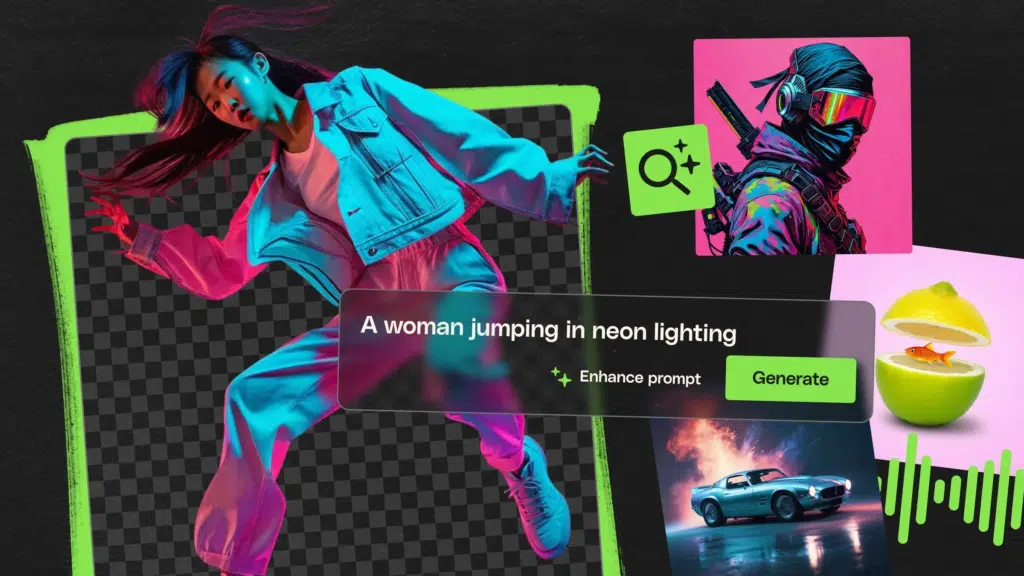
VideoGen from Envato generates video from text and image inputs and sits inside Envato’s wider library of creative assets.
VideoGen offers two starting points: Text to Video and Image to Video.
With Text to Video, you enter a written prompt to define the scene and motion. More detail improves output quality.
With Image to Video, you begin with an image, including material from Envato’s library or its AI image tools, and use that image as the basis for the generated footage.
The Envato subscription also includes video templates, stock footage, sound effects, graphics, and other creative assets. That means generated clips can sit alongside existing production material from the same service.
Platforms: VideoGen is web based.
Pricing: Included with an Envato subscription, which starts at US$16.50 per month when billed annually.
Best for: Content creators and marketers who need AI video generation alongside a large library of stock and creative assets.
Our take: VideoGen fits particularly well when Envato Elements is already part of the workflow. The same subscription includes AI clips, stock footage, graphics, templates, music, and sound effects, so marketers can assemble a piece from several types of source material without adding another asset library.
FAQs
1. What Is the Best Animation App?
The best animation app depends on what you want to create and how much control the project requires.
If you’re just getting started with animation or want to make simpler videos, Pencil2D and FlipaClip are good starting points. If you want to explore AI generated video, Envato’s VideoGen lets you begin with either a text prompt or an image.
If your goal is to work professionally as an animator, Blender and Maya give you much deeper control over modeling, rigging, animation, rendering, and effects, but they also take considerably more time to learn.
2. Are There Any Good Animation Apps for Beginners?
Yes. Pencil2D is a good option for learning traditional frame by frame animation on a desktop. FlipaClip brings a similar drawing based approach to phones and tablets.
For business content, Visme and Vyond require less traditional animation knowledge because much of the work starts with templates, scenes, and ready made assets.
3. What Makes a Good Animation App?
A good animation app should match the kind of output you need.
For beginners, drawing tools, a clear timeline, and an understandable interface may matter most. Experienced animators usually care more about rigging, timing control, compositing, asset management, effects, and export options.
Price and platform also matter, especially if you need to move between desktop and mobile devices.
4. What Are the Best Animation Apps for iPad?
Linearity Move is designed for motion graphics and vector based animation on iPad.
FlipaClip focuses on traditional frame by frame drawing, while Stop Motion Studio uses the camera to animate physical objects.
5. What Are the Best Animation Apps for Android?
Among the best animation apps for Android, FlipaClip is geared toward traditional frame by frame drawing, while Stop Motion Studio handles physical stop motion.
Vyond and Visme are also animation apps for Android, although their focus is business, presentation, and marketing content.
6. What Are the Best Free Animation Apps?
Blender and Pencil2D are two of the best free animation apps on this list, and they cover very different kinds of production.
Blender includes an extensive 3D toolset. Pencil2D focuses on straightforward 2D frame by frame drawing. Both are open source and allow users to export their own work without a platform watermark.
7. Which Animation Apps Are Best for Animating Logos?
Jitter handles logo animation, UI motion, and short graphic sequences, especially when the original artwork comes from Figma.
Visme can cover simpler branded motion pieces built from templates. Detailed logo animation usually needs dedicated motion graphics software with more control over timing, paths, effects, and compositing.
Which Animation App Should You Choose?
Pencil2D and FlipaClip are approachable options for learning traditional animation. Toon Boom Harmony and Moho focus more heavily on 2D character work. Blender and Maya cover 3D production. Jitter, Vyond, Visme, and Linearity Move address narrower jobs such as UI motion, business videos, presentations, and vector animation.
Runway, Firefly, and VideoGen generate footage from prompts or source images. Toon Boom Harmony, Moho, Blender, and Maya give animators direct control over frames, rigs, timing, scenes, and continuity.
For learning, testing ideas, or producing a small piece, an animation app may be all you need. A larger production brings different demands such as reusable assets, consistent characters and art direction, tighter timing, and predictable results from scene to scene.

Victor Blasco
Co-founder of Yum Yum Videos | Explainer Video & Video Marketing Expert
Victor Blasco has over 25 years of experience in animation and film production. For the past 14+ years, he has worked with companies to create explainer and marketing videos that simplify complex ideas and drive business results.
His work has supported global brands like Amazon and McKesson, as well as startups that raised over $2B and reached unicorn or IPO stages.
Victor shares insights based on real client work. His contributions have been published on platforms like Social Media Examiner, and he has been featured or quoted in outlets such as Forbes.