25 Top Animated Ads & Cartoon Ads to Inspire You

Co-founder of Yum Yum Videos | Explainer Video & Video Marketing Expert
Animated ads can do something live footage often cannot: change the rules of the world to fit the idea. A coin can become a character, a vending machine can contain an entire factory, and a simple software feature can turn into a visual joke that makes sense in seconds.
That freedom is useful only when the animation has a job. The best animated ads use movement, characters, design, or visual metaphor to make the message easier to follow. Some behave like short stories. Others are closer to product demonstrations, brand films, or compact explainer videos.
The 25 animated ad examples below cover software, healthcare, food, transport, finance, sports, and consumer brands. I have also included five projects we produced at Yum Yum Videos, an animated video company. After more than 1,000 video projects, I tend to judge an ad by a simple question: does the animation help the audience understand, remember, or feel something that would be harder to achieve another way?
TL;DR
- Animated ads work particularly well when the concept depends on visual metaphor, characters, impossible scenes, or a product that is difficult to film.
- Animated commercials can use many visual styles. The examples below include 2D, 3D, motion graphics, clay inspired animation, paper animation, and mixed techniques.
- Cartoon ads are strongest when the character or fictional world carries the message instead of decorating it.
- For short paid placements, one idea usually works better than several competing messages.
- Branding can live inside the animation through color, typography, recurring characters, movement, and sound.
Animated Ads, Animated Commercials, and Cartoon Ads: What Is the Difference?
Animated ads is the broad term. It includes paid social videos, online commercials, brand films, product ads, and other advertising made primarily with animation.
Searches for animation ads and animated advertising usually point to the same broad category: advertising where animation carries most of the visual message.
Animated commercials usually refer to advertising pieces built for a campaign or commercial placement. They may run on television, YouTube, streaming platforms, websites, or social channels.
Cartoon ads use illustrated characters or a cartoon visual world. Red Bull is a familiar example because the characters and drawing style have been part of the brand for decades. A motion graphics ad for software can still be an animated ad without being a cartoon commercial.
Those categories overlap. The useful question is which visual approach gives the message the clearest form. Our guide to types of video content for business looks at how advertising videos fit alongside explainers, demos, testimonials, and other formats.
Why Use Animation in Advertising?
Animation becomes useful when the idea needs more control than a camera can provide. A brand can compress time, change scale, move inside a device, personify an object, or build an entire fictional environment around one product benefit.
It can also make abstract products easier to see. Software, financial services, apps, and technical systems often have value that happens behind a screen. Advertising animation can turn that value into movement, objects, or a short visual story. That is why some animated ads sit close to promotional video examples and product explainers.
The format also gives brands a repeatable visual system. Red Bull has used cartoon characters for years. Mailchimp, Headspace, and Slack have each built recognizable visual languages around very different products. Consistency matters because the audience can identify the brand before the final logo appears.
25 Best Animated Ads and Commercials for 2026
I picked these best animated ads because each one gives animation a specific role. Some explain. Some create a world. Some use a character to carry the idea. A few barely explain anything at all and let motion, music, or visual rhythm do the work.
1. Keyword Magic Tool by Semrush
Semrush turns the name Keyword Magic into the creative device. A wizard controls search data and interface elements as if the software itself were a spell.
The ad is only about 23 seconds long, so there is no room for a full tutorial. The character gives the product one memorable visual idea while interface references keep the software recognizable. This is a useful model for technical products that need a quick advertising concept with only a few interface cues.
2. Be Together. Not The Same by Android
Android builds the commercial around animated characters and a social message instead of showing a phone. The characters are simple enough to read quickly, which leaves more attention for the interaction between them.
This is a brand ad first. The product does not need to appear in every scene because the campaign is connecting Android with individuality and inclusion.
3. Everyones Journey by the UK Department for Transport
The Department for Transport uses a cartoon ad to show small situations that can make public transport difficult for other passengers. Animation lets the campaign move between different travelers and scenarios without turning the piece into a series of staged demonstrations.
For public awareness work, that flexibility is practical. Several behaviors can fit inside one consistent visual world, and the tone can stay approachable while the message remains serious.
4. June by Lyft
Lyft approaches advertising like an animated short. June, an older woman, drives through a series of small encounters that gradually reveal what the service means in her life.
The brand appears inside the story instead of interrupting it. That choice gives the audience time to care about the character before the commercial asks them to think about transportation. For more examples built around narrative, see our video storytelling examples.
5. Work Simplified by Slack
Slack explains workplace chaos with a continuous visual sequence. There is no voiceover and almost no need for explanatory text because the motion itself connects each problem to the next.
The interesting part is the economy. The ad does not try to explain every Slack feature. It uses rhythm, composition, and a chain of visual cause and effect to make the product idea understandable in under a minute.
6. Summa Health
.
Summa Health uses character animation, perspective changes, and transitions to move through a healthcare message without making every scene feel like a separate slide.
The transitions do real work here. One scene leads visually into the next, which helps a subject with several ideas feel like one piece. That is a useful technique for healthcare advertising, where the script may need to move through multiple situations in limited time.
7. Erste Group Christmas Ad
Erste Group tells the story of a young hedgehog whose spikes make it difficult to connect with classmates. The fictional animal world gives the bank a way to talk about belonging without turning the ad into a financial services explanation.
This is where cartoon ads have a clear advantage. A character can embody the emotional idea of the campaign while the brand stays in the background until the story has done its work.

8. Nike Air Max Animated Commercial
.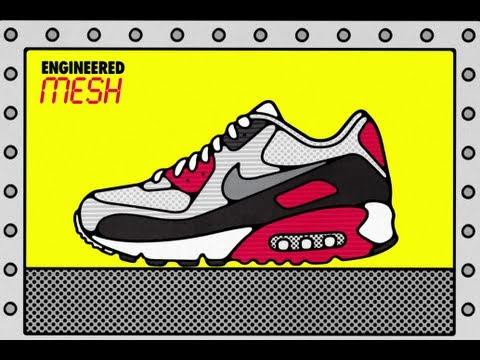
Nike uses animation to move through different Air Max models and eras. The visual treatment changes with the sneaker, so the ad can reference design history without becoming a timeline full of dates and labels.
For a product with a strong design archive, this approach makes the history part of the entertainment. The animation reacts to the object instead of placing every model inside the same template.
9. Mailchimp
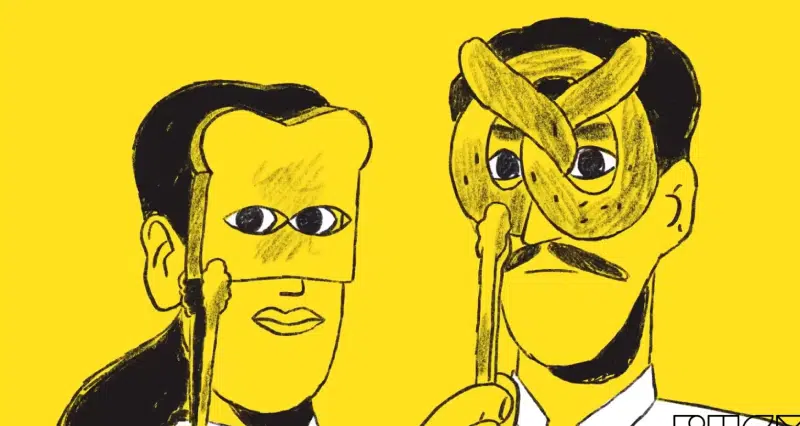
Mailchimp puts the audience at the center and spends little time describing software features. The animated advertisement is closer to a message for entrepreneurs than a product pitch.
That makes sense for a brand that already has broad awareness. The ad can use animation to reinforce who the brand is for, while product education can happen elsewhere in the funnel.
10. Sydney Water
.
Sydney Water turns a very specific behavior, using the half flush, into a compact animated commercial with rhyme, character movement, and a simple visual idea.
The subject is ordinary, which is exactly why the animation matters. It gives a small conservation behavior enough personality to hold attention without making the message feel heavy.
11. Headspace
Headspace has a visual style that matches the product. The shapes are simple, the motion is calm, and the animation explains how the app works without overloading the screen.
This is one of the best animated commercials in the list for studying brand fit. The pace and design feel connected to meditation before the viewer reaches the call to action.
12. Airbnb
Airbnb uses a clay inspired visual style to give the campaign a handmade feel. The short runtime keeps each video centered on one travel situation instead of trying to explain the full service.
A series like this can be useful when a product solves several different audience needs. Each ad can take one use case and keep the message narrow.
13. Red Bull Cartoon Commercial
Red Bull shows the value of a recurring animation system. The drawing style, humor, and character behavior have stayed recognizable across years of cartoon commercials.
The individual story can change while the brand language stays familiar. That consistency is difficult to build with one campaign, but it becomes valuable when animation is used repeatedly over time.
14. Stories of Better by Toyota
Toyota uses paper inspired animation to move across several vehicles and ideas in one visual system. The technique gives the lineup a shared design language while still allowing each model to feel distinct.
The piece was used at the Paris Motor Show, where a large display gave the animation a physical scale that would be difficult to reproduce in a standard product spot. It is a good reminder that the final viewing environment should influence the creative treatment.
15. In Pursuit of Greatness by Wimbledon
Wimbledon tells a history of tennis through changing animation styles, music, and movement. The commercial works without a voiceover, so the visual evolution becomes part of the historical progression.
This format asks more from the image than a narrated ad would. Every transition has to communicate time, energy, or context because there is no spoken explanation to fill the gap.
16. Way Better by Clover
Clover builds a fictional world around an everyday grocery product. The setting gives the spread more personality than a conventional product shot could provide.
The campaign also received industry recognition, including an animated advertisement award at the INFOCOM EME Awards and a first place result for television and visual effects at the Mobius Awards. Here, craft is part of the campaign identity from the beginning.
17. A.I. Ketchup by Heinz
Heinz turned an emerging AI image trend into the concept itself. The campaign asked image generation tools for ketchup and used the outputs to play with the idea that ketchup is visually associated with the Heinz bottle.
The animated advertising angle comes from the movement through generated images, product references, and brand recognition. It is a timely concept built around a very old brand asset: the shape and identity of the bottle.
18. Happiness Factory by Coca Cola
Coca Cola imagines an entire factory inside a vending machine. The 3D characters turn the few seconds between pressing a button and receiving a bottle into a miniature adventure.
The product experience is familiar, so the ad invents a world around the part consumers never see. This is a classic use of animation in advertising: build the impossible side of an ordinary action.
19. Oreo Wonderfilled
Oreo combines illustrated characters, a custom song, and playful transformations around the idea of sharing a cookie. The animation follows the rhythm of the music, so sound and image feel designed together.
For food advertising, that coordination matters because the product cannot rely on aroma or taste. Movement, sound, and visual texture have to create the mood around it.
20. Why Does Starbucks Blend Coffee?
Starbucks uses illustration, sound design, and motion to explain coffee blending while keeping the sensory side of the product present.
The ad has an educational layer, but it does not feel like a lesson because the visuals keep moving through ingredients, process, and atmosphere. This is a useful reference for animated advertisement examples that need to teach something about the product itself.
5 Animated Ads We Produced at Yum Yum Videos
The next five examples come from our own production work, so I can be more specific about the problem each piece was built to solve.
21. Catan
.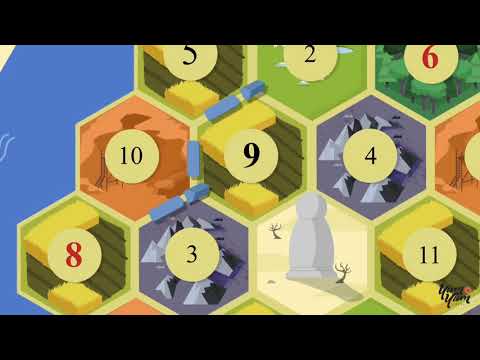
Catan needed to introduce the board game to people who had never played it while keeping the commercial entertaining for people who already knew the world.
We started with friends playing at home and then moved them inside Catan. That transition lets the audience discover the rules through the characters instead of stopping the story for an explanation. The project later won a 2025 Peoples Telly Silver Award in the General Online Commercials category.
22. Amazon Coins
Amazon Coins is a digital currency, so the core product has no physical behavior to film. We solved that by treating the coin like an object that could bounce, roll, and interact with the world around it.
The movement gives an abstract product a physical logic. Viewers can follow how coins are acquired and used without spending the whole ad inside a screen recording.
23. Accelerant
Accelerant operates in insurance, where the audience already understands the category but may not understand the company’s model or member experience.
This piece focuses on problems relevant to that audience and uses character animation to keep the message grounded in people instead of policy language. It was part of a larger relationship in which we produced nine videos for Accelerant across different audiences and communication moments.
24. Tortilla Land
Tortilla Land was one of our earlier cartoon ads. Taco ingredients sing and dance, which gives the product a playful world without requiring a live set or performers.
Looking back at the project, the useful part is how directly the visual idea fits the product. The animation does not need a complicated metaphor. It turns familiar ingredients into the cast.
25. Adzerk
.
Adzerk, now Kevel, needed a more abstract way to explain advertising infrastructure. We used motion graphics animation because systems, connections, and flows were more important than characters.
This is a good example of why animated ads do not have to look like cartoons. Motion, shapes, interface references, and typography can carry a commercial when the product itself is technical.
What the Best Animated Ads Have in Common
The animation carries information
In Slack, motion connects workplace problems. In Amazon Coins, movement gives digital currency a physical form. In Sintavia style technical work, 3D can show space and process. Good animation earns its place by carrying information that would otherwise need more words or more production.
The ad has one main idea
Short animated commercials have limited time. Semrush has the wizard. Sydney Water has the half flush. Coca Cola has the hidden factory. The concept gives each piece a center that the audience can recognize quickly.
The visual style fits the brand
Headspace feels calm. Red Bull feels irreverent. Wimbledon feels historical and energetic. The style can change dramatically between brands because there is no single look that defines effective animation advertising.
The audience is clear
Cartoon ads for consumers can use broad emotional ideas. A software ad may need interface cues. A healthcare piece may need more precise language. The creative treatment should start with what the intended viewer already knows and what they need to understand next.
How Much Do Animated Ads Cost?
The cost of an animated ad depends on length, style, illustration, character work, 3D, revisions, sound, and deadline.
In our 2026 animation pricing research, we contacted 125 animation companies and collected 61 usable quotes. The median quote was $9,680 per minute. That is a market reference, not a fixed price for every commercial. Short ads can still require significant production work because every second may contain custom design and animation.
Our animation cost study explains the methodology and broader pricing ranges.
Animated Ads FAQ
What are animated ads?
Animated ads are advertisements created primarily with animation instead of filmed footage. They can use 2D characters, 3D, motion graphics, stop motion inspired techniques, typography, or a mix of styles.
Are cartoon ads the same as animated commercials?
Cartoon ads are one type of animated commercial. They usually rely on illustrated characters or a cartoon world. Animated commercials can also use motion graphics, 3D, product animation, or abstract design without cartoon characters.
How long should an animated commercial be?
The right length depends on placement and message. Many paid ads work in short formats because the audience has little context and the campaign needs one clear action. Brand films and product explainers can run longer when the story or explanation needs more room.
What makes an animated ad effective?
A clear audience, one main message, readable visual hierarchy, purposeful motion, and a style that fits the brand matter more than adding animation for its own sake.
Can animated advertising explain technical products?
Yes. Motion graphics, interface animation, visual metaphor, and character animation can give software and other abstract products a form the viewer can follow. The Adzerk and Semrush examples above use very different approaches to that problem.
When should a brand use cartoon advertisement examples as inspiration?
Cartoon advertisement examples are most useful when characters, humor, or a fictional world could carry the campaign idea. They are less useful as a reference when the audience mainly needs a precise product demonstration or realistic physical detail.
A Simple Check Before Producing an Animated Ad
Before choosing a style, answer four questions:
- What should the audience understand or feel after watching?
- Which part of the idea would be difficult or expensive to film?
- Does the ad need a character, a product demonstration, a visual metaphor, or a branded motion system?
- Where will the ad be watched first?
Those answers usually narrow the creative direction faster than starting with a list of animation styles.


Victor Blasco
Co-founder of Yum Yum Videos | Explainer Video & Video Marketing Expert
Victor Blasco has over 25 years of experience in animation and film production. For the past 14+ years, he has worked with companies to create explainer and marketing videos that simplify complex ideas and drive business results.
His work has supported global brands like Amazon and McKesson, as well as startups that raised over $2B and reached unicorn or IPO stages.
Victor shares insights based on real client work. His contributions have been published on platforms like Social Media Examiner, and he has been featured or quoted in outlets such as Forbes.