Healthcare Explainer Videos: Benefits, Examples, Costs & Production Tips

Co-founder of Yum Yum Videos | Explainer Video & Video Marketing Expert
Healthcare explainer videos give medical, biotech, pharma, and health tech companies a visual way to present complex products to patients, clinicians, buyers, and investors.
In healthcare, the script has to do several jobs at once. It may explain a technical workflow, use the right scientific terminology, pass medical or legal review, and remain understandable to someone seeing the product for the first time.
At Yum Yum Videos, nearly 30% of the companies we have worked with are in healthcare and biotech. Over the last 14+ years, that work has included pharmacy software, regulated digital health platforms, clinical trial services, laboratory products, biotech, and patient-facing healthcare communication.
What Is a Healthcare Explainer Video?
A healthcare explainer video is a short video built to explain a medical product, service, platform, treatment, workflow, or scientific concept to a specific audience.
Depending on the project, that audience may be:
- Patients or caregivers
- Physicians and other healthcare professionals
- Hospital administrators
- Pharma and biotech teams
- Payers or procurement teams
- Investors and partners
- Internal sales or training teams
The audience changes the entire video.
A patient-facing medical explainer video should not sound like a pitch to a hospital procurement team. A biotech video for investors may need to explain the science and market opportunity. A pharmaceutical explainer video aimed at physicians can use terminology that would be inappropriate for a general consumer audience.
We settle the audience during the brief because it changes the vocabulary, level of detail, examples, and pace of the script.
A good healthcare explainer keeps the science accurate and removes details that distract the intended viewer. During scripting, we decide what needs words and what animation shows more clearly.
BPS Bioscience healthcare explainer video, MUSE Awards winner for its motion graphics and visual storytelling. View award.
For BPS Bioscience, we used restrained motion graphics and a minimalist visual approach to explain a technical subject without crowding the screen. The project received a MUSE Award.
Where Healthcare Explainer Videos Help Most
Healthcare companies often come to us with the same problem: their internal teams understand the product immediately, while a new viewer needs context. A short video gives that viewer the missing context before product details take over.
1. They Make Complex Medical Ideas Easier to Follow
Live action alone cannot show many of the things healthcare companies need to explain. Animation can map software workflows, biological processes, data moving between systems, clinical trial logistics, and laboratory procedures directly on screen.
Medical explainer videos and life sciences explainer videos are especially useful for this kind of material because the viewer can watch the process unfold step by step.
Accuracy still sets the limit. A visual metaphor can simplify the explanation, but the science has to remain correct.
2. They Match the Explanation to the Viewer
We have produced healthcare projects for patients, doctors, enterprise buyers, biotech partners, and investors. The same product can require a very different explanation for each group.
A physician may expect technical terminology. A patient may need the same idea explained in plain language. We write those two scripts differently.
During scripting we ask one basic question: What does this audience already know?
The answer changes the vocabulary and the amount of context we use. In B2B projects, a buyer can then enter a sales call already familiar with the basic problem and workflow.
3. They Help Build Trust Through Precision
Healthcare audiences catch errors quickly. An incorrect interface, misleading biological representation, wrong label, or unsupported claim can damage credibility before the product explanation is finished.
Our healthcare production process includes more technical review than a typical marketing project because accuracy affects credibility. On projects such as Thermo Fisher Scientific, the client’s scientific and technical teams review visual material before animation, while corrections still involve illustrations rather than finished scenes.
We prioritize accuracy and clarity for the actual audience. Visual style comes after those two requirements.
4. They Can Support Investors and Partners
Healthcare and biotech startups often have to explain the underlying science and the business opportunity in the same conversation. That makes investor communication a common use for healthcare explainer videos.
A founder can talk through the idea in a meeting, but a clear video gives investors or partners a consistent explanation they can watch before, during, or after the pitch.
MedVector used video in exactly that context during its fundraising period.
5. They Can Be Reused Across Several Channels
A healthcare explainer may begin on a landing page and later appear in sales presentations, investor decks, conferences, onboarding material, paid campaigns, or email outreach.
Before production starts, we write down the video’s main job and primary audience. That decision keeps extra use cases from creeping into the script.
When one script tries to cover every channel, it gets longer and less specific. We usually keep one primary audience and message, then reuse the finished asset wherever that message still fits.
Healthcare Explainer Video Examples From Real Projects
We have spent more than 14 years producing custom explainer videos and have completed more than 1,000 animated videos. Nearly 30% of the companies we have worked with are in healthcare and biotech.
McKesson: Whiteboard Animation for Independent Pharmacies
McKesson asked us to create a video for My HealthMart, a business intelligence tool developed for independent pharmacies.
The platform brings together clinical, financial, operational, and marketing information. Our script had to introduce those different data areas without turning the video into a feature list.
We used whiteboard animation because the progressive drawing style gave us room to introduce information gradually instead of putting several data concepts on screen at once.
The final video focuses on step by step explanation of the data and workflow for pharmacy owners.
McKesson’s internal performance data is confidential, so I cannot attach a conversion number to this project. McKesson did record a video testimonial about the experience of working with our team.
For healthcare teams considering a similar educational format, our whiteboard animation guide goes deeper into when this style works well.
BrightInsight: Explaining a Regulated Digital Health Platform
BrightInsight had a different problem.
Its regulated digital health platform had to make sense to investors, biopharma partners, healthcare companies, and other stakeholders during a period of rapid company growth.
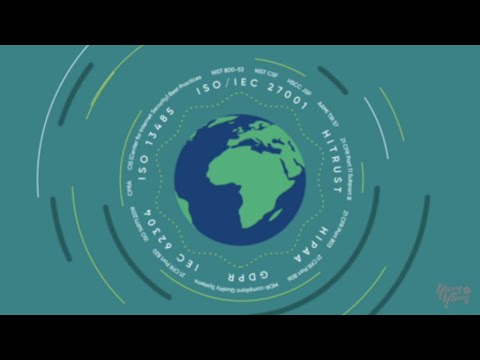
We produced two custom explainer videos between 2021 and 2022 using motion graphics to simplify the platform and its compliance framework.
.
During the period around our collaboration, BrightInsight raised $101 million in Series C funding led by General Catalyst. The company also reported 431% revenue growth between 2019 and 2022 and was recognized in the Deloitte Technology Fast 500.
Those figures describe BrightInsight’s business performance during that period. The two videos were communication assets used alongside that growth, not the cause of it.
BrightInsight used the two explainers to present its regulated platform to investors, biopharma partners, clients, and clinical stakeholders during that growth period.
You can see the full context in our BrightInsight case study.
Thermo Fisher Scientific: Technical Accuracy Before Animation
Thermo Fisher Scientific is a useful example of what changes when a project moves deeper into life sciences video production.
The subject matter involves laboratory workflows and scientific instrumentation. Visual accuracy matters, and the people reviewing the video know the subject extremely well.
.
For projects like this, we build additional technical review into the production schedule. The client’s scientific team can check illustrations and terminology before animation begins.
A technical correction at the illustration stage may take minutes or hours. The same correction after animation can require rebuilding an entire scene.
Lhea Lecy from Thermo Fisher described our work this way:
“Yum Yum Videos is amazing to work with. Their quality of work is exceptional, and they are very responsive and always professional.”
For life sciences explainer videos, we keep domain terminology when the audience already uses it. Researchers and lab teams do not need a consumer level explanation of familiar concepts.
MedVector: Explaining a Clinical Trial Model to Investors
MedVector developed a platform that allowed patients to participate in advanced clinical studies through local provider offices.
The idea addressed a real clinical trial access problem, but it was not something every investor could understand instantly.
We used whiteboard animation and a board-game metaphor to explain the obstacles patients and researchers face during clinical trial recruitment.
MedVector used video as a major communication asset while raising capital, including on its investment page. The company went on to secure $3.5 million in funding.
The $3.5 million funding round belongs to MedVector’s business performance. We treat the video as one communication asset used during that period.
In this case, the medical explainer video gave investors a faster way to understand a clinical trial model before evaluating the company.
You can read the complete MedVector case study or see more examples in our healthcare marketing case studies.
Healthcare, Medical, Pharma, and Life Sciences Explainer Videos
Healthcare, medical, pharma, and life sciences videos share production techniques, while the audience and review requirements vary by project.
Medical Explainer Videos
A medical explainer video may cover a treatment, device, patient journey, healthcare service, clinical workflow, or medical platform.
When patients are the audience, we simplify unfamiliar terminology while keeping the medical meaning accurate.
Pharma Explainer Videos
Pharma explainer videos often have to communicate with physicians, patients, internal commercial teams, or other healthcare stakeholders.
The script may involve product mechanisms, treatment pathways, disease education, or operational information.
For pharmaceutical explainer videos, legal, medical, and regulatory review can also affect the schedule. The creative team should know early who needs to approve the script and visuals.
Life Sciences Explainer Videos
Life sciences explainer videos frequently cover scientific instruments, laboratory processes, biotech platforms, diagnostics, research workflows, or complex data. Animation is useful here because many of those processes are invisible, microscopic, software based, or difficult to film directly.
Healthcare SaaS and Digital Health Videos
Healthcare SaaS has another set of requirements.
The video may have to explain software, integrations, security, compliance, dashboards, or data movement while still making the business outcome clear.
Motion graphics and simplified UI animation show the workflow while keeping the piece shorter than a full product tutorial.
If you are looking specifically at production options for this sector, our healthcare and biotech video production page includes more project examples and case studies.
How Long Should a Healthcare Explainer Video Be?
For our marketing-focused healthcare projects, we usually start by testing whether the message fits in 60 to 90 seconds. Technical, educational, or regulated subjects often need more room.
A patient education video, technical product walkthrough, or detailed pharmaceutical explainer video may run longer. Whiteboard videos can also work at around 2 to 2.5 minutes when the subject needs a slower educational pace.
We set runtime from the audience’s existing knowledge, the amount of explanation required, and the viewing context. The message comes first; duration follows.
We do not cut necessary context just to hit 60 seconds, and we do not add extra features simply because two minutes are available. The script ends when the viewer has enough information for the video’s job.
Our explainer video script guide explains how we structure the message and estimate word count before production.
How Much Does a Healthcare Explainer Video Cost?
Professional custom animation typically costs $8,000 to $25,000 for a 60-second explainer video.
For our 2026 pricing research, we contacted 125 video production companies and animation studios. 76 responded, and 61 supplied a usable quote for a custom 60-second animated explainer. The quotes ranged from $2,800 to $27,000; the median was $9,680.
Healthcare projects can move toward the higher end of that range when the scope includes:
- Specialized scriptwriting
- Additional technical review
- Medical or scientific illustration
- Multiple stakeholders
- Compliance or legal review
- Custom animation and visual development
- Localization or multiple voice-over versions
Style and scope change the final quote. A motion graphics piece requires a different production workload from a detailed 3D medical animation.
You can see the full methodology and current market ranges in our 2026 explainer video cost research.
What Cheap Healthcare Video Production Can Cost You
Templates and basic production can cover simple internal needs. For videos shown to physicians, hospital buyers, investors, patients, or enterprise partners, we put more time into script, review, and custom visual work.
A rushed production can get the message, science, or audience wrong. A weak script addresses the wrong viewer. Generic artwork can misrepresent a medical process. Skipping technical review can leave a scientific error in the finished piece.
MedVector is useful context here. The company invested about $20,000 in its early video work with us during the same period in which it raised $3.5 million.
We do not calculate an ROI from those two numbers because the funding round cannot be isolated to one communication asset.
For an investor pitch, buyer presentation, or clinical explanation, we evaluate the production budget against the job the asset has to do and the audience that will see it.
Production Tips From Our Healthcare Projects
Get the Technical Reviewers Involved Early
Bring the scientist, clinician, product specialist, legal team, or compliance reviewer into the script and visual review before animation starts.
Late corrections slow the timeline because the next team has already built work on the approved script, storyboard, or artwork.
Write for the Actual Viewer
A patient, physician, investor, and hospital administrator need different levels of explanation. Keep technical language when the audience already uses it; explain or replace it when they do not.
Use Animation Where It Adds Information
Use animation for information that benefits from being seen: a biological mechanism, data moving between platforms, a patient journey, a clinical workflow, or the internal operation of a device.
When an interview explains a section better, use the interview. We choose animation for the parts where motion adds information.
Approve the Script Before Polishing the Visuals
Fix the message before polishing the storyboard. A sentence can change in minutes during scripting; the same change after illustration or animation may affect several completed scenes. We map those approval points in our explainer video production process.
FAQ About Healthcare Explainer Videos
What is a healthcare explainer video?
A healthcare explainer video is a short video that explains a medical, biotech, pharmaceutical, or digital health product, service, process, or idea to a defined audience. It can be used for patient education, sales, product marketing, investor communication, training, or partner education.
What is the best animation style for healthcare explainer videos?
The style depends on what the video has to show. We use motion graphics for software and data, whiteboard for educational explanations, character animation for human stories, and 3D when the subject needs dimensional detail.
How much do healthcare explainer videos cost?
A custom professional 60-second explainer generally costs $8,000 to $25,000. Our 2026 market study found quotes from $2,800 to $27,000, with a median of $9,680. Detailed 3D production sits above the range of many 2D and motion graphics projects.
How long should a medical explainer video be?
For our marketing-focused medical explainer projects, 60 to 90 seconds is the range we test first. Technical, educational, or regulated subjects often need two minutes or more.
Can healthcare explainer videos be used for pharma and life sciences?
Yes. Pharma explainer videos, pharmaceutical explainer videos, and life sciences explainer videos use many of the same production techniques. We adapt the terminology, visuals, and review process to the audience and subject.
Who should review a healthcare video before it is published?
The reviewer list depends on the company and its claims. In our projects, it may include marketing, product, medical or scientific specialists, legal, compliance, and other stakeholders. We identify those people before scripting so their feedback arrives before storyboard and animation.
Final Thoughts
The healthcare explainer videos in these projects started with different communication problems.
McKesson needed pharmacy owners to understand a business intelligence tool. BrightInsight had to explain a regulated digital health platform to several stakeholder groups. Thermo Fisher required close scientific review. MedVector needed investors and partners to understand a different model for clinical trial access.
McKesson’s piece used whiteboard animation to unpack pharmacy data. BrightInsight used motion graphics for a regulated platform. Thermo Fisher required scientific review before animation. MedVector used a board game metaphor to explain clinical trial access to investors.
When we start a new healthcare, medical, pharma, or life sciences project, we write down the audience and the one thing that audience needs to understand at the end. We use that answer to make the production decisions that follow.

Victor Blasco
Co-founder of Yum Yum Videos | Explainer Video & Video Marketing Expert
Victor Blasco has over 25 years of experience in animation and film production. For the past 14+ years, he has worked with companies to create explainer and marketing videos that simplify complex ideas and drive business results.
His work has supported global brands like Amazon and McKesson, as well as startups that raised over $2B and reached unicorn or IPO stages.
Victor shares insights based on real client work. His contributions have been published on platforms like Social Media Examiner, and he has been featured or quoted in outlets such as Forbes.