25 YouTube Content Ideas for 2026: What to Post on Your Channel

Co-founder of Yum Yum Videos | Explainer Video & Video Marketing Expert

A business YouTube channel usually needs more than one kind of video because each format serves a different purpose. An explainer can introduce a product, while a Q&A can answer the questions your sales team hears every week. Shorts are useful when the goal is to reach people who have never seen the channel before.
You will not need all 25 formats. Tutorials make sense when viewers need to complete a task, while Shorts can help with discovery and Q&As can handle recurring customer questions.
If you already publish regularly, look for formats you haven’t tried. If you’re starting from scratch, pick two or three and compare watch time, retention, and subscriber growth before adding more.

25 YouTube Content Ideas for 2026: Quick Overview
- Educational videos that teach viewers useful concepts or skills
- Tutorials and how to videos that guide viewers step by step
- Explainer videos that simplify products, services, or complex topics
- YouTube Shorts to reach new audiences through short form content
- Product reviews that help viewers make purchase decisions
- Behind the scenes videos that show how your business operates
- Client testimonials that build trust and social proof
- Webinars and long form educational sessions
- Industry news videos that position you as a thought leader
- Livestreams that allow real time interaction with your audience
YouTube Stats for 2026
As of February 2026, YouTube had more than 2.70 billion monthly users worldwide.
An eMarketer forecast published by Statista puts YouTube Shorts at about 185 million U.S. viewers per month in 2026 and 192 million in 2027.
YouTube’s 2026 CEO letter cites Nielsen and says YouTube has ranked #1 in U.S. streaming watchtime for nearly three years.
YouTube reported that more than a million channels used its native AI creation tools in December 2025. The company also announced additional creation tools for 2026.
See our social media video statistics for platform specific performance data.
YouTube Content Ideas to Entertain Your Audience
Entertainment gives businesses room to use humor and lighter ideas alongside more practical material. Even serious brands can publish something playful once in a while.
Table of Contents
1. AI Videos
AI videos can take the form of explainers, comedy, fictional characters, or Shorts. Clear prompts help. Editing is where you cut weak moments, rewrite awkward lines, and check factual claims before publishing.
One recurring format turns everyday objects into characters, from alarm clocks complaining about getting hit first thing in the morning to kiwis dressed as doctors explaining nutrition. The setup is easy to recognize, so the explanation can get playful quickly.
2. YouTube Shorts
Shorts have over 2 billion monthly users worldwide.
Shorts can be recipes, reviews, quick demos, jokes, or clips from a longer video, while an AI YouTube shorts generator can help turn existing footage into short-form content more efficiently. The format works especially well when the idea is easy to understand in the first few seconds.
Keep each Short centered on one clear idea, or clip a strong moment from a longer video and use it to point people toward the full piece.
3. Fictional Personas
A fictional persona gives a channel a recurring character without requiring a human host to appear on camera.
Anxious Kim Hamzzi, a channel with nearly 700 thousand subscribers, uses an AI generated hamster as its recurring host. The character has become the identity of the channel rather than a one off gag.
You probably don’t need a hamster persona who cooks pizza to represent your business, but the example shows what faceless channels and AI characters can offer creators. If you’re too shy to appear on camera or just can’t spare the time, creating a mascot for your brand and using it as your YouTube representative is another option.
4. Challenge Videos
Challenge videos add a rule or constraint to an ordinary activity. Opening a bottle or making a sandwich without using your thumbs is enough to create a clear setup that viewers understand immediately.
For a business channel, the challenge can come from your own expertise. Ask viewers to try a tip or business practice for a week, then share what happened in the comments.
The idea only needs one rule that fits the audience and is easy to explain.
5. Comedy/Sketch Videos
Comedy is easier to write when the audience already knows the situation. Office problems, client calls, bad meetings, and small everyday annoyances give you material without needing an elaborate setup.
It could be anything, from providing commentary on your printer not working when you need it the most because it’s run out of cyan. We’ve all been there. Why does it even need cyan to print in black and white anyway? Or you could share funny anecdotes about dealing with difficult clients.
The printer example works for exactly that reason: the audience understands the frustration before the joke even starts.

6. Travel Videos
Travel videos let viewers see places, routines, and experiences they may not encounter themselves.
If you travel for work or simply enjoy visiting new places, film the parts you would show a friend: the neighborhood, a strange detail, a good meal, or something that surprised you. It gives the channel a break from your usual subject without losing your voice.
YouTube Content Ideas to Educate Your Viewers
Questions you already answer at work can become useful videos.
7. Educational Videos
An educational channel gives you room to explain the same topics that come up in sales calls, onboarding, support, or client conversations.
Educational videos can cover almost any subject. You can start with broad questions in your area of expertise, use animation apps when visuals help, and move into narrower topics as you learn what your audience watches.
At Yum Yum Videos, for example, we have a doughnut as our logo and spend our days making animated videos. That gives us plenty to talk about, from video marketing in the digital world to, well, pastries.
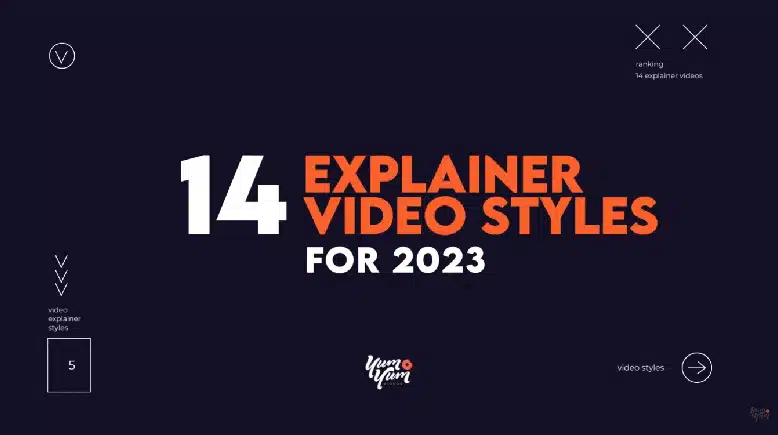
We made one of these ourselves: an educational video about popular explainer animation styles for our YouTube channel. The video has passed 150k views, and hundreds of people still watch it daily.
The format is especially useful when you already know the subject well and can explain it without turning the video into a lecture.
8. Tutorials/How to Videos
Our video marketing statistics guide cites a figure of 59% of people preferring video to written instructions. That is exactly the kind of situation where a tutorial earns its place.
Tutorials work well on YouTube because viewers can pause, rewind, and follow each step at their own pace.
A step by step video lets viewers complete the task while they watch, which gives the video a clear purpose from beginning to end.
The subject can be anything from cooking to language learning. For a business, the same format can explain setup, onboarding, maintenance, or a repeatable process.
If you can show the task on screen and explain what happens next, you already have the bones of a tutorial. Yes, even a tutorial about making tutorials.

9. Interviews and Q&As
A Q&A starts with material you already have: the questions people keep asking. Group a few related questions into one video, or give a recurring question its own episode.
For interviews, bring in someone who knows a subject your audience cares about and ask questions you would genuinely want answered. That usually gives the conversation enough direction without making it feel scripted.
A collaboration also puts the video in front of another creator’s audience.
10. Life Hacks and Tips
Tips videos work best when each idea solves a small problem quickly. Pick a subject you know well, choose a handful of tips you actually use, and explain why each one helps.
11. Debunking Myths
Every industry has claims that get repeated until they sound true. Pick a few your customers hear often, then explain what is accurate, what is wrong, and where the real answer needs context.
In a myth debunking video, the explanation matters more than the verdict, so show the evidence or reasoning that led you to the answer.
12. FAQs
Repeated questions usually point to information your audience cannot find easily.
Gather the most common ones and answer them in a single video. FAQ videos are evergreen, so you can also embed them on your website or send them to customers in a newsletter when the same doubts come up again.
13. Webinars
Webinars are long form learning sessions about a product, service, or subject you know well. The live format also gives viewers a chance to ask questions while the topic is being discussed.
Save the recording after the session so it can become an on demand resource, a source for shorter clips, or training material for employees.
.
YouTube Video Ideas to Put Your Business Out There
A business channel can mix product information with useful context about the company, its customers, and the people behind it.
14. Explainer Videos
An explainer video is a short way to show what your business offers, how a product works, or why a service matters. It can:
- Show what you sell and who it is for.
- Use a title and description that match the topic people are searching for.
- Reuse the video on websites, social media, and email.
Animation gives explainer videos several useful visual options. Whiteboard works well for step by step teaching, motion graphics can organize data or abstract ideas, 2.5D adds depth without going fully 3D, and character animation is useful when the story depends on people or situations.
Animation cost varies by style and production scope. A 60 to 90 second explainer can also be reused on your website, social channels, sales emails, and presentations.
15. Stating Your Stance
Opinion videos work when you actually have a point of view worth explaining. Pick an industry issue you know well and say what you think, including the reasoning behind it.
A clear point of view gives viewers something specific to agree with, challenge, or discuss. Keep the argument respectful and make the reasoning more important than the provocation.
.
16. Business News
Industry news videos are useful when your audience needs help sorting important updates from noise.
Choose developments that affect the people watching and explain why they matter. A longer update can also supply clips for Shorts or other social posts.
17. Client Testimonials
A client testimonial gives the customer the microphone, letting someone else explain what they used, what changed, and what they liked or disliked about the experience.
The strongest testimonials sound like real customers, not scripts. Ask about the situation before the purchase, the experience itself, and the result afterward.
18. Product Reviews
Millions of YouTube users look for product information before making a purchase. A review can show what the product is like to use, where it performs well, and where it falls short.
A useful review should include what worked, what did not, and who the product is actually for. If the video is sponsored or also functions as a promotional video, say so clearly.
A review loses credibility when it sounds scripted, so base it on your own experience and disclose sponsorships clearly.
19. Livestream Videos
A livestream can be an event, interview, Q&A, or work session. Live streams also work for long study sessions or background music.
Businesses use live video when real time interaction adds something the recorded version cannot. Stream an event, interview a guest, or answer questions as they come in.
20. Behind the Scenes
Behind the scenes videos show the work that usually stays off camera: how a product is made, how a shoot comes together, or what happens before a campaign launches.
You can film the creative, technical, or logistical parts of the process. Your team often overlooks the details viewers find most interesting because those details feel completely normal at work.
YouTube Content Ideas to Connect With Your Audience
21. Share Your Favorites
Favorites videos give the person behind the channel something to talk about that is not a product pitch. Books, movies, apps, or one oddly specific personal favorite can all work.
Share a book that changed your life, a treasured possession, or a song that you can listen to a thousand times without getting tired of it, and explain why you like it. Pick things you genuinely like and explain why they matter to you, even if the choice feels a little cringy.
22. Long Form Vlogs
Long form vlogs give you room to show a process, trip, project, or story that would feel cramped in a short clip. They fit gaming, education, lifestyle, business, and travel channels.
Since YouTube is a lot more public than your room, we don’t advise you to share your deepest secrets on a video.
You can, however, offer a peek, show yourself working on a new project, running your business, taking a trip, or even documenting how you put together a video!
23. A Day in the Life
Take your audience through a typical day and include details they would not normally see, such as how your team starts the morning or prepares for a project.
Pick a few moments rather than documenting every hour. Getting ready for work, preparing for a project, or unwinding on a Sunday can be enough.
You can even have some of your team members be the stars of the video or partner up with other content creators and feature their own experiences!
24. Unboxing Videos
I enjoy unboxing videos most when I’m considering a purchase and want to see exactly what arrives in the package before buying it.
Publishing unboxings of your own products lets potential customers see exactly what arrives before they buy. That is especially useful when the product is usually purchased online and customers cannot inspect it in person first.
If it fits your budget, you can also send a product to a creator whose audience overlaps with yours and let them unbox it in their own style.
25. Haul Videos
Haul videos let viewers browse through somebody else’s purchase, which is especially fun with expensive or unusual items. I watch them too, usually while wearing pajamas.
Beauty and fashion are common haul categories, but the format also works for art supplies, kitchen products, food, and plenty of other niches. Tie the products to topics your channel already covers so the video still feels relevant to existing viewers.
How to Distribute Your YouTube Content
A new upload does not have to live only on YouTube. You can also distribute it through:
- Social media: Share the full link, a short clip, or a teaser on the channels your audience already uses.
- Emails: Send regular emails or newsletters to subscribers using email newsletter software, with links to your latest videos.
- YouTube SEO: Use search terms in the title and description when they accurately describe the video. A search engine agency can help with deeper keyword research when needed.
- Paid Advertising: Use YouTube ads to reach the right audience by targeting your relevant demographics, interests, and viewing habits.
Which YouTube Content Ideas Work Best for Businesses?
- Explainer videos
- Educational videos
- Product demos
- Testimonials
- Behind the scenes videos
- Webinars
Producing YouTube Content With Yum Yum Videos
Yum Yum Videos produces custom explainer and marketing videos for businesses.
For Accelerant, we produced 9 custom explainer videos between 2021 and 2024, a period in which the company raised more than $340 million in funding. Accelerant later raised another $724 million when it went public on the NYSE in 2025, and our case study shows how the video series developed along the way.
Our projects are custom, with an agreed scope, timeline, and price.
If you have a project in mind, contact us with the goal and approximate video length so we can discuss the right production approach.
YouTube Video Ideas: FAQs
1. Which Is The Best YouTube Video Idea to Get Subscribers?
Different channels perform best with different video formats. Start with two or three that fit your niche, then compare watch time, audience retention, and subscriber growth in YouTube Analytics. Keep the formats that produce the strongest results for those metrics.
2. Where to Get YouTube Video Ideas for My Channel?
Type a topic into the YouTube search bar and look at the autocomplete suggestions. They show the language viewers use around that topic and can give you angles for titles, questions, and follow up videos.
3. How to Make YouTube Videos as a Beginner?
A current smartphone is enough to start, and I would spend first on audio and lighting because even an inexpensive microphone and ring light can make a noticeable difference.
For editing, use the simplest tool that lets you cut cleanly, add captions, and export at the quality you need. Free software is enough for a basic first channel.
4. What Is The Best Content to Create on YouTube?
- AI videos
- Shorts
- Fictional Personas
- Challenges
- Travel videos
- Comedy Sketches and Bloopers
- Educational videos
- Tutorials / How To Videos
- Interviews and Q&As
- Life Hacks and Tips
- Debunking Myths
- FAQs
- Webinars
- Stating Your Stance
- Business News
- Client Testimonials
- Product Reviews
- Livestreams
- Behind the Scenes
- Share Your Favorites
- Explainer Videos
- Long Form Vlogs
- A Day in the Life
- Unboxing Videos
- Hauls
Choose the format based on what the video needs to accomplish. An explainer can condense the main information a potential client needs into 60 to 90 seconds.
If reach is your main goal, test formats such as challenges, unboxings, and long form vlogs and compare how each performs on your channel.
When the goal is to teach and show expertise, use educational videos, how to videos, or webinars.

Victor Blasco
Co-founder of Yum Yum Videos | Explainer Video & Video Marketing Expert
Victor Blasco has over 25 years of experience in animation and film production. For the past 14+ years, he has worked with companies to create explainer and marketing videos that simplify complex ideas and drive business results.
His work has supported global brands like Amazon and McKesson, as well as startups that raised over $2B and reached unicorn or IPO stages.
Victor shares insights based on real client work. His contributions have been published on platforms like Social Media Examiner, and he has been featured or quoted in outlets such as Forbes.