Best Video Storytelling Examples and How to Create a Powerful Storytelling Video

Co-founder of Yum Yum Videos | Explainer Video & Video Marketing Expert
Video storytelling can make a complicated idea feel personal and easier to follow. The story is usually your audience’s: what they want, what gets in the way, and where your product or brand enters the picture.
In practice, this changes how you write the whole video. Features appear inside a problem, decision, or change, so the viewer sees why they matter instead of receiving a list of information with no context.
The 15 video storytelling examples below use very different approaches, from character animation and humor to search queries and motion graphics. Five of them are projects we produced at Yum Yum Videos, an explainer video agency, so I can also explain some of the decisions from the production side.
After more than 14 years and 1,000 videos, one thing has become very clear to us: storytelling is less about inventing a dramatic plot and more about deciding whose experience the video should follow and what changes for that person.

What Is Video Storytelling?
Video storytelling is the use of narrative structure to communicate a message through video. The viewer follows a person, problem, goal, decision, or change, and the information appears as part of that progression.
A SaaS company might follow a user struggling with a workflow. A healthcare video might follow a patient or researcher. A financial brand can show a decision with real consequences. Even a video with no human characters can still tell a story if the viewer has something to follow from one state to another.
That is why storytelling can work across many types of business videos, including explainers, brand films, promotional videos, commercials, testimonials, and educational content.
Why Storytelling Works So Well in Video
When information arrives as a list, viewers have to decide for themselves how each detail fits together. A story gives those details an order by establishing the situation, introducing a problem or change, and showing what happens next.
This is especially useful for subjects that are difficult to see directly. Software, finance, healthcare, logistics, and technical services often involve processes happening behind a screen or inside a system. Narrative gives those processes people, consequences, and visual context.
It also gives the script a filter. If a feature never affects the situation, it may not deserve much screen time. If a detail changes what the character can do, it has a natural place in the story.
The examples below range from large commercial productions to videos built around a search bar or a single animated object. The storytelling comes from the sequence, not the size of the production.
15 Best Video Storytelling Examples
1. ICBA by Yum Yum Videos
We created this video for the Independent Community Bankers of America.
The communication problem was broader than explaining a banking service. ICBA wanted to show what community banks make possible in the places they serve. We built the story around people opening businesses, investing locally, and helping communities grow.
That choice gave the financial message a human scale. The bank stays in the background while the viewer sees the consequences of access to local banking.
For us, this was a useful reminder that the brand does not always need to occupy the center of the story. Sometimes the better story is the one happening around it.
2. Catan by Yum Yum Videos
.
Catan gave us a very different challenge. We needed to introduce a board game, explain enough of the experience to make it understandable, and keep the video entertaining.
We started with three friends playing together and then moved them into the world of Catan. That transition lets the audience discover the game alongside the characters instead of watching a separate rules explanation.
The ordinary living room gives the fantasy world a point of reference. Once the characters enter the game, the Catan animals and environment can explain mechanics without making the video feel like a tutorial.
The project won a 2025 People’s Telly Silver Award in the General Online Commercials category. The award is nice validation, but the storytelling lesson is simpler: when a product has rules, let the audience learn them through an experience.
You can see more work in this style on our character animation page.
3. The Legend of Zelda: Tears of the Kingdom by Nintendo Switch
https://www.youtube.com/watch?v=wIJODMsYbkc
Nintendo builds this ad around an adult player whose routine has become repetitive.
The game enters his day gradually. He plays during small moments, explores Hyrule, and starts sharing parts of the experience with other people. Nintendo spends very little time on traditional feature explanation because the story is about what playing adds to his routine.
The player stays at the center while the console remains in the background.
I like this example because it understands that product storytelling does not always need a dramatic problem. A subtle change in someone’s day can be enough.
4. Mr. Wind by Epuron
.
Mr. Wind turns wind energy into a person.
The protagonist moves through life as a misunderstood man whose presence causes problems everywhere he goes. The final reveal explains who he represents and changes the meaning of everything the viewer has already seen.
Epuron waits before introducing the brand message. By the time the reveal arrives, the viewer already understands the character.
Personification works particularly well here because wind energy is abstract. Giving it a personality makes the subject concrete without forcing the audience through a technical explanation first.
5. Believe by Nike and Ted Lasso
This campaign uses the world of Ted Lasso and a football scarf as its central device.
The scarf moves from one fan to another and creates a simple connection between football, identity, and community. The cultural reference does most of the setup, so the ad can move quickly.
For a brand working with entertainment or sports, this is a useful lesson. The partnership works better when the reference actually carries the story instead of appearing as a celebrity cameo or visual decoration.
6. A Slimy Situation by LEGO
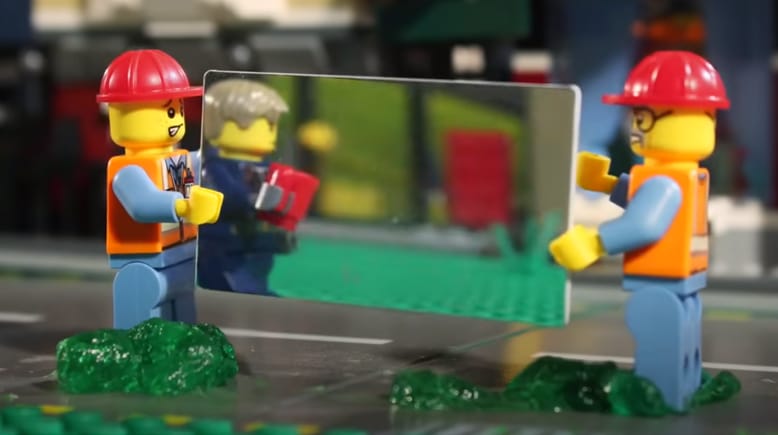
LEGO opens with an immediate problem: a city is covered in slime.
The characters investigate, but the story leaves the solution open. Viewers have to decide how they would save the city using LEGO.
That changes the audience’s role. The video creates the problem and then hands the next part of the story to the viewer.
For a toy based on imagination and construction, the open ending fits the product perfectly. The format itself mirrors how people play with LEGO.
7. Excitable Edgar by John Lewis and Waitrose
Edgar is a young dragon who wants to join the holiday celebrations, but his fire keeps causing trouble around the village.
He melts an ice rink, burns decorations, and eventually isolates himself. His friend Ava later finds a place where Edgar’s fire becomes useful when he lights the Christmas pudding.
The same trait creates the conflict and resolves it. That gives the story a clean emotional arc with very little explanation.
The brands stay secondary for most of the video. The viewer spends the time with Edgar and Ava, which is why the ending has room to land.
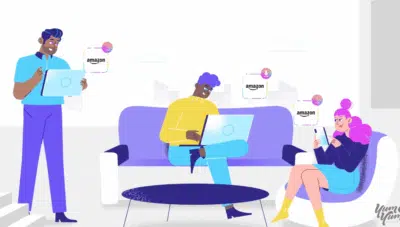
8. Amazon Appstore by Yum Yum Videos
For Amazon Appstore, we built the video around a father using the service across different devices and situations.
This gave us a way to explain several functions without separating the story into feature blocks. Purchases, games, Amazon Coins, and Windows 11 compatibility appear when the character needs them.
We used motion graphics for the technical parts and character animation for the everyday situations. The two styles had different jobs, but they were tied together by the same character.
For software and digital products, this approach is often useful because the product can appear in context before the script has to explain the interface in detail. Our product demo videos use a similar principle when a workflow needs more screen level explanation.
9. To The Travelers by Etsy

Etsy centers this holiday video on people choosing gifts for people they care about.
The marketplace stays in the background while each scene focuses on the reason behind a gift. That is a smart fit for Etsy because the value of many products on the platform is personal. The object matters because of who gives it and who receives it.
Each scene is short, but there is already a relationship, a choice, and an outcome.
Ecommerce brands can learn a lot from this structure. The product does not need a long backstory when the reason someone chooses it already contains the story.
10. We Can Do IT by University of Phoenix
This 30 second ad follows a factory worker who loses her job as automation changes the workplace.
She studies, develops new skills, and later returns to work in an IT role. Every scene advances the same transformation, so the story can move quickly without feeling rushed.
The opening establishes the problem. Education becomes the turning point. The final job closes the arc.
University of Phoenix has a clear role because the service appears exactly where the character needs a new path.
11. Thermo Fisher by Yum Yum Videos
.
Thermo Fisher asked us to communicate technical work related to cell and protein research.
We started at the microscopic level and then expanded outward to the labs, specialists, and technologies involved in studying those changes. The sequence gives the viewer a path through a subject with several layers of scientific information.
That was the main storytelling job on this project. We did not need a fictional hero or dramatic conflict. We needed a visual journey that could carry the viewer from one level of complexity to the next.
This is common in healthcare and biotech video production, where the story may come from a process, a patient journey, or a scientific change.
12. Business Comfort by Casper

Casper True Stories uses customer experiences as short narratives around the product.
The format gives the brand a repeatable structure. Each story can introduce a different person and a different reason someone values the product while keeping the same overall concept.
This is useful for brands with products that solve several small, personal problems instead of one universal problem.
The customer experience provides the narrative, so the product can stay present without carrying every scene.
13. Parisian Love by Google
Parisian Love tells a relationship story using Google searches.
The queries move from studying in Paris to meeting someone, maintaining a relationship, getting married, and starting a family. There are no actors and no spoken dialogue.
The search bar is both the product interface and the storytelling device. Every new query advances the relationship.
For me, this is one of the best examples of format and story becoming the same thing. Google does not need a separate product demonstration because the product is already doing the storytelling.
14. The Firing of Jira by ClickUp
ClickUp frames a software comparison as an exit interview.
Jira becomes the employee being fired, while ClickUp’s product differences appear through the conversation. The setup gives a B2B comparison a recognizable social situation and a reason for the dialogue to happen.
The humor is unusually direct for project management software, and the competitor angle is aggressive.
I would not use that tone for every B2B brand, but that is exactly why the example is useful. It shows how far a strong narrative device can move a category that usually communicates through feature lists and interface shots.
15. StockCharts by Yum Yum Videos
StockCharts gave us an unusual storytelling problem because the concept uses motion graphics without human characters.
We used a single point of light to represent an investor moving through market changes, charts, alerts, and uncertainty. The point becomes the character. Its movement gives the viewer something to follow while the surrounding graphics represent the market environment.
This project changed the way I think about character in storytelling. A character does not need a face, dialogue, or even a body. It can be any visual subject that experiences change.
You can see more examples of this approach in our motion graphics examples guide.
Two Storytelling Case Studies With Measurable Results
Storytelling is easier to discuss when there is a real project behind it. These two cases show different ways narrative can support communication over time.
MedVector: Three Videos During a $3.5M Fundraising Period
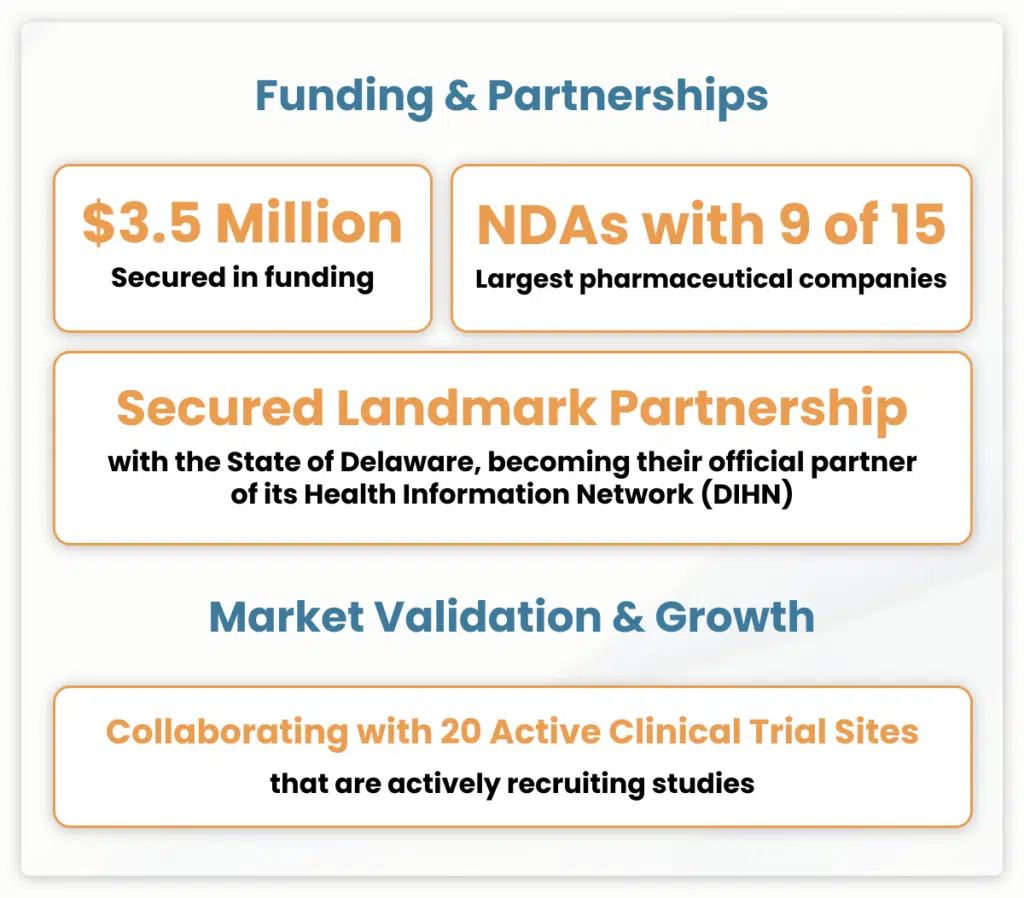
Between 2018 and 2021, MedVector worked with Yum Yum Videos on three whiteboard explainer videos for its telemedicine based clinical trial model.
The communication challenge was specific. MedVector had to explain a regulated workflow to investors, physicians, investigators, and institutional partners. We used a board game metaphor to introduce delays, research costs, patient recruitment, and the role of the platform.
The whiteboard animation style kept the visual language simple while the narrative moved through concrete research and patient situations.
During the same period, MedVector secured $3.5 million in funding while using a focused landing page with video as a primary communication asset. The MedVector case study documents the three videos, the landing page, and the fundraising period.
The funding belongs to MedVector. Our work was the communication system around a complex model.
Loadsmart: Five Videos and Nearly 3 Million Views
Loadsmart shows a different side of storytelling. This was not one isolated campaign. Between 2022 and 2024, we produced five animated explainers for products including Kamion, Opendock, ShipperGuide, and Managed Transportation.
The challenge was consistency. Each product needed its own explanation, but the videos also had to feel like parts of the same platform story.
Across the core product explainers, the series reached nearly 3 million views. Opendock and Managed Transportation each passed 1.2 million views, while the platform vision video reached about 450,000 views.
Those are direct video results. Loadsmart’s broader business growth is separate. The interesting storytelling lesson is that one narrative system can stretch across several products and several years without making every video feel identical.
The full Loadsmart case study shows how the five videos were used across product launches, the website, and industry events.
What More Than 1,000 Video Projects Have Taught Us About Storytelling
Across more than 1,000 projects, we have seen the same production issue in very different industries: scripts become hard to follow when every idea receives the same importance.
Story gives us a way to prioritize. Someone faces a problem, something changes, and the viewer needs to understand why that change matters. Once that sequence is clear, features and technical details have a natural place in the script.
This is particularly useful in an explainer video, where the script has limited time and every scene has to earn its place.
The visual style comes after that decision. Character animation, motion graphics, whiteboard animation, and live footage can all support the sequence, but none of those choices can rescue a script that does not know what it wants the viewer to follow.
How to Make a Storytelling Video
1. Start With the Audience Situation
Write down what the viewer is dealing with before the product or brand enters the story.
For ICBA, that meant showing people and communities affected by local banking. For StockCharts, it meant representing an investor dealing with market uncertainty.
The opening needs enough context for the viewer to understand why the next part matters.
2. Decide What Changes
Every story needs some kind of change, and it can be practical, emotional, or informational. A character may solve a problem, understand a confusing process, make a decision, or discover what the product changes for them.
Write that change in one sentence before working on the full explainer video script.
If the sentence is vague, the finished story will probably wander.
3. Give Each Feature a Reason to Appear
Product information becomes easier to follow when the story creates a reason for it.
In the Amazon Appstore video, product functions appear as the father uses the service. In University of Phoenix, education enters the story when the character needs a new path after losing her job.
This keeps the product tied to the situation on screen.
4. Use the Viewer as the Reference Point
The audience does not need to become a literal character in every video. The story still needs to make sense from their perspective.
Ask what they already know, what they are worried about, and what they need to understand by the end.
This is one of the easiest ways to stop a script from turning into a company biography.
5. Keep the Narrative Arc Visible
For a short marketing video, the structure can be simple:
- Establish the situation.
- Introduce the problem or change.
- Show the response.
- End with the outcome or next step.
The exact timing depends on the video. A 30 second commercial and a two minute explainer do not need the same pacing.
6. Remove Scenes That Do Not Move the Story
A scene should establish context, reveal information, change the situation, show a consequence, or move the viewer toward the resolution.
If you cannot explain what a scene contributes, cut it from the script before it becomes an expensive scene to produce.
That sounds obvious when written down. In production, it is one of the places where scripts grow unnecessarily.
FAQs About Storytelling Videos
What Makes a Good Storytelling Video?
A good storytelling video gives the viewer a clear subject to follow, a change they can understand, and a reason for the brand or product to appear inside the story.
The visual execution can be simple. Parisian Love uses search queries. StockCharts uses a point of light. The structure still gives the viewer a progression from one state to another.
How Long Should a Storytelling Video Be?
The right length depends on the job. A commercial may tell a complete story in 30 seconds, while many explainers sit around 60 to 120 seconds. Technical or educational stories can take longer when the viewer needs more context.
The useful question is whether each scene earns its place.
What Is the Difference Between a Storytelling Video and a Regular Explainer Video?
An explainer describes a product, service, process, or idea. Storytelling is one way to structure that explanation.
Many explainers use a narrative because it gives the product a situation in which to operate. Other explainers use a direct demonstration, visual analogy, or step by step structure.
Can Storytelling Work for Technical or B2B Products?
Yes. Thermo Fisher, MedVector, StockCharts, ICBA, and Loadsmart all deal with subjects that require technical, financial, medical, or institutional context.
The story does not make those subjects less serious. It organizes the information around something the viewer can follow.
Does a Storytelling Video Need Characters?
No. StockCharts uses a point of light. Parisian Love uses search queries. A process, object, interface, or visual metaphor can carry the narrative if it changes over time and gives the viewer a clear thread to follow.
A Practical Test Before You Approve the Script
Before approving the script, read it once without looking at the storyboard and answer four questions:
- Who or what is the story following?
- What changes during the video?
- Where does the product, service, or brand enter?
- What should the viewer understand or do at the end?
If one answer is unclear, fix that part of the script before production moves forward. It is much easier to solve a storytelling problem in a paragraph than after the scenes are already designed and animated.

Victor Blasco
Co-founder of Yum Yum Videos | Explainer Video & Video Marketing Expert
Victor Blasco has over 25 years of experience in animation and film production. For the past 14+ years, he has worked with companies to create explainer and marketing videos that simplify complex ideas and drive business results.
His work has supported global brands like Amazon and McKesson, as well as startups that raised over $2B and reached unicorn or IPO stages.
Victor shares insights based on real client work. His contributions have been published on platforms like Social Media Examiner, and he has been featured or quoted in outlets such as Forbes.