20 Best Bank Commercials and Financial Ads (2026)

Co-founder of Yum Yum Videos | Explainer Video & Video Marketing Expert

Most bank ads have a difficult job. Mortgages, investing, savings, insurance, credit, security, and payment technology are important, but none of them automatically feels like something people want to watch for fun.
The strongest bank commercials usually find a human tension, a joke, a visual idea, or one clear problem before they mention the financial product. That is the part I look for first.
I have spent more than 25 years working in animation and film production, including the last 14+ years at Yum Yum Videos. We have produced more than 1,000 videos, including work for financial organizations and fintech companies such as ICBA, American Express, StockCharts, Airtm, RAMP DeFi, Win FX, and Accelerant. That experience changes the way I look at bank commercials. I pay attention to what the ad chooses to explain, what it leaves out, how quickly the idea becomes clear, and whether the creative concept actually supports the financial message.
For this list of the best bank commercials, I reviewed 20 bank commercials and financial ads that take different approaches. Some are built around humor. Some use animation to simplify a product. Others barely mention a product and build the spot around trust, identity, or one memorable situation.
For companies producing this kind of content, our explainer video company works with financial, fintech, insurance, and other complex B2B products.
How I Chose the Best Bank Ads
I selected the best bank ads here by looking for a clear connection between the creative idea and the financial message. The execution can be funny, emotional, animated, cinematic, or simple. After the creative idea lands, the institution’s point has to be clear.
I also wanted the list to reflect how broad bank advertising has become. Traditional banks sit next to credit unions, investment platforms, digital wallets, and fintech products because they often compete for the same thing: attention and trust around money.
20 Best Bank Commercials and Financial Ads
- ICBA
- StockCharts
- U.S. Bank
- Synovus Bank
- F&M Bank
- Addition Financial
- APD Bank
- Bank of America
- Citi
- American Express
- UOB Private Bank
- RAMP DeFi
- J.P. Morgan Wealth Management
- DBS
- Citizens Bank
- Wells Fargo
- Airtm
- Capital One
- E*TRADE
- Win FX
Top 20 Bank Commercials and Financial Ad Videos(2025)
1. ICBA: A Bank Advertisement Built Around Community
This one is personal because we produced it at Yum Yum Videos.
ICBA represents thousands of community banks across the United States. The script did not need to explain a new app or a complicated financial product. The harder job was explaining what community banking means and why a local bank can matter to a business owner, family, or neighborhood.
We built the 60 second piece around people rather than banking terminology. The animation shows the role community banks play in everyday economic activity while the narration keeps the message simple.
Why it works
- The ad gives community banking a human context instead of leading with products.
- The 60 second runtime forces the message to stay focused.
- The visual system supports several audiences without turning the spot into a list of services.
- The institution’s role becomes clear before the brand message closes the piece.
For this bank advertisement video, clarity was the priority.

2. StockCharts: Explaining a Financial Product Without Dumbing It Down
StockCharts was another project we worked on ourselves.
The platform gives investors charting and market analysis tools, which creates an obvious communication problem: charts contain a lot of information, and a video can become visually dense very quickly.
We used motion graphics to organize the product around what the viewer actually needs to understand. Instead of trying to reproduce every function on screen, the video introduces the platform, shows how the information behaves, and keeps the visual hierarchy under control.
Why it works
- Motion graphics fit a product built around data and charts.
- The viewer sees the product category without being buried in interface detail.
- The pacing gives financial information enough time to register.
- The script focuses on what users can do with StockCharts rather than listing every feature.
For a technical finance product, this financial ad approach works because the visuals organize information the audience already expects to be dense.
3. U.S. Bank: “The Power of Us”
.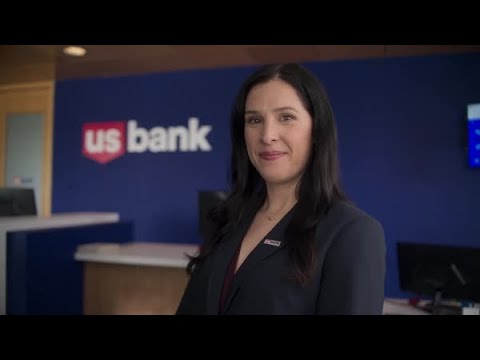
U.S. Bank builds this commercial around partnership. The people and businesses in the spot carry the story, while the bank stays in the role of the institution helping them move forward.
That structure is common in bank advertising for a reason. Banking products can be similar from one institution to another, so the commercial sells the relationship and the outcome instead of spending the entire runtime explaining an account.
Why it works
- The customer remains at the center of the story.
- Different life and business situations broaden the audience without changing the core message.
- The bank’s role is supportive rather than dominant.
4. Synovus Bank: “Fortune Favors the Curious”
Synovus uses curiosity as the organizing idea of the campaign. The commercial follows people taking steps toward something they want to build or change, with the bank appearing as part of that progression.
The concept creates momentum because each scene builds on the previous one. The behavior in the scenes keeps returning to the same idea instead of feeling like unrelated lifestyle footage with a logo at the end.
Why it works
- A single creative premise unifies the scenes.
- The bank becomes associated with action and financial progress.
- The message works for both personal and business banking audiences.
For Synovus, curiosity supplies the creative idea and the bank’s role follows from it. That structure gives the commercial a clear beginning and direction.
5. F&M Bank: “Some Things Will Always Be”
F&M Bank takes almost the opposite route. The 15 second spot focuses on consistency.
That is a smart match for a bank because stability is itself part of the value proposition. The commercial does not need an elaborate plot. It uses a short runtime to reinforce continuity and reliability.
Why it works
- The message reinforces F&M’s positioning around continuity and reliability.
- Fifteen seconds is enough for one idea.
- The creative direction supports a bank positioning built around longevity.
Some of the best banking ads are built around one clear idea. This 15 second spot never needs a second one.
6. Addition Financial: “We See the Real You”
Addition Financial uses animation and relatable situations to talk about individual financial goals.
The characters move the commercial through several customer situations. The same illustrated world ties those situations together and gives Addition Financial a consistent visual identity.
Why it works
- Character animation makes several financial situations feel like one campaign.
- The focus stays on the member rather than the institution.
- The animation gives the brand more control over tone and visual identity.
7. APD Bank: 3D Animation for an App Launch
APD Bank uses 3D animation to introduce its digital banking app.
This choice makes sense because the product is partly about interface and technology. The video can move through screens, devices, and graphic environments in ways that would be harder to achieve with a standard screen recording.
Why it works
- The visual style supports a technology driven product.
- 3D gives the app a stronger product launch feel.
- The commercial shows functionality instead of relying only on claims about innovation.
3D makes sense here because the product depends on interface design, devices, and transitions that a basic screen recording would not show as clearly.
8. Bank of America: Mobile Banking “Museum”
.
Bank of America takes a familiar product benefit, mobile banking convenience, and places it in a specific real life situation.
The museum setting gives the ad a small story. The viewer sees someone complete a banking task from a phone without needing a voiceover to explain every step.
Why it works
- One feature drives the entire commercial.
- The setting makes the benefit easy to understand.
- The product appears through use rather than exposition.
The entire Bank of America spot is built around one benefit: mobile convenience. Nothing else has to compete for those seconds.
9. Citi: “The Moment”
Citi’s “The Moment” addresses the gender pay gap through young girls reacting to real information about workplace inequality.
The product is not the center of the piece. The brand is making a statement about an issue connected to money, work, and opportunity.
Purpose driven bank commercials can easily feel detached from the company if the subject has no credible connection to the brand. Here, the financial context gives Citi a reason to enter the conversation.
Why it works
- Real reactions carry more weight than a heavily scripted performance.
- The subject connects directly with economic opportunity.
- The commercial gives the brand a point of view rather than adding a generic purpose message.
10. American Express: Lin-Manuel Miranda and Small Business
American Express uses Lin-Manuel Miranda in a campaign centered on neighborhood small businesses.
There is a personal detail for us here: American Express is also a Yum Yum Videos client, although this particular commercial was not produced by our team. I like the spot because the celebrity is not treated as the entire idea. Miranda moves through real businesses and helps connect a global financial brand with local commerce.
Why it works
- The celebrity has a clear relationship to the setting and story.
- Small businesses remain visible throughout the commercial.
- The product enters naturally through spending and commerce.
- The neighborhood setting makes a very large brand feel more local.
11. UOB Private Bank: “Forests of the Future”
UOB Private Bank uses environmental responsibility and long term thinking as the basis of the commercial.
Private banking often talks about wealth across generations. That makes legacy a credible bridge into a story about forests, sustainability, and what people leave behind.
Why it works
- The subject connects with the idea of long term value.
- Imagery and tone carry the positioning, with very little product explanation.
- The message is aimed at a specific private banking mindset.
This bank commercial is a positioning piece. Product education stays in the background.
12. RAMP DeFi: Explaining Decentralized Finance Visually
We produced this financial video for RAMP DeFi.
The communication challenge was very different from ICBA. RAMP had to explain how users could deposit staked digital assets into a liquidity pool and unlock additional capital. Those mechanics are difficult to explain with lifestyle footage or a traditional commercial.
We used structured animation and isometric animation elements to show relationships between assets, users, and the platform.
Why it works
- The visuals explain how the system operates.
- The script introduces the mechanism in sequence.
- The video turns abstract DeFi concepts into visual objects and movements.
- The style preserves technical detail in a conversational presentation.
For financial services advertising, RAMP shows a practical reason to use animation: the product logic exists in assets, relationships, and transactions that a camera cannot film directly.
13. J.P. Morgan Wealth Management: “Rise Above the Noise”
J.P. Morgan Wealth Management opens with terms such as crypto and metaverse, then uses them to make a point about financial noise.
The idea works because the commercial does not need to explain each trend. It uses the overload itself as the problem and positions financial advice as a way to filter it.
Why it works
- Familiar financial buzzwords establish the context in seconds.
- The campaign frames information overload as the problem.
- The brand voice is calm; the surrounding information is deliberately noisy.
For wealth management, the promise is useful filtering and clearer financial decisions.
14. DBS: “Bank Less”
https://youtu.be/yLHs2-94pvI?si=dcM2i3FmY2KcNRWL
DBS makes the unusual decision to tell customers to “bank less.”
That line gives the bank commercial its entire structure. The digibank app is presented as technology that reduces the effort required to manage money.
The 60 second piece mixes live action, VFX, and animation. Quick cuts show the app inside everyday life rather than stopping the story for a long feature demonstration.
Why it works
- “Bank less” gives the campaign a simple, ownable idea.
- Lifestyle scenes communicate convenience.
- Mixed media maintains product visibility while the story stays in everyday life.
- The visual pace fits a digital banking product.
If you are planning this kind of production, our animation cost guide explains how style and complexity affect budget.
15. Citizens Bank: “Dog Translator”
https://youtu.be/PUNjMyBK_88?si=6_30vSshgRNC5frz
I like this creative bank ad because it fits a complete startup story into 15 seconds.
A woman notices that an AI assistant cannot understand her barking dog. That problem becomes the idea for a dog translator, the invention becomes a business, and Citizens Bank enters when the business starts to grow.
It is absurd enough to be memorable but structurally very clean.
Why it works
- The setup, idea, business growth, and bank connection all fit into 15 seconds.
- Humor gives the commercial a reason to be watched.
- The bank enters at the exact point where financing becomes relevant.
- The ad speaks directly to entrepreneurs and small business owners.
A short ad can still tell a story if every scene has a job.
16. Wells Fargo: “Lulu & Lobo”
Wells Fargo uses two dogs, Lulu and Lobo, and a delivery truck that interrupts a peaceful afternoon.
There is very little traditional banking language in the spot. The characters, sound design, and situation create the emotional tone, while the financial message sits underneath the story.
Why it works
- The commercial uses very little voiceover.
- Sound carries part of the narrative.
- The pets make the situation immediately readable.
- The spot associates the brand with dependability and lets the story carry that idea.
Wells Fargo shows how far a bank advertisement can move away from familiar banking imagery while keeping the brand message intact.
17. Airtm: Making a Digital Dollar Product Understandable
Airtm is another financial project we produced at Yum Yum Videos.
The platform allows users to hold, send, and convert money in dollars, which is particularly relevant in markets affected by currency instability. The video needed to explain the product while still showing the real problems behind it.
We used character animation to move between situations involving transfers, access to dollars, and financial uncertainty. That gave the product a human context before the explanation became technical.
Why it works
- Characters connect the product to real financial situations.
- The video explains benefits before diving into mechanics.
- The international audience is reflected in the visual storytelling.
- Animation gives abstract money movement a visible form.
On Airtm, we deliberately showed currency instability and transfer problems before explaining the wallet. That gave the product a human reason to exist before the video moved into the mechanics.
18. Capital One: “Holiday Night Fever”
Capital One builds this holiday commercial around John Travolta, disco references, and a reunion with Donna Pescow.
The financial product is woven into a piece that people can understand even if they are paying little attention to the banking details.
Why it works
- Nostalgia gives the campaign an immediate cultural reference.
- The celebrity casting supports the concept rather than sitting beside it.
- The card appears inside the shopping story.
- The holiday context gives the ad natural timing and relevance.
Capital One is solving a brand-awareness problem here, so entertainment carries more of the workload than product explanation.
19. E*TRADE: “Astronaut”
E*TRADE turns investment regret into a visual joke.
A group of astronauts looks back at Earth. One older astronaut admits he never invested when he had the chance, which gives the space setting a second meaning: he is literally far away while everyone else has moved on.
Why it works
- The metaphor communicates financial regret without a lecture.
- The setting makes the joke instantly visual.
- The product promise follows naturally from the problem.
- The concept makes retirement planning feel less abstract.
The space setting turns a familiar financial fear into a literal image: the astronaut who waited too long to invest is the person left behind.
20. Win FX: Motion Graphics for an AI Investment Platform
We worked with Win FX on a motion graphics explainer for its AI powered investment platform.
The product combines automation and financial decision making, so the script had to establish what the platform does before the animation could add any value. We kept the design clean and used motion to organize the information. Each movement had an explanatory job.
Why it works
- The script gives the viewer a clear product model.
- Motion graphics fit an abstract technology and finance product.
- The visual hierarchy makes technical information easy to scan.
- The animation supports the explanation rather than competing with it.
For financial brands comparing production partners, our guide to animation companies explains what to look for in different teams.
5 Patterns Across These 20 Bank Commercials and Financial Ads
Across these 20 bank commercials and financial ads, five production choices show up repeatedly.
They Usually Focus on One Financial Idea
The Bank of America spot is about mobile convenience. F&M focuses on stability. Citizens Bank connects financing with entrepreneurial growth.
None of those ideas requires the ad to explain every product the bank sells.
They Give Abstract Financial Concepts Something Visual
Money movement, investing, liquidity, financial advice, and digital banking can be difficult to see. StockCharts uses motion graphics for market data, Airtm uses characters for money movement, and Bank of America uses a museum situation to show mobile banking in use.
Trust Is Shown Through the Story
Saying “you can trust us” is rarely enough.
The narratives make the positioning visible. ICBA shows the role of community banks, Wells Fargo dramatizes dependability, and U.S. Bank follows people moving toward financial goals.
Humor Works When It Connects Back to the Product
Citizens Bank, Wells Fargo, Capital One, and E*TRADE all use humor differently.
In the stronger examples, the joke points back to the financial message. Citizens connects the dog translator to business financing; E*TRADE turns investment delay into the astronaut punchline.
Animation Is Particularly Useful for Fintech
StockCharts, RAMP DeFi, Airtm, APD Bank, and Win FX all deal with products or systems that are difficult to film directly.
Animation can show data, interfaces, money flows, platform relationships, and processes that only exist digitally.
What We Have Learned From Producing Financial Videos
Financial projects tend to expose weak scripts very quickly.
Complicated financial products invite too much explanation. In our own projects, the first script pass often contains more than the viewer needs. We cut until the video has one clear communication job.
ICBA needed a human story about community banking. StockCharts needed a clean way to organize charting and market information. RAMP DeFi needed visual logic for a decentralized finance mechanism. Airtm needed the audience to understand the human problem before the digital wallet. Win FX needed motion design that supported an AI investment product without overwhelming the viewer.
We have also seen how the relationship can continue when the communication problem evolves. Between 2021 and 2024, we produced nine videos for Accelerant, an insurtech company serving brokers, partners, investors, and clients. Accelerant later went public in 2025, raising $724 million on the NYSE at a $6.4 billion valuation. The IPO was Accelerant’s business achievement, not something caused by our videos. What the project shows is that one financial company can need several different explanations as it grows.
You can see the complete project in our Accelerant case study.
In our financial services video production work, we define the audience and the financial concept first. The visual style comes after that decision.
Types of Bank Commercials, Bank Ads, and Financial Commercials
Different bank advertisements and financial commercials solve different communication problems.
Product and App Commercials
These focus on one service, feature, or digital tool. Bank of America’s mobile banking spot and DBS’s digibank campaign fit here.
They work best when the viewer needs to understand a concrete benefit quickly.
Brand Story Bank Commercials
These ads spend more time on what the institution represents.
U.S. Bank, F&M Bank, and UOB use this approach in different ways. The product can remain in the background while the commercial builds an association with partnership, stability, or long term thinking.
Animated Explainer Videos
.
Animation is useful when the financial product itself needs explanation.
StockCharts, RAMP DeFi, Airtm, and Win FX all use visuals to make systems and products easier to follow. Our explainer video production process is built around solving that message before animation begins.
Customer and Community Stories
Community banks, credit unions, and business banking teams can use real customers or representative characters to show what the institution makes possible.
The goal is to make the financial service concrete through the person using it.
Short Bank Ads
A 15 or 30 second bank ad needs a narrow message. Citizens Bank succeeds because the story has one clear arc. F&M uses 15 seconds to reinforce one brand idea.
For short placements, cutting ideas is usually more effective than making the narration faster.
FAQ About Bank Commercials and Bank Ads
What are some of the best bank commercials and best banking ads?
The best bank commercials and best banking ads use very different approaches. Citizens Bank uses a 15 second startup joke, Bank of America demonstrates mobile banking through a simple situation, Citi builds around a social issue, and DBS turns “bank less” into the campaign idea. The best choice depends on whether the goal is product explanation, brand positioning, trust, or awareness.
What makes a good bank ad?
A good bank ad has one clear communication goal, a specific audience, and a creative idea that supports the financial message. Strong bank advertising also makes trust, convenience, or product value visible through the story instead of relying on claims alone.
Why do banks use animation in commercials?
Animation can show products and processes that are difficult to film, including money movement, investment platforms, app interfaces, data, and financial systems. It also gives the brand control over characters, environments, pacing, and visual hierarchy.
What are creative bank ads?
Creative bank ads have a core idea the viewer can grasp quickly. Citizens Bank uses a dog translator, E*TRADE uses an astronaut, Capital One builds around Travolta, and Wells Fargo uses two dogs and a delivery truck.
What is the difference between bank ads, financial ads, and financial commercials?
Bank ads usually promote a bank, credit union, banking service, or banking product. Financial ads and financial commercials cover a broader category that can include investment platforms, fintech products, insurance, wealth management, crypto, payment services, and other financial products.
How long should a bank commercial be?
The right runtime depends on the message and placement. A single campaign idea can work in 15 to 30 seconds. Product explanations often need 60 to 90 seconds or more. Our guide to explainer video length explains how we plan runtime around the amount of information the viewer needs.
Choosing a Bank Commercial Format
The best bank ads on this list fit the format to the communication problem.
A 15 or 30 second placement needs one benefit or one story beat. A technical fintech product may need animation or UI because the viewer has to understand how the system works. A brand campaign can spend more time on positioning, people, or emotion.
Before choosing the style, define what the viewer needs to understand, who needs to understand it, and how much explanation the product requires. Those decisions determine the format more reliably than the production trend of the moment.

Victor Blasco
Co-founder of Yum Yum Videos | Explainer Video & Video Marketing Expert
Victor Blasco has over 25 years of experience in animation and film production. For the past 14+ years, he has worked with companies to create explainer and marketing videos that simplify complex ideas and drive business results.
His work has supported global brands like Amazon and McKesson, as well as startups that raised over $2B and reached unicorn or IPO stages.
Victor shares insights based on real client work. His contributions have been published on platforms like Social Media Examiner, and he has been featured or quoted in outlets such as Forbes.