10 Best Explainer Video Examples That Get Real Results

Co-founder of Yum Yum Videos | Explainer Video & Video Marketing Expert

The examples in this list solve a specific communication problem: explaining products that are technical, unfamiliar, or easy to overload with features. The script has to prioritize the information viewers need to understand the product quickly.
For this article, we selected 10 explainer video examples with something useful to study beyond the animation itself. Several have documented business outcomes. Accelerant raised more than $340 million during the period we worked together, Dollar Shave Club generated 12,000 orders within 48 hours of launch, and Crazy Egg reported a 64% increase in homepage conversions after adding its explainer. The remaining examples are included because they solved a specific communication problem particularly well.
A few of these videos look dated today. That is not a reason to dismiss them. We looked at the problem each company faced, how the video addressed it, and the business results documented during the same period.
How We Picked These Videos
1. Results
We gave priority to videos connected to documented business outcomes.
Accelerant raised more than $340 million during the period in which we worked together. Dollar Shave Club reportedly generated 12,000 orders within 48 hours of launching its video. Crazy Egg reported a 64% increase in homepage conversions after adding its explainer.
For examples with a direct causal metric, we report it. When only a broader business milestone is documented, we state the result and its timing without attributing it to the video.
2. Clarity
We looked at how quickly each video explains the product, problem, or new behavior.
This becomes especially important with technical products, new categories, expensive services, or ideas that are difficult to describe in one sentence.
We also considered whether the visuals make the explanation easier to follow or simply decorate what the voiceover is already saying.
3. Storytelling
We looked at whether the characters, humor, visual metaphors, pacing, or other creative choices reinforce the product idea rather than compete with it.
That can come from a character, a customer scenario, humor, a visual metaphor, or simply a well-organized explanation. The specific approach changes from one example to another.
Quick Overview of the Examples
| Example | Year | Industry | Main Lesson |
|---|---|---|---|
| Accelerant | 2021–2024 | Insurtech | Simplify complex B2B ideas |
| Dollar Shave Club | 2012 | Ecommerce | Use humor without losing clarity |
| Spotify | 2011 | Music streaming | Make a new behavior feel natural |
| MedVector | 2018 to 2020 | Healthcare | Make complex topics easier to pitch |
| Slack | 2014 | B2B SaaS | Turn a customer story into entertainment |
| Crazy Egg | 2012 | SaaS | Use clarity to improve conversions |
| Dropbox | 2009 | Cloud storage | Explain a new category simply |
| Mint | 2009 | Fintech | Use design to make finance approachable |
| Headspace | 2011 | Wellness | Use tone to reduce friction |
| Branch | 2021 | SaaS | Avoid feature overload |
1. Accelerant: Simplifying a Complex Insurtech Model
Year: 2021 to 2024
Created by: Yum Yum Videos
Industry: Insurtech / Financial Services
Style: Motion graphics / Character animation
Between 2021 and 2024, Yum Yum Videos produced nine custom explainer videos for Accelerant. The company needed to explain an insurance model that involved several audiences and was not easy to summarize in a traditional product pitch.
The videos were used to communicate that model to investors, partners, and other business audiences during a period of rapid expansion. You can read the full Accelerant video case study for more details.
Company milestone:
Between 2021 and 2024, while we were producing the video series, Accelerant raised more than $340 million in private funding. In 2025, after our production period, Accelerant and some of its shareholders sold approximately $724 million in stock through its NYSE IPO. When the shares began trading, Reuters reported a fully diluted valuation of about $6.4 billion.
We’re proud to have supported Accelerant’s communications during this period of growth, helping the company explain its model clearly to investors, partners, and other audiences.
Why it works:
The animation gives viewers a visual representation of how Accelerant’s insurance model works. That reduces the amount of technical explanation the explainer video script has to carry on its own.
Key takeaway:
For technical B2B products, the script and visuals should divide the explanation between them. If the voiceover has to explain every relationship, process, and benefit by itself, the video becomes much harder to follow.
2. Dollar Shave Club: Humor That Turned Into Immediate Sales
Year: 2012
Created by: Dollar Shave Club
Industry: Subscription ecommerce / Consumer goods
Style: Live-action commercial
Dollar Shave Club’s launch video explains a very simple offer: affordable razor blades delivered through a subscription.
Founder Michael Dubin walks through a warehouse explaining how the service works while increasingly absurd things happen around him. The jokes keep the pace moving, but the subscription model remains easy to understand.
Results:
The video reportedly cost $4,500 to produce and generated 12,000 orders within 48 hours of launch. The YouTube video later passed 28 million views, and Dollar Shave Club was eventually acquired by Unilever for around $1 billion. Explainer video budgets can vary considerably by style and production model; our guide to explainer video cost breaks down those differences.
Why it works:
The humor attracts attention without taking over the explanation. Within a short time, viewers know what the company sells, how the subscription works, and what makes the offer different.
Key takeaway:
Humor works best when the joke and the product explanation move in the same direction. In this case, almost every scene reinforces the personality of the brand while Michael Dubin continues explaining the offer.
3. Spotify: Making Music Streaming Feel Effortless
Year: 2011
Created by: Spotify
Industry: Music streaming / Technology
Style: Animated product explainer / Launch promo
Before Spotify became mainstream in the United States, the company had to explain a different way of listening to music. Users could access millions of songs without buying individual tracks or managing downloads.
The explainer focuses on that change in behavior rather than trying to cover every feature of the platform.
Company milestone:
The video was part of Spotify’s U.S. launch in 2011, an important stage in the company’s international expansion.
Why it works:
The video treats streaming as something simple and familiar. It spends very little time explaining the technology behind the product and much more time showing what the user can actually do with it.
Key takeaway:
When a product asks people to change an existing habit, the explanation should focus on the new behavior. Technical details can come later.
4. MedVector: Explaining a Healthcare Model During a $3.5M Fundraising Journey
Year: 2018 to 2020
Created by: Yum Yum Videos
Industry: Healthcare / Clinical trials
Style: Whiteboard animation
MedVector worked with Yum Yum Videos on three healthcare explainer videos created to support its fundraising efforts.
The company had to explain a clinical trial recruitment model to people who did not necessarily understand every part of the healthcare process. The videos were used together with a focused landing page as important communication tools during fundraising. The MedVector video case study includes more details about the project.
Company milestone:
MedVector used a focused landing page and our videos as part of its fundraising communications. The company later reported $3.5 million in total funding raised. Our videos helped MedVector explain its model clearly to investors and other stakeholders throughout the fundraising process.
Scott Stout, CEO of MedVector, said that our team was able to understand complex topics and visualize them without face-to-face interaction in his verified Clutch review.
Why it works:
The whiteboard format presents the healthcare process in sequence. Each new illustration appears as the explanation progresses, so viewers are not asked to process the entire system at once.
Key takeaway:
Whiteboard animation can work particularly well for clinical workflows and other multi-step healthcare processes because the visual information appears in the same order as the explanation.
5. Slack: Turning a Customer Story Into a Sitcom-Style Explainer
Year: 2014
Created by: Sandwich Video
Industry: B2B SaaS / Workplace communication
Style: Live action with motion graphics
Slack’s So Yeah, We Tried Slack follows the Sandwich Video team through the communication problems they had before adopting the product.
Email, messages, files, and workplace conversations are spread across different places. Slack is introduced inside that story as the tool the team begins using to bring those conversations together.
The result feels closer to a short workplace comedy than a conventional software demonstration.
Company milestone:
The video became part of Slack’s early marketing during its breakout growth period. By August 2014, Slack had around 140,000 daily active users. By June 2015, it had passed 1.1 million daily active users.
Why it works:
The workplace story provides the context for the product features. Viewers see channels, messaging, file sharing, and search being used to solve problems that appeared earlier in the video.
Key takeaway:
A SaaS explainer does not always have to begin with the interface. Starting with a recognizable customer problem can give the product demonstration a reason to exist.
6. Crazy Egg: A Real-Results Explainer Video Example
Year: 2012
Created by: Demo Duck
Industry: SaaS / Website optimization
Style: Animated explainer video
Crazy Egg was built for marketers, website owners, and SEO professionals who wanted to understand how visitors interacted with their websites.
Its homepage explainer shows what a heatmap is and why that information can be useful without requiring the viewer to understand web analytics terminology first.
Results:
Crazy Egg reported a 64% increase in homepage conversions and an additional $21,000 in monthly revenue after adding the video. It remains one of the clearest early examples of measurable explainer video ROI.
Why it works:
The video demonstrates the problem visually before spending much time on the product. Viewers can see why traditional analytics may not reveal where people are clicking, and the heatmap becomes easier to understand once that problem is visible.
Key takeaway:
For technical SaaS products, showing the problem can reduce the amount of explanation needed later. The viewer already understands why the feature matters before the product is introduced in detail.
7. Dropbox: The Classic Explainer Video That Made Cloud Storage Simple
.
Year: 2009
Created by: Common Craft
Industry: SaaS / Cloud storage
Style: Cutout animation / Doodle-style explainer
Dropbox’s original video came from a period when cloud storage was still unfamiliar to many consumers.
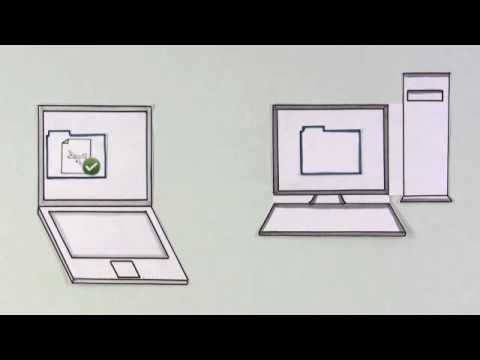
The cutout drawings may look basic compared with current animation, but the format gave Dropbox a simple way to demonstrate something that was difficult to describe at the time: the same files appearing across several devices.
The narration explains the action while the animation shows it happening.
Company milestone:
The video was featured on Dropbox’s homepage for years and was reportedly viewed around 30,000 times per day, eventually reaching more than 25 million total views according to Dropbox. The YouTube version also accumulated millions of views.
Why it works:
The visual sequence mirrors the explanation. When the narrator talks about syncing a file, viewers see that file move between devices.
That repetition makes an unfamiliar concept easier to understand without adding technical detail.
Key takeaway:
Dropbox did not need sophisticated animation to explain cloud storage. It needed a visual system that could show file syncing more clearly than a paragraph of text.
8. Mint: A Visual Milestone in Early Explainer Videos
Year: 2009
Created by: Mint
Industry: Fintech / Personal finance
Style: Motion graphics / Animated typography
Mint’s explainer looked unusually polished for a startup video from 2009.
Motion graphics, typography, icons, and transitions were used to organize financial information without making the interface feel heavy or intimidating.
The video also became an early reference for many production companies. At Yum Yum Videos, it was one of the pieces we looked at during our first years because it showed how design and explanation could work together in a business video.
Company milestone:
Mint was acquired by Intuit in 2009 for approximately $170 million.
Why it works:
The visual design keeps financial information organized. Motion, typography, and icons guide the viewer through the explanation while the narration stays focused on everyday money management.
Key takeaway:
Fintech products often have to explain information that users already find stressful or complicated. Clear visual hierarchy can make that information easier to process without oversimplifying the product.
9. Headspace: Making Meditation Feel Friendly and Accessible
Year: 2011
Created by: Headspace
Industry: Wellness / Meditation app
Style: Character animation / Product explainer
Headspace used simple character animation to explain guided meditation at a time when the concept was still unfamiliar to many app users.
The characters, voice acting, and restrained visual style give the subject a casual tone. Meditation is presented as something people can try without having to know much about the practice beforehand.
Impact:
The animation helped establish a visual language that became closely associated with Headspace as the company expanded its brand.
Why it works:
The characters make the explanation feel conversational rather than clinical. That tone fits a product asking users to try a new personal habit.
Key takeaway:
For products connected to behavior change, tone affects how the explanation is received. The viewer has to feel comfortable enough with the idea to consider trying it.
10. Branch: Explaining Complex SaaS Without Overloading Features
.
Year: 2021
Created by: Yum Yum Videos
Industry: Tech / SaaS
Style: 2D animation / Product explainer
Branch, a U.S.-based SaaS company, needed to explain a mobile linking and attribution platform with a lot of technical depth.
Yum Yum Videos created an animated explainer built around user journeys, app growth, and the business problems Branch solves. That gave the script a way to explain the platform without walking viewers through every individual feature.
You can see more about the project in our Branch case study.
Company milestone:
In 2022, Branch raised $300 million in Series F funding at a valuation of $4 billion. Our explainer video supported Branch’s communications during this period, helping the company explain its mobile linking and attribution platform clearly to business audiences.
Why it works:
The video organizes the explanation around business value rather than trying to fit the entire product into a short runtime.
Viewers get enough information to understand what Branch does and why a company might need it, while the more detailed feature explanation can happen later in the sales process.
Key takeaway:
Complex SaaS products usually have more features than an explainer video can cover well. Choosing which part of the value proposition to explain is often more useful than trying to compress the entire platform into two minutes.
Why These Examples Still Matter Today
Several of these videos are more than a decade old, but the communication problems behind them are still common.
Dropbox had to introduce an unfamiliar product category. Spotify had to explain a new consumer behavior. Accelerant and Branch had to simplify technical B2B platforms. MedVector had to make a healthcare model understandable to investors. Dollar Shave Club and Slack had to keep attention while explaining relatively straightforward products.
The production tools have changed considerably since those videos were made. The underlying decisions are still recognizable: what information belongs in the script, what can be shown visually, what can be left out, and what the audience needs to understand before the video ends.
What These Explainer Video Examples Have in Common
Accelerant and Branch reduce the complexity of technical B2B products.
Dropbox and MedVector use simple visual systems to walk viewers through unfamiliar processes.
Dollar Shave Club and Slack rely on humor because their products are easy enough to explain while the story keeps the audience watching.
Crazy Egg is especially useful because the result is measurable: the company reported a 64% increase in homepage conversions and an additional $21,000 in monthly revenue after adding its explainer.
There is no single animation style or script structure that explains every product equally well. The useful question is what the audience needs to understand, and which parts are easier to say, show, or demonstrate.
Working With Yum Yum Videos
Yum Yum Videos is an explainer video company creating custom videos for startups, SaaS companies, healthcare brands, and enterprise teams that need to explain products that are difficult to communicate quickly.
Our work with Accelerant, MedVector, and Branch included videos used during fundraising, sales, investor communication, and product education. You can explore our explainer video case studies to see how other companies have used video around major business milestones.
If you are planning an explainer video, start by deciding what one idea the audience needs to understand when the video ends. That decision usually makes the script, duration, and visual approach much easier to define.
Contact us to start planning your explainer video.

Victor Blasco
Co-founder of Yum Yum Videos | Explainer Video & Video Marketing Expert
Victor Blasco has over 25 years of experience in animation and film production. For the past 14+ years, he has worked with companies to create explainer and marketing videos that simplify complex ideas and drive business results.
His work has supported global brands like Amazon and McKesson, as well as startups that raised over $2B and reached unicorn or IPO stages.
Victor shares insights based on real client work. His contributions have been published on platforms like Social Media Examiner, and he has been featured or quoted in outlets such as Forbes.